
Preparation room disinfection is not a single end-of-day task. The products on your shelves, the way they are diluted, the time they remain wet. And the records your team can access all shape worker safety and regulatory readiness. A practical protocol should connect product selection with the actual surfaces, instruments, and exposure risks your staff handles every day.
Call 800-752-8767 to review your disinfection and infection control workflow.
The best funeral home disinfectants program combines Standard Precautions, EPA-registered products selected for the task, label-directed dilution and contact time, accessible Safety Data Sheets, appropriate PPE, and adequate ventilation. OSHA also requires employers to provide suitable PPE when potential exposure exists, while CDC guidance emphasizes following the manufacturer’s instructions for every cleaning and disinfection product.
That approach makes compliance part of routine preparation room work rather than a separate paperwork exercise. It also gives operators a clear framework for evaluating disinfectants, soaps, and related infection control supplies before a chemical reaches the work surface. The first step is understanding the OSHA responsibilities that guide those decisions.
Why OSHA Compliance Matters in the Preparation Room
OSHA compliance turns infection control from an informal practice into a repeatable preparation-room standard. A clear process helps staff select appropriate PPE, control blood and body-fluid exposure, handle chemical products safely, and document the procedures that protect everyone working in the room.
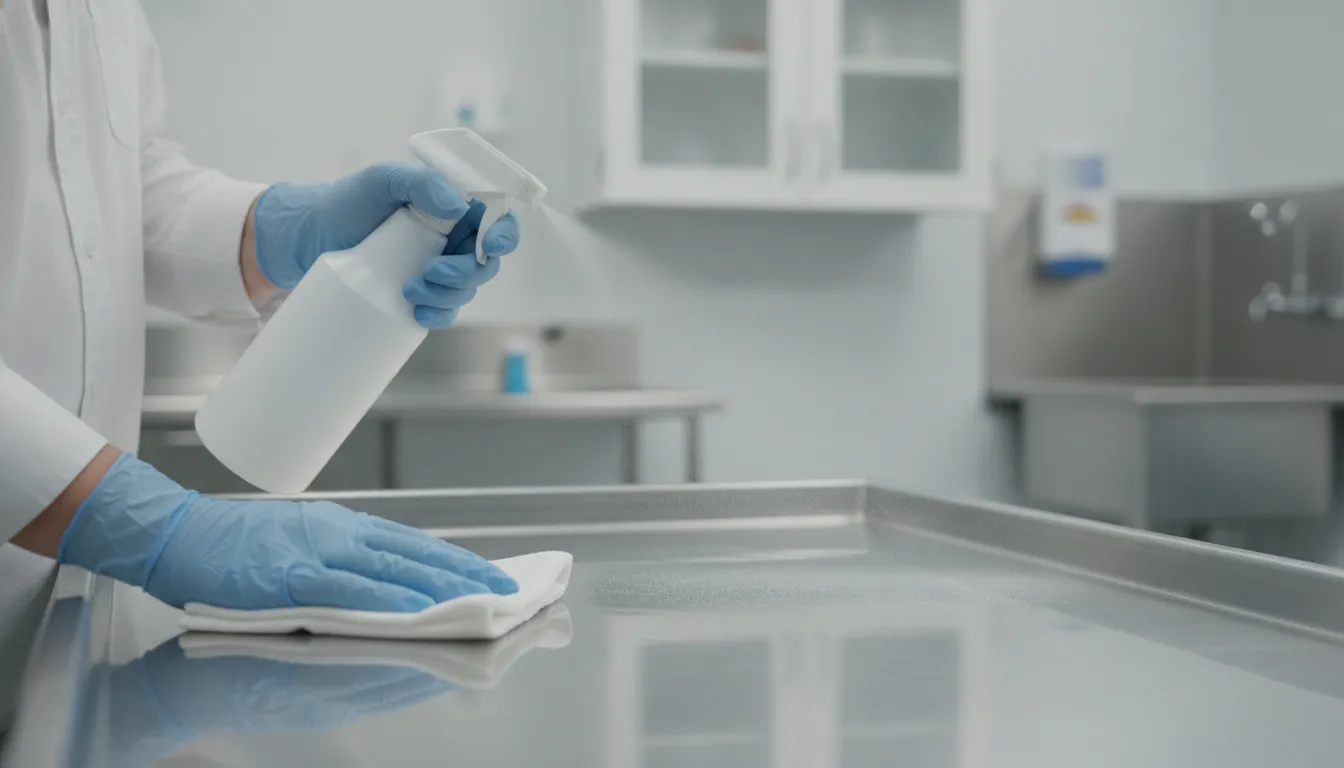
OSHA’s Bloodborne Pathogens standard requires employers to provide and ensure the use of appropriate PPE when employees may face exposure. The PPE selection should follow a risk assessment, rather than relying on a one-size-fits-all supply list. Tasks involving splashes, contaminated instruments, or direct contact with bodily fluids may require different protection than routine room cleaning. The infection control plan should explain those differences in language staff can use during a busy removal or preparation.
For contaminated countertops, tables, sinks, floors, and other nonporous surfaces. OSHA requires cleaning with an EPA-registered disinfectant or a 1:10 dilution of bleach when blood or body fluids are present. The product must be used according to its label, including the required dilution, application method, and contact time. Wiping a surface immediately after spraying may not provide the exposure time needed for the product to work.
- Risk-based PPE: Identify the hazards associated with each preparation-room task and specify the gloves, gowns, eye protection, face protection, or respiratory protection required.
- Approved surface disinfection: Keep an EPA-registered product suitable for the expected contamination, or prepare a 1:10 bleach solution when that procedure is appropriate.
- Accessible Safety Data Sheets: Maintain an SDS for every disinfectant and chemical used in the workplace, and make the documents readily accessible to staff under OSHA’s Hazard Communication Standard.
- Ventilation: Use adequate ventilation to reduce worker exposure to disinfectant fumes and other chemicals, especially when stronger products are being applied.
- Consistent procedures: Document the cleaning sequence, product concentrations, contact times, PPE steps, spill response, and disposal requirements so every staff member follows the same process.
Ventilation is a practical part of chemical safety, not merely a facility preference. Adequate airflow helps reduce exposure to fumes from disinfectants and other preparation-room chemicals. Staff should also know where to find the relevant SDS before an incident occurs, not after a product has splashed or caused irritation.
These requirements work best when they are integrated into daily operations. Treat every decedent as potentially infectious, use Standard Precautions consistently, and keep the room stocked so staff are not tempted to improvise. Embalming chemicals may have disinfectant properties, but they do not replace cleaning and disinfecting work surfaces. For a broader planning reference, review these infection control safety protocols alongside the home’s written OSHA procedures.
What Are the Top Types of Funeral Home Disinfectants?
The best funeral home disinfectant depends on the surface, the contamination risk, and the contact time your team can follow consistently. Phenolics are commonly selected for broad-spectrum preparation-room use, quats support routine cleaning. Bleach is suited to certain bodily-fluid spills when prepared correctly, and alcohol is better reserved for small spot applications.
Product selection should support the operational protocol required by your infection-control plan, not replace it. Every product must be used according to its label, including the stated dilution, application method, and wet contact time. The complete preparation room guide provides broader guidance, while the comparison below helps narrow the initial product discussion.
| Type | Spectrum or role | Best use | Limitations and cautions |
|---|---|---|---|
| Phenolics | Broad-spectrum activity against bacteria and fungi | General preparation-room disinfection where broad coverage is needed | Follow the product label for dilution, contact time, ventilation, and material compatibility |
| Quaternary ammonium compounds (quats) | Routine surface cleaning and disinfection | Floors and general surface areas during scheduled cleaning | Use only for the claims and organisms listed on the label; do not assume every quat handles every exposure |
| Chlorine bleach | Powerful option for selected contamination events | Bodily-fluid spills when the required concentration is prepared correctly | Diluted solutions should be prepared fresh daily. Never mix bleach with other chemicals |
| Alcohol-based products | Fast spot disinfection | Small areas where rapid evaporation is useful and sufficient contact time is possible | Evaporates quickly, may not maintain contact time on large surfaces, and is flammable |
Common branded examples in this category include CaviCide, MetriCide, Wavicide, Uniquat Plus 128, and Champion SLC. The name on the container is only the starting point. Confirm the product’s EPA registration, intended use, required contact time, and compatibility with stainless steel, plastic, and other materials in the room. For non-disposable instruments, a high-level disinfectant may be appropriate, but that is a separate decision from routine floor and countertop cleaning.
In practice, many facilities keep more than one type available. A quat may support a repeatable daily cleaning routine, while a phenolic may fit broader preparation-room disinfection. Bleach can be reserved for defined spill procedures, and alcohol for limited spot work. Maintain Safety Data Sheets where staff can access them, provide adequate ventilation, and train every team member on the same product-specific process. Vischer’s disinfectants and soaps category can help operators compare available options with their safety and workflow requirements.
How to Select the Right Disinfectant for Your Prep Room
The right disinfectant must match the task, the surface, and the exposure risk. Evaluate efficacy, worker safety, material compatibility, and the label directions together rather than choosing a disinfectant on strength or convenience alone.
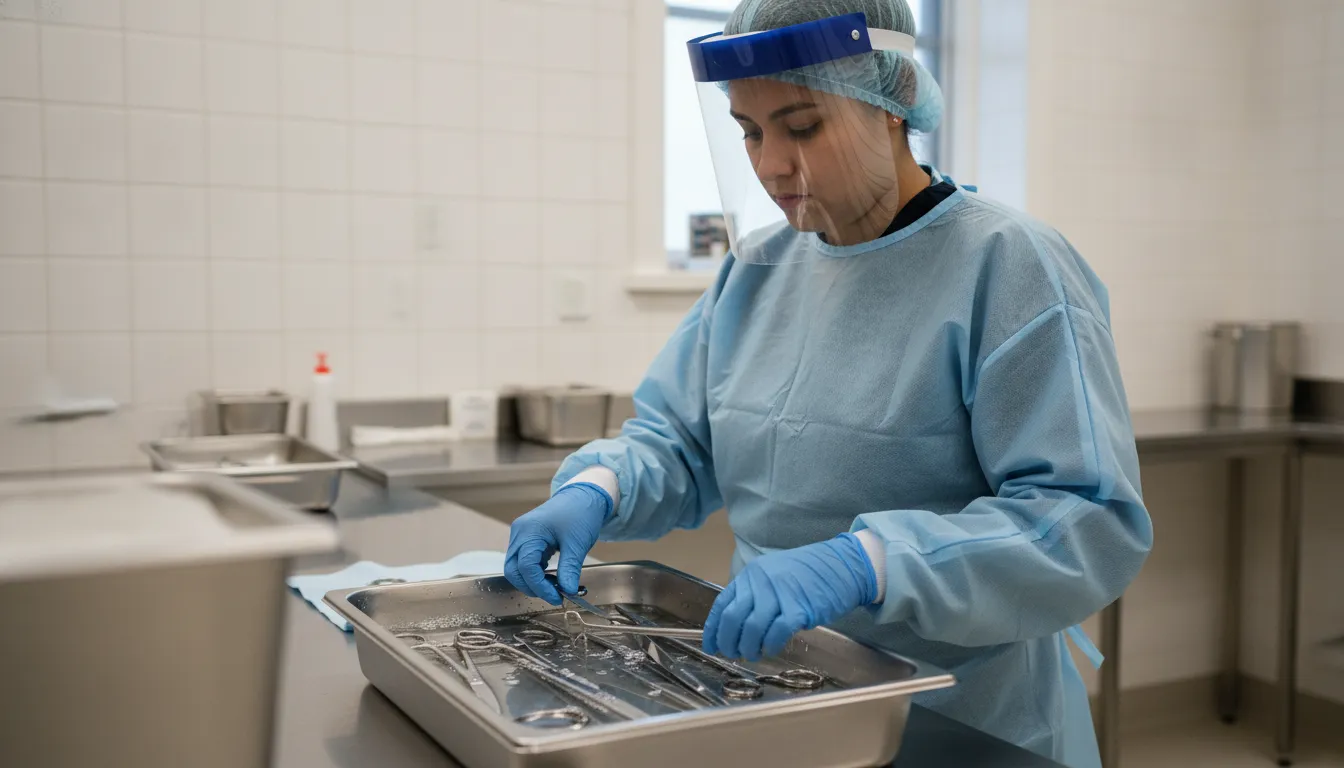
Start by identifying what you are disinfecting. Non-disposable instruments require thorough cleaning followed by a high-level disinfectant, according to guidance for infection control in the preparation room. Select a product intended for instruments and verify that its directions support the level of disinfection your protocol requires. A surface product may be appropriate for a table or floor but not for reusable tools.
- Application: Confirm that the product is designed for the intended instrument, work surface, or spill response.
- Efficacy: Review the organisms and use claims listed on the product label, and select an EPA-registered product where the applicable procedure requires one.
- Material compatibility: Make sure the formulation is compatible with stainless steel, plastics, and other prep room materials to help prevent corrosion, cracking, or premature instrument degradation.
- Worker safety: Consider ventilation, required PPE, chemical hazards, and the likelihood of exposure during mixing and application.
- Operational fit: Check dilution requirements, storage conditions, shelf life, and contact time so staff can use the product consistently during a busy preparation schedule.
Compatibility deserves particular attention when selecting a product for reusable tools. A disinfectant that damages stainless steel or plastic can reduce instrument life and create avoidable replacement costs. Before adopting a new formulation, review its material compatibility information and test it according to your facility’s established maintenance procedure. Keep the relevant Safety Data Sheet accessible to staff, and make sure the product’s use fits the preparation room’s ventilation and PPE controls.
Safety and efficacy should be balanced, not treated as competing goals. A highly aggressive chemical is not automatically the best choice if it creates unnecessary exposure or is routinely used at the wrong concentration. Conversely, a milder product is not suitable if it cannot meet the required disinfection objective. Choose the option that provides reliable performance with the lowest practical hazard for the task, then standardize that choice in your written protocol.
Finally, follow the manufacturer’s label for dilution, application method, and contact time. The surface must remain visibly wet for the stated contact period when the label requires it. Do not estimate concentrations or shorten contact time because the product appears to work quickly. For a broader look at preparation room workflow, review this complete preparation room guide, then compare the available disinfectants and soaps against your facility’s documented needs.
A Step-by-Step Disinfection Protocol for the Preparation Room
A reliable preparation-room protocol moves in one direction. Apply Standard Precautions, remove visible contamination, clean, and disinfect surfaces according to the product label. Complete hand hygiene before the room is released for the next case. Written, standardized steps help every staff member follow the same process and reduce procedural errors.
Keep the protocol accessible at the point of use, alongside your preparation room disinfectant supplies. The exact product, dilution, application method, and contact time must always come from the manufacturer’s label.
- Apply Standard Precautions before beginning. Treat every decedent as potentially infectious, regardless of the documented cause of death. Select the required PPE for the task, inspect gloves and protective garments for damage, and cover or remove items that could be contaminated unnecessarily. Standard Precautions create a consistent baseline for every case.
- Prepare the room and products. Confirm that ventilation is operating and that the selected disinfectant is approved for the surface and the hazard being addressed. Gather the required tools, disposable materials, and waste containers before cleaning starts. Do not mix chemicals. Keep product labels and Safety Data Sheets available for staff reference.
- Remove visible soil first. Use an appropriate cleaner and disposable materials to remove blood, tissue, and other organic matter from work surfaces. Cleaning is not optional, because remaining soil can interfere with a disinfectant’s performance. Handle contaminated materials according to the facility’s established exposure-control and waste procedures.
- Apply the disinfectant as directed. Use an EPA-approved or EPA-registered product appropriate to the situation and follow its labeled concentration, application method, and contact time. Keep the surface visibly wet for the full required contact period. Routine infection-control disinfection is sufficient for most cases, but unusual infectious risks may require a separate protocol and product.
- Disinfect high-touch and task-specific areas. Work systematically across the table, nearby equipment, handles, switches, sinks, and other surfaces touched during preparation. Include reusable tools and instruments in their designated reprocessing procedure. Non-disposable instruments should receive thorough cleaning and high-level disinfection when required by the facility’s policy and the instrument’s intended use.
- Address transport-related contamination. After a decedent has been bagged for transport, disinfect the outside of the bag with a product carrying the applicable EPA-approved emerging viral pathogen claims. Follow the product label and allow the required contact time before handling the bag further.
- Complete removal and hand hygiene. Remove PPE carefully to avoid transferring contamination to clothing or skin, then dispose of or reprocess it according to policy. Wash hands with soap and water for at least 20 seconds. Or use an alcohol-based hand sanitizer containing at least 60% alcohol when soap and water are not available. Document any incident, product issue, or deviation that requires follow-up.
Review the protocol whenever products, equipment, room layouts, or regulatory guidance changes. A short competency review also helps confirm that each staff member understands not only which product to use, but when the surface is safe to return to service.
Special Cases: Bloodborne Pathogens, Prions, and Infected Remains
Special-case handling starts with Standard Precautions, then adds the exact cleaning agent, protective equipment, and disposal process required by the hazard. Routine funeral home disinfectants are appropriate for many daily tasks, but blood or body-fluid contamination and suspected prion disease require a more deliberate response.
For blood or other potentially infectious body fluids, OSHA requires contaminated surfaces to be cleaned with an EPA-registered disinfectant or a 1:10 dilution of bleach. Follow the product label for preparation, application, and contact time rather than wiping the solution away immediately. The correct process also includes appropriate PPE, safe removal of contaminated materials, and hand hygiene after the task. OSHA’s Bloodborne Pathogens standard is the governing reference for this response: review the bloodborne pathogens requirements when updating your written procedures.
- Restrict the area and prevent unnecessary contact while the spill or contamination is assessed.
- Put on the PPE specified by your exposure-control plan before beginning cleanup.
- Remove visible contamination, then apply an EPA-registered disinfectant or properly prepared bleach solution for the labeled contact time.
- Dispose of regulated waste and contaminated PPE according to your facility’s procedures.
- Wash hands with soap and water for at least 20 seconds. Or use an alcohol-based hand sanitizer containing at least 60% alcohol when soap and water are not immediately available.
Prions, including those associated with Creutzfeldt-Jakob disease (CJD), are a different concern. The CDC states that prions cannot be inactivated through standard embalming solutions or routine disinfection methods. If CJD or another prion disease is suspected, do not assume that normal preparation-room procedures are sufficient. Use the CDC guidance for funeral directors and coordinate with the appropriate medical and public-health authorities before proceeding.
Prion decontamination may require chemical solutions such as bleach or sodium hydroxide, or specialized physical processes such as autoclaving. These materials and methods carry their own exposure and compatibility risks, so they should be used only under an established protocol with trained personnel. Document the decision, product concentration, contact time, and disposal steps.
Finally, do not treat embalming fluid as a substitute for environmental cleaning. Embalming chemicals may have disinfectant properties, but work surfaces, equipment, and the preparation room still require thorough cleaning and disinfection. A written protocol helps staff distinguish routine work from a special-case response without creating unnecessary alarm.
Where to Source OSHA-Compliant Disinfection Supplies
The right supplier should do more than ship chemicals. Funeral home operators need products that fit their preparation-room workflow, staff training, surface materials, and documented infection-control procedures. A consultative supplier can help connect those operational needs with appropriate disinfectants, PPE, and supporting documentation.
Vischer Funeral Supplies has served funeral professionals from Lykens, Pennsylvania, as a family-owned business since 1983. The company works with independent funeral homes, regional groups, crematories, and forensic facilities, bringing practical knowledge of the conditions staff face every day. Vischer is also an authorized Champion distributor, including Champion products used in professional preparation-room environments.
That combination matters when an operator is reviewing disinfectants and soaps. The catalog includes professional-grade options such as CaviCide, MetriCide 28, Uniquat Plus 128, and Champion SLC, along with products for different cleaning and disinfection applications. Selection should still be based on the product label, intended use, required contact time, material compatibility, and the specific hazards identified in the facility’s written procedures.
OSHA’s Bloodborne Pathogens standard requires appropriate PPE when employees may face exposure, while the Hazard Communication Standard requires accessible Safety Data Sheets for workplace chemicals. A supplier can help your team identify the documentation and protective equipment that belong with each product. But the funeral home remains responsible for maintaining its program, training staff, and following applicable federal, state, and local requirements.
Vischer also stocks personal protection supplies for preparation-room work. Ask the team to review your current products, the surfaces and instruments you disinfect, and the tasks that create exposure risk. That conversation can help you build a more consistent supply program instead of choosing chemicals in isolation, while keeping efficacy, worker safety, and practical day-to-day use in balance.
Ready to strengthen your infection control program? Call 800-752-8767 today.
Frequently Asked Questions
What makes a disinfectant appropriate for a funeral home?
Choose a product for the surface, soil, and level of disinfection required. For routine areas, use a product labeled for the intended surfaces and follow its dilution, application, and contact-time directions. Non-disposable instruments require thorough cleaning followed by a high-level disinfectant appropriate for the instrument material.
What are OSHA requirements for cleaning a preparation room?
OSHA’s Bloodborne Pathogens standard requires employers to use appropriate personal protective equipment when exposure is possible and to clean blood or body-fluid contamination with an EPA-registered disinfectant or a 1:10 bleach solution. Keep Safety Data Sheets accessible and provide adequate ventilation when using chemical products. Sources: OSHA Bloodborne Pathogens and OSHA Hazard Communication.
Should embalming fluid replace surface disinfection?
No. Although some embalming chemicals have disinfectant properties, they do not replace cleaning and disinfecting work surfaces, equipment, and the preparation room after use. Treat every decedent with Standard Precautions, then complete the room-cleaning steps required by your facility’s written protocol.
How should staff handle a suspected CJD case?
Pause the routine workflow and consult current CDC guidance before proceeding. Prions that cause CJD are not inactivated by standard embalming solutions or routine disinfection, so specialized chemical and physical processes may be required. Source: CDC guidance for funeral directors.
Ready to Strengthen Your Preparation Room Protocol?
Consistent product selection and clear procedures can help your team approach preparation room disinfection with greater confidence and care. For consultative, OSHA-aware guidance on disinfectants, soaps, and infection control products, contact Vischer Funeral Supplies. Share your preparation room needs with the team, and discuss practical options for supporting your established safety workflow.