

Moving a heavy casket down a narrow flight of wooden stairs invites a workplace injury. This physical strain harms your staff and risks the dignity of the deceased. Multi-floor funeral homes need reliable vertical transport systems to handle these heavy tasks.
Call 800-752-8767 to talk with our specialists about the right casket lift for your funeral home.
The casket lift is a specialized vertical hoist installed in a professional mortuary to transport heavy, loaded caskets safely and smoothly between different building floors. According to strict safety codes like the Washington State Legislature, these devices are designed only for casket transfer to prevent accidents. This strict mechanical design protects busy mortuary workers from extreme physical lifting strains, painful back injuries, and other serious workplace hazards. When choosing, mortuary facility owners must assess their specific building layouts, power options, and required weight capacity to find the best equipment match. Our detailed comparison guide reviews key specs and configurations to help you select the most reliable, durable vertical transport system for your facility.
Managing these unique challenges needs a deep understanding of your facility and the equipment available on the market today. You must know what vertical lifting options exist, how they operate, and which setup matches your daily service volume. In the next section we answer the first selection question: what exactly qualifies as a casket lift and which facilities genuinely need one.
What Is a Casket Lift and Who Really Needs One?
A casket lift is a powered platform built to move caskets between floors, helping multi-level funeral homes run safely. Small homes often use portable biers. But larger facilities and coroner teams need these fixed systems to reduce injury risk and speed up their daily workflow.
Defining the mortuary casket lift
In the death care field, precise terms matter. Under state safety codes like WA RCW 70.87.010, a casket lift has a strict definition. It is a vertical lift built for a mortuary to carry caskets between two or more floors.
This machinery is not a standard freight lift. It serves one clear role in your building. To move caskets safely, you need special tools that can bear heavy weight. Using the wrong lift type can lead to code violations or damage.
Who needs a vertical lift?
Not every funeral home needs a built-in lift. If your building runs on one flat level, portable gear may be enough. At Vischer, we sell a wide range of modern casket lift transport equipment, including biers, trucks, and removal carts. But for multi-level buildings, a fixed lift becomes a critical need.
A special casket lift serves a critical role in homes with high service volumes. Heavy caskets are hard to carry up and down stairs. A powered lift solves this issue. It reduces manual labor and lowers the risk of staff injury. This tool helps your team work with speed and respect.
You should check your building to see if you need a lift. High-volume homes are not the only groups that benefit. You may need to install a lift if your work fits these patterns:
- Multi-floor funeral homes: If you prepare bodies on a lower level and hold services on an upper floor, a vertical lift is a must.
- High-volume facilities: Homes that handle several services a day need to move caskets fast without straining staff.
- Coroner and removal teams: Medical examiners and county teams often need heavy-duty lifts to transfer bodies from transport vehicles to cold storage racks.
Casket Lift Safety, Ergonomics, and Compliance
Safety during casket transport is paramount, requiring reliable and well-built lifting equipment. Using a proper casket lift reduces manual labor and helps protect staff from serious workplace injuries. Regular checks of this gear make sure you comply with local laws while protecting the dignity of the deceased.
Workplace Injury and Staff Strain
Moving a heavy casket between different floors is one of the hardest tasks in a funeral home. Without the right tools, staff must lift hundreds of pounds by hand. This heavy work often leads to back strains, sprains, and other bad injuries. When you buy sturdy casket lifts and biers, you remove much of this lifting strain from your daily workflow. It saves time and keeps your staff safe during transport.
To keep your workspace safe, you should follow standard safety steps. Using a mechanical lift is the best way to handle heavy caskets, but you must also use other tools and rules.
- Use casket transfer aids and lifts to slide the casket smoothly onto the platform.
- Never lift with your back; always bend at your knees and keep your feet wide apart.
- Clear all paths and doorways before you start moving any heavy load.
- Ensure at least two staff members are present when loading or unloading the lift.
State and Local Compliance Rules
Every state has strict rules for heavy lifting gear. In Massachusetts, the state law under 524 CMR 31.02 sets clear standards for hoistway covers. If a casket lift serves one floor with under 15 feet of travel, you can use a hinged cover that opens on its own. This cover must be made of strong material at least seven-eighths of an inch thick. It must support a load of at least 1,000 pounds and use a key switch.
In Washington, state law under RCW 70.87.010 defines a casket lift as a vertical lift built only to carry caskets across two or more floors. Since these lifts are built for mortuary work, they must follow distinct code rules. Do not try to bypass these laws by using a standard freight lift, as they do not meet the same safety standards.
Failing to meet these rules can lead to heavy fines or shutdown orders. Regular checks help you stay in line with your local building codes. A licensed tester should check your lift once a year to make sure that all safety features work. Keeping clear service files also protects your business in case of an audit.
The Role of Operator Training
Even the best casket lift can be unsafe if your staff does not know how to run it. Proper training is just as vital as the gear itself. Every team member must learn the weight limits and control buttons before they use the lift. They should also know how to balance a casket and lock it in place on the platform.
Staff training should not be a one-time event. You should review safety rules during regular staff meetings and run quick drills every year. If you hire a new team member, walk them through the lift manual before they run any heavy gear. This ongoing focus on safety shows respect for your staff and ensures a professional environment for everyone.
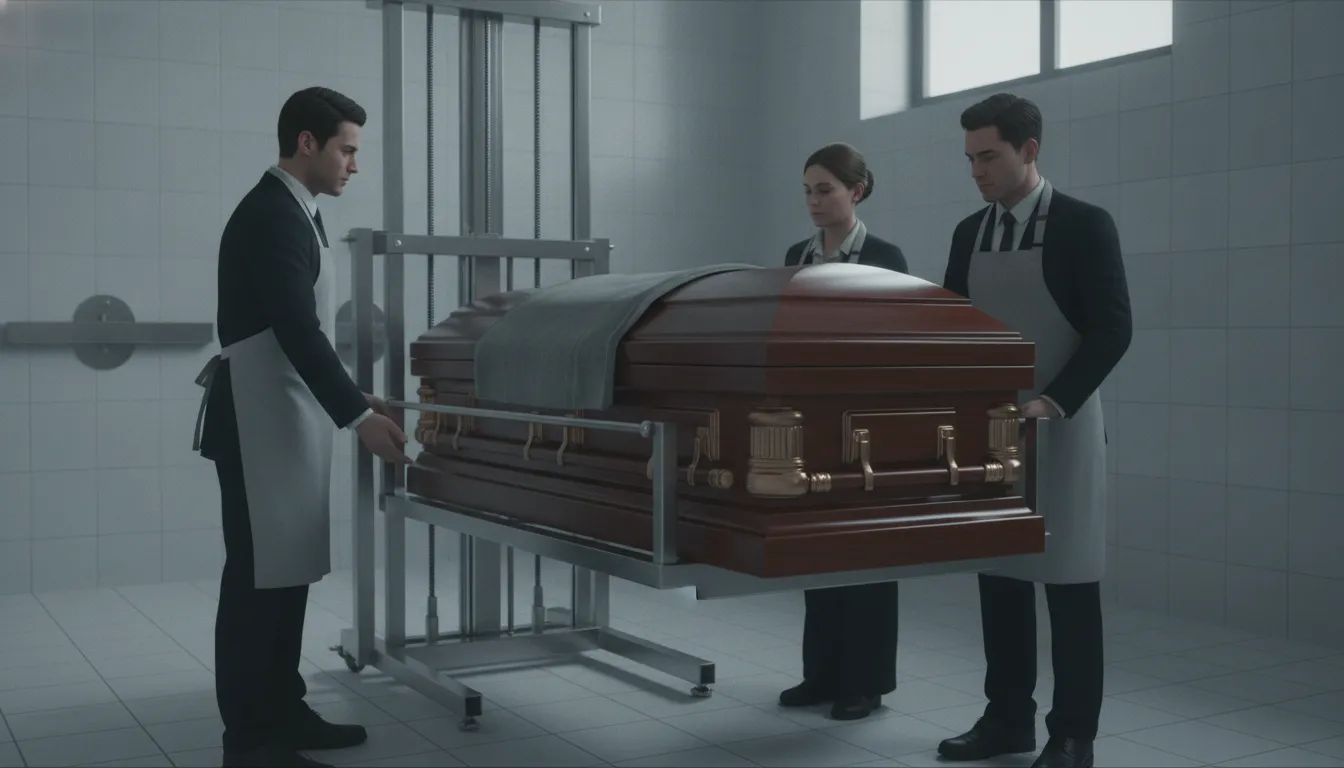
Electric vs. Manual Casket Lifts: Key Differences
Choosing between an electric and a manual casket lift depends on your building’s volume, weight needs, and layout. Electric models offer easy push-button controls and precise height, while manual systems give safe lifting without any wires.
Power Sources and Lifting Mechanisms
Every funeral home must manage heavy loads safely. A casket lift helps staff move bodies and heavy boxes without strain. Electric lifts use battery power. Many top models use a 12V AGM battery. They come with built-in smart chargers. Staff just push a button to raise or lower the load. This makes lifting smooth and steady.
Manual lifts do not need a plug. They use foot pumps or hand jacks. These are hydraulic tools. You pump a foot pedal to raise the platform. This takes some leg work, but it is simple. The systems have fewer parts to break down. They work well even when the power goes out.
Lifting Capacity and Platform Dimensions
Lifts come in different weight ranges. A standard battery lift, like the Presto XBP68-05, carries up to 500 pounds. It has a lift range of 14.5 to 82.5 inches. This high reach is great for three-tier wall racks. The platform size is 30 by 74 inches. It works well in most casket rooms.
If you handle larger cases, you need a heavy-duty unit. A heavy-duty battery lift table can carry up to 1,200 pounds. These tables have a lift height of 65 inches and a load height of 20 inches. The platform is 28 by 70 inches. For general work, you can also buy a manual hydraulic casket lift. Most of these models hold about 1,000 pounds. They help balance weight and cost for smaller spaces.
How to Map Power Types to Facilities
How do you know which style fits your space? Think about your daily volume. High-volume funeral homes do well with battery power. Staff can lift heavy caskets all day with less strain. Also, electric lifts are best for high storage racks because they reach higher.
Smaller funeral homes can save money with manual lifts. A standard 1,000-pound scissor lift is a rugged tool. It is perfect for ground-level prep work. To move caskets around, you can also use simple casket transport equipment. If you only need to lift caskets a few inches off the floor, you can buy a low-cost casket jack set. These sets cost around 221 dollars and do not take up much space. Always match the tool to your room size and weight needs.
| Feature | Electric & Battery Lifts | Manual & Hydraulic Lifts |
|---|---|---|
| Power Source | 12V AGM or DC battery with smart charger | Manual foot pump or hydraulic fluid system |
| Typical Capacity | 500 lbs (standard) up to 1,200 lbs (heavy-duty) | 1,000 lbs (standard scissor lift styles) |
| Lift Range | 14.5 to 82.5 inches (standard) or 65 inches (heavy-duty) | Up to 65 inches (typical scissor lift range) |
| Platform Size | 30 by 74 inches (standard) or 28 by 70 inches (heavy-duty) | Varies by model (standard scissor size) |
| Best-Fit Use Case | Multi-level racks, heavy cases, high-volume spaces | Ground-level transport, low-volume facilities |
| Maintenance | Battery charging and electrical circuit checks | Simple seal checks and fluid top-offs |
| Cost Considerations | Higher initial cost ($3,204 to $7,390 range) | Budget-friendly ($1,345 to $4,579 range) |
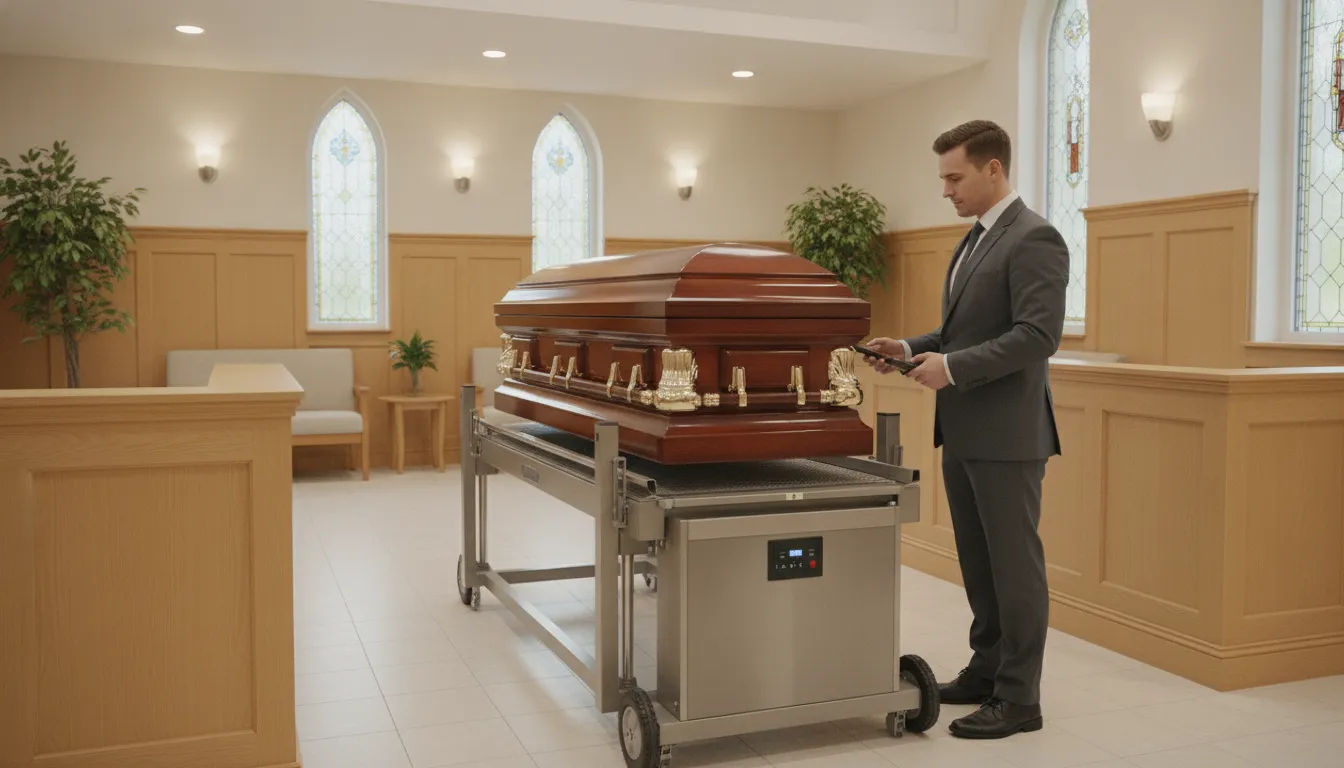
How to Choose the Right Casket Lift Capacity and Configuration
Choosing the right casket lift means matching your building layout with weight needs to ensure long-term safety. You must select a setup that fits your floor plan. This setup should carry the heaviest loads your team will move. Taking time to check your floor space and your daily load needs before buying will prevent costly setup mistakes.
Four Key Lift Configurations
Your building layout dictates the lift setup you need. Many funeral homes need compact lifts that can work smoothly in tight spaces without risking safety. For a proper fit, you must select your casket transport equipment based on the architectural layout of your building. Lifts generally come in four physical setups:
- Straight-through: This setup lets you load from one side and unload from the opposite side.
- 90-degree: This shape lets you turn the casket as it moves up, which works well in corners.
- Enter and exit same side: This setup uses a single opening to load and unload on the same level.
- Three-opening: This shape lets you access the lift platform from three different directions.
Weight Capacity Sizing Guide
Weight limits are a main focus for funeral directors who value durable and reliable gear. If a lift fails under a heavy load, it risks staff safety. It also risks the dignity of the deceased.
When you plan for capacity, count the weight of the casket, the deceased, and any flower displays or transport biers. You should always choose a lift with a limit that is above your heaviest planned load by at least twenty percent. You can choose a weight capacity that matches your service needs:
- Light-duty lifts: These models carry up to 500 pounds and work well for standard casket rooms.
- Medium-duty lifts: These scissor lifts carry up to one thousand pounds and use hydraulic power for regular work.
- Heavy-duty lift tables: These systems support up to twelve hundred pounds to handle oversized caskets and heavy burial vaults.
Hoistway and Enclosure Rules
When you set up a lift in your building, you must follow local safety laws. According to state hoistway rules, any lift that serves only one floor with under fifteen feet of travel may use a hinged cover.
This cover must open and close on its own as the lift moves. It also needs a key-operated switch at the landing to prevent accidents. Above all, the hoistway cover must be made of strong wood or steel that can support at least one thousand pounds.
Casket Lifts and Transfer Equipment for Coroners and Removal Teams
Casket lifts and heavy transfer tools are not just for funeral homes. Coroner and field removal teams face tough lifting tasks every day in the field. While a standard casket lift serves buildings with several floors, scene removals need highly mobile tools. These teams need gear that can go anywhere and handle rough paths. Staff safety and transport speed are both key during these field tasks.
Distinct needs for scene removals
Funeral homes work in neat, flat spaces, but field teams work in tight or dirty spots. Coroners and forensic teams must move bodies from car crashes, woods, or old homes. They cannot use fixed lifts that stay in one room. Instead, they need mobile tools that can load and unload quickly. This work needs tools that can handle water, dirt, and heavy weights without breaking.
Easy cleaning is a big deal for forensic teams. Blood and dirt must wash off fast to keep things safe. Most field gear uses stainless steel or heavy plastic that resists strong soap. You can check our forensic equipment checklist for coroners and removal teams to see how to pick these cleanable surfaces. Field gear must also stand up to heavy daily use in wet or cold weather.
Essential field transport gear
Several types of mobile gear help field teams do their jobs safely. For scene removals, special removal equipment category items are needed tools. In fact, transport carts are a key tool for body removal and transport from the site of death to the funeral home. These mobile carts let one or two workers move heavy loads with ease.
The main tools in this field lineup include:
- Heavy-duty cot: A rolling cot that can change height to load into vans.
- Folding stretcher: A light, strong tool for carrying people up or down stairs.
- Cadaver trolley: A rolling table with a cover to move bodies inside the shop.
- Body bags: Leak-proof bags that protect the team and keep the scene clean.
Maintaining load and vessel integrity
When moving a heavy body or a casket, smooth motion is key. Rough bumps can hurt the worker or damage the load. Heavy-duty casket transporters handle heavy loads with smooth steady movement to preserve casket integrity during transit. This steady ride protects the vessel and keeps the work dignified. Using the right wheels and locks ensures the load does not slide on steep ramps or wet floors. Well-made carts make sure that transport is safe from start to end.
What to Look for Before You Buy a Casket Lift
When buying a casket lift, you must check your site layout, lift limits, and local safety rules. Making these checks first keeps your team safe and helps you run your home with dignity.
Heavy gear can help your staff avoid strain and work fast. But each building is unique, so you need to plan carefully before you buy. If you want to know more about these systems, read our guide on casket lifts and biers first. This background will help you see how lifts and transport carts fit into your layout.
Site layout and weight limits
Casket transport gear must fit the exact layout of your home. You will need to check the space between floors and look at the path the unit will take. It is also key to check the weight limits for the caskets you move. Most lifts handle a range from 500 to 1,200 pounds, so find a limit that meets your needs.
Pre-purchase checklist steps
A step-by-step checklist will guide your purchase. Use this guide to check your site and pick the best lift for your team. This planning keeps your work safe and simple.
- Check your building layout. High-quality lifts are vital for modern building care. Measure your door frames and halls to ensure a clear path.
- Select the proper load limit. Size your lift weight limit to match your heaviest loads. A typical range runs from 500 to 1,200 pounds to keep your team safe.
- Pick your power source. Decide if an electric or battery unit fits your goals better than manual hydraulic power. Power lifts save on labor.
- Verify state safety codes. Ensure your system meets local safety rules. Massachusetts requires covers that hold at least 1,000 pounds, as shown in the Massachusetts lift rules.
- Plan your floor space. Measure your platform size to make sure it fits your casket room. Check the footprint so the lift does not block busy paths.
- Look for safety features. Look for features like safety locks and smooth braking in product specs. These features protect your staff and caskets from harm.
- Check the warranty and support. Check upkeep plans and maker warranties rather than just the price. You can view casket lifts in our online catalog to get started.
Frequently Asked Questions
What are the benefits of using a casket lift?
A casket lift reduces the physical strain on your staff when moving heavy caskets between levels or floors. Under Washington law RCW 70.87.010, a casket lift is defined as a vertical lift made only for carrying caskets. Using one improves daily work speed, prevents staff injuries, and ensures the deceased are handled with the utmost dignity. It also helps your business make the best use of multi-floor layouts.
How do you choose the right casket lift for your facility?
To choose the right casket lift, look at your building layout, weight needs, and power type. Make sure you check local rules. For example, Massachusetts laws say hoistway covers must support at least 1,000 pounds under state rule 524 CMR 31.02. You must also choose between manual hydraulic lifts for smaller budgets or electric models for high-volume work. Matching the lift to your room layout prevents costly setup and safety issues.
Are casket lifts required by OSHA?
OSHA does not have a specific rule that requires casket lifts in funeral homes. However, OSHA enforces safety rules to protect workers from back strain and other heavy lifting injuries. Using a casket lift helps your business meet these safety standards by reducing manual lifting. Buying proper transport tools is a smart way to prevent workplace injuries and keep your staff safe.
What weight capacity does a casket lift support?
Most professional casket lifts support weights from 500 pounds up to 1,200 pounds. Heavy-duty lift tables can lift up to 1,200 pounds, while smaller electric models often carry about 500 pounds. You should choose a model with a weight limit that is higher than your heaviest load to keep your staff and facility safe.
Ready to Find the Best Casket Lift for Your Funeral Home?
Using old, worn transport tools puts your staff at daily risk of painful back strains and other bad injuries. Waiting too long to replace weak lifts can lead to costly downtime and damage your standing for providing dignified care. Upgrading to new heavy gear today ensures that your daily work tasks always run safely, smoothly, and without any sudden delays. By choosing stronger, safer lifts now, you protect your team and maintain the highest possible standards of care in your facility.
Ready to contact our team? Please contact Vischer Funeral Supplies to talk with our skilled gear experts about finding the right casket lift for your funeral home.