
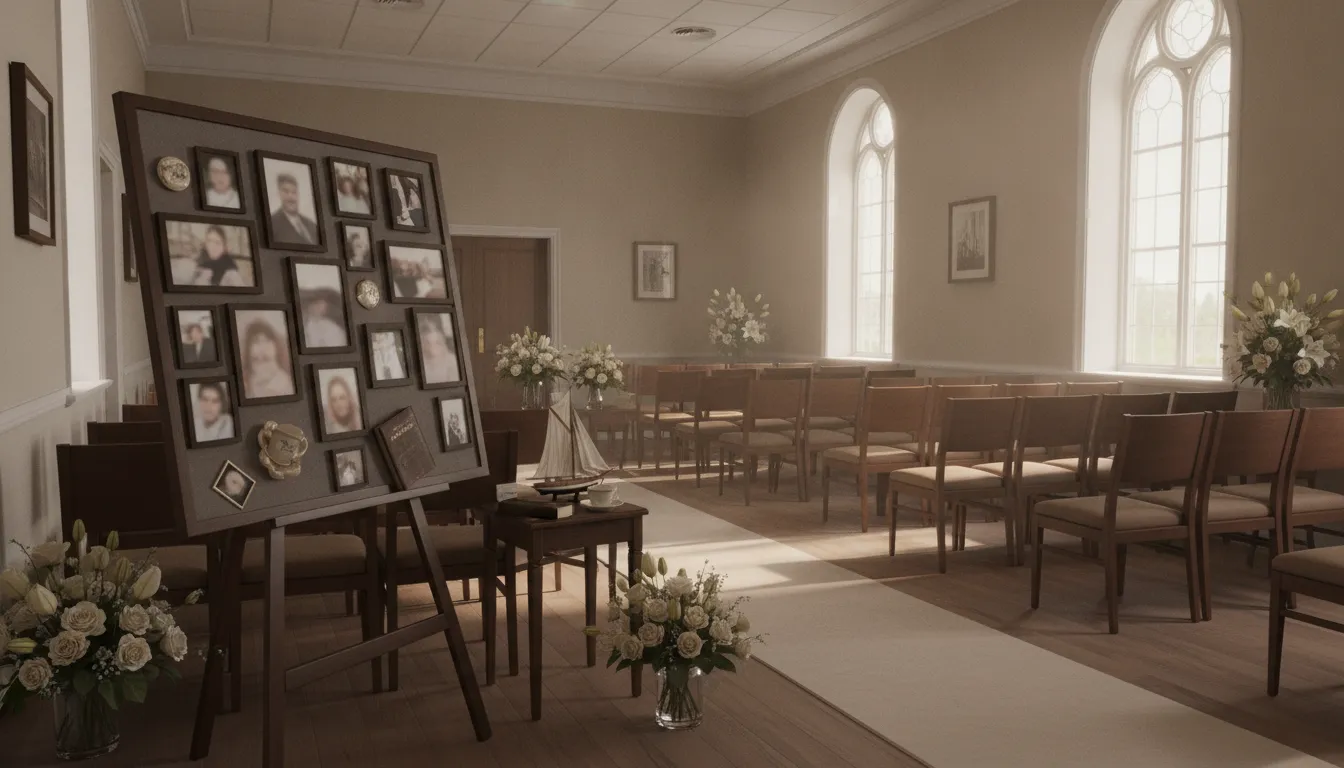
Celebration of life decoration ideas can help a funeral home create a personal, welcoming setting without making the room feel crowded or staged. For funeral home teams, the best displays connect photographs, keepsakes, flowers, signage, and service details to the family’s wishes while preserving clear paths and a calm presentation.
Contact Vischer for funeral-home display supply guidance
A strong celebration-of-life display uses a few intentional tribute zones, such as a memory board, photo grouping, keepsake area, floral accent, and welcome point. Each zone should be easy to see, stable, accessible, and simple for staff to explain and reset.
This guide focuses on room-wide presentation for funeral home operators. It complements, rather than replaces, a table-specific setup plan. Begin with the family’s story and preferences, then use the room’s entry, seating, display, and circulation areas to guide the arrangement.
What Should a Celebration-of-Life Display Accomplish?
A celebration-of-life display should help guests recognize the person being remembered, understand how to participate, and move comfortably through the service space. It should feel personal because it reflects the family’s choices, not because every available decoration has been placed in the room.
Before selecting items, ask the arranging family what they want guests to notice first. Their answer may be a collection of photographs, a favorite hobby, a military or professional life, a faith tradition, or a particular color and floral style. Confirm which personal belongings may be displayed, which items need special care, and whether any symbols or practices should be included or omitted.
For staff, the objective is also operational. A display needs a clear owner, a known setup sequence, and a safe location for items before and after the service. Photograph the approved arrangement for internal reference when appropriate, label reusable funeral-home supplies, and keep family belongings separate from inventory. These simple steps reduce confusion during a busy service schedule.
| Display zone | Purpose | Planning check |
|---|---|---|
| Welcome point | Orients guests and communicates where to enter, sign, or gather. | Keep it visible from the entrance without narrowing the approach. |
| Memory board or photo wall | Shares important moments, relationships, places, and interests. | Use stable supports and arrange images at comfortable viewing heights. |
| Keepsake area | Gives physical context to a vocation, hobby, service, or family tradition. | Display only approved items and protect fragile or valuable belongings. |
| Floral or symbolic accent | Adds color, texture, or a meaningful visual focus. | Coordinate with the room and keep sightlines open. |
| Service information point | Helps guests find programs, cards, seating, or reception details. | Use concise wording and place information where guests naturally pause. |
How Can Teams Build Meaningful Memory Boards and Photo Displays?
Build a memory board or photo display around a clear story rather than a random collection of images. Select photographs and keepsakes with the family, group them by life stage or theme, and use a stable display system that lets guests see each item without touching or moving the arrangement.
Ask for a manageable selection of photographs first. Images may show family relationships, work, service, travel, hobbies, pets, or everyday moments. The goal is not to show every photograph available. A curated group with enough space around each image is easier to view and gives guests room to pause.
When using a board, easel, or freestanding display, inspect the support before the service. Check that the base is level, the frame is secure, and the display does not rock when approached from the side. Place larger images toward the center or upper portion only when they remain visible to guests of different heights. Avoid arrangements that force visitors to lean into a walkway.
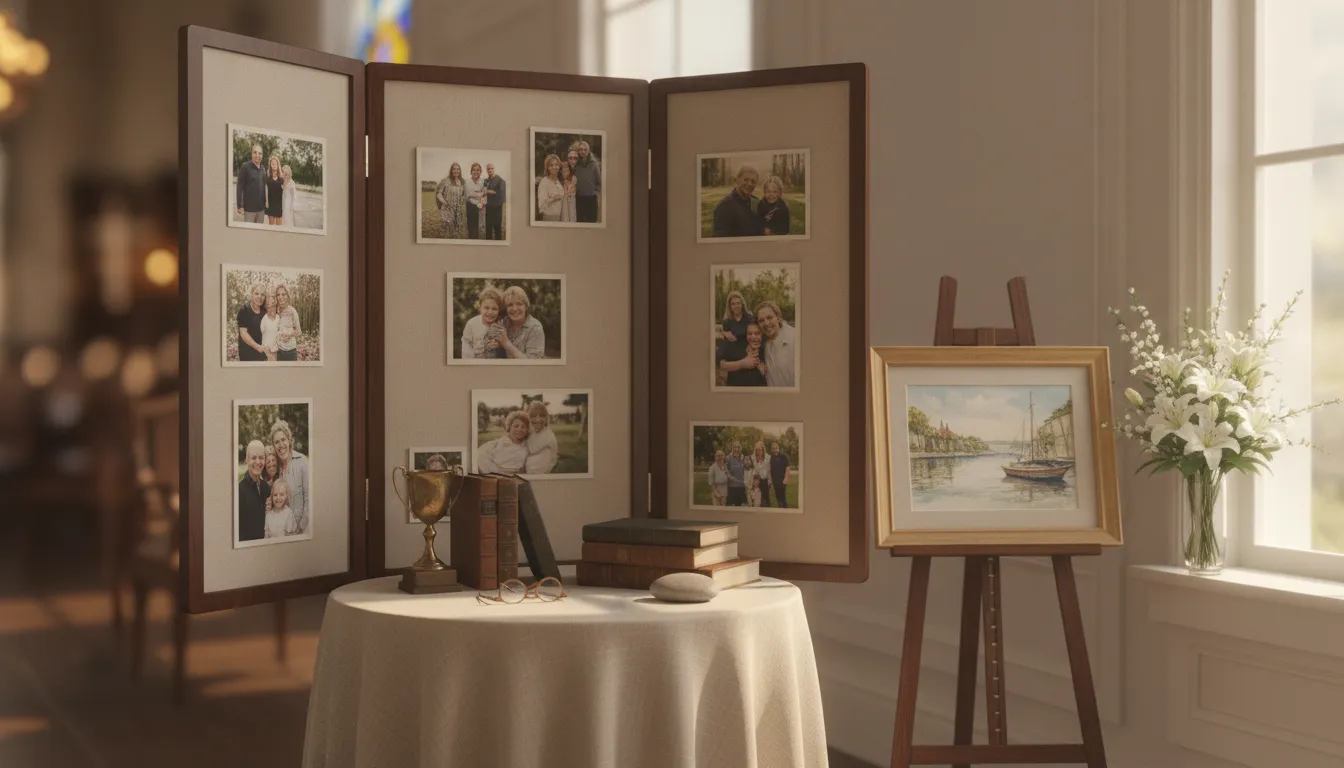
Personal objects can make a display more specific, but they also require more care. Confirm whether the family wants sports items, uniforms, books, tools, artwork, awards, or other belongings included. Keep valuable or delicate pieces in a controlled location and decide who will return them after the service. If an item needs a stand, case, or elevated support, test the setup before the room opens.
Vischer’s funeral chapel accessories guide can help teams think through display supports, ceremonial details, and flexible room preparation. For books and guest materials, the memorial register book and stationery guide provides a related planning resource.
Which Signage and Wayfinding Details Help Guests?
Use signage to answer practical questions quietly: Where should guests enter? Where is the service room? Where can they leave a message? What happens after the service? Signs should support the family’s plan and the facility’s flow without turning a memorial setting into an event venue.
- Place a welcome sign where it can be seen before guests reach the main display.
- Use directional signs only where the building layout makes navigation unclear.
- Keep wording short, high contrast, and easy to read from a standing approach.
- Use consistent sizes, stands, and placement so the room feels coordinated.
- Remove temporary signs promptly after the service and return reusable holders to storage.
Review signs from the entrance, the seating area, and the path to restrooms or a reception space. Make sure a sign does not block a photograph, reduce the width of an aisle, or create a trip hazard. If the family has approved a quote, phrase, organization name, or service detail, verify the spelling before printing or displaying it. Do not infer religious language, military affiliations, or personal titles without confirmation.
How Should Funeral Homes Arrange Flowers and Tribute Zones?
Arrange flowers and tribute zones so each has a defined purpose and the room remains visually balanced. A floral accent can frame a memory board, mark a welcome point, or reinforce a preferred color palette, but it should not hide photographs, block a sign, or make a pathway harder to use.
Start by mapping the room into zones. Keep the main entrance and service aisle open. Place the largest visual element where guests can see it without crossing through the service flow. Smaller keepsakes and photographs can support that focal point, while flowers provide a side accent rather than competing with the family’s selected memories.
Use suitable stands and supports for larger arrangements. Vischer’s funeral floral display setup guidance offers a related reference for positioning floral displays and managing presentation equipment. If a casket, urn, or other ceremonial focal point is present, coordinate the surrounding tribute zones so guests can see the primary element first.
Water, stems, containers, and loose greenery deserve a final check before guests arrive. Keep moisture away from electrical equipment, paper materials, and walking surfaces. If candles or powered lighting are part of the family’s plan, follow facility policy and assign staff responsibility for inspection and removal. An attractive display is never a reason to compromise safe movement or the protection of personal belongings.
Talk with Vischer about practical funeral-home display options
How Can Teams Plan Accessibility and Service Flow?
Plan accessibility into the display from the beginning, not as a final adjustment. Guests should be able to enter, view meaningful items, reach approved materials, sit, and leave without navigating around decorative obstacles or asking staff to move the arrangement.
- Walk the route. Follow the path from the entrance to seating, the memory display, the service area, and the exit. Look for narrow points created by easels, flower stands, chairs, or signs.
- Check more than one viewing height. Review the display while standing and seated. Make sure meaningful images and information are not visible only from one position.
- Preserve turning and approach space. Leave enough open area for guests using mobility devices, guests with children, and staff carrying service materials.
- Reduce glare and visual clutter. Adjust reflective frames, lighting, and sign placement so guests can read information without stepping into the path.
- Explain the arrangement to the team. Before doors open, identify the welcome point, approved personal items, guest materials, and any boundaries around the display.
Chapel furniture is part of this planning decision. Compare the display footprint with the room’s chairs, tables, register stand, and existing ceremonial equipment. Vischer’s funeral home furniture buying guide can support broader facility planning without treating a celebration-of-life display as a separate decorative project.
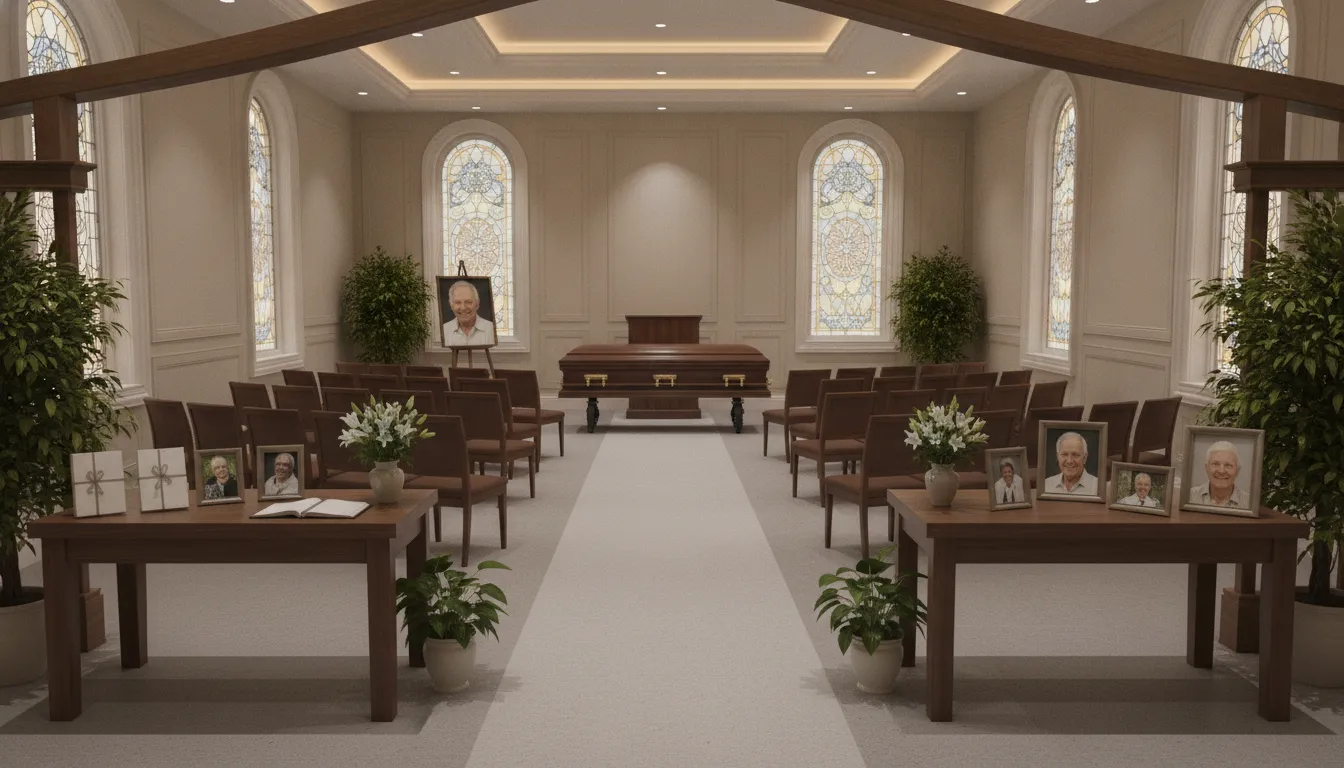
What Should Staff Check Before and After the Service?
A short checklist protects the display, the room, and the family’s belongings. Complete it before guests arrive, then repeat the return process after the service so the next team member can understand what remains to be done.
- Confirm the family-approved layout and the location of every personal item.
- Check that boards, easels, stands, frames, signs, and containers are stable.
- Confirm that entrances, aisles, seating approaches, and exits remain clear.
- Inspect flowers, water, cords, lighting, and paper materials for spills or damage.
- Review sign wording and make sure service information is current.
- Assign responsibility for collecting family belongings and reusable funeral-home supplies.
- Record missing, damaged, stained, or worn items before returning equipment to storage.
Handle family-owned belongings first during breakdown. Place them in a designated handoff area and confirm the return plan. Then sort reusable display pieces by type. If the team uses a photo of the approved setup for internal reference, store it according to the funeral home’s privacy and recordkeeping practices.
Frequently Asked Questions
How do you decorate for a celebration of life at a funeral home?
Start with the family’s wishes, then create a few intentional zones for photographs, keepsakes, flowers, welcome information, and service materials. Use stable supports, concise signs, and clear paths. Keep the display personal and readable rather than filling the room with unrelated decorations.
What are some unique celebration of life decoration ideas?
Consider a photo wall organized around a life chapter, a hobby or vocation display, a travel or place-based memory area, a carefully selected collection of awards or artwork, or a welcome point that reflects a meaningful color or tradition. Confirm each idea with the family before collecting personal items.
What is a good display for a celebration of life?
A good display has one clear focal point and several supporting elements that guests can understand quickly. A memory board or photo grouping can anchor the room, with keepsakes, flowers, and service information placed nearby. The arrangement should remain stable, accessible, and easy for staff to explain.
How can a funeral home keep a celebration-of-life display respectful?
Let the family’s approved choices guide the presentation, avoid assumptions about culture or faith, and use restraint in color, quantity, and placement. Protect personal belongings, keep walkways clear, and make sure decorative elements support the person’s story instead of competing with it.
Plan a Thoughtful Celebration-of-Life Setting
The most effective celebration-of-life decoration ideas give families room to tell a meaningful story while giving staff a dependable way to prepare the room. When memory boards, photographs, keepsakes, flowers, signage, and accessibility are planned together, the result can feel personal, organized, and ready for guests.
Contact Vischer to plan funeral-home display supplies
Use the family’s approved plan as the final reference for every display decision, and give staff enough time to complete the room check before guests arrive.