
Choosing cremation equipment is a facility decision, not simply a matter of comparing chamber dimensions. The right system must fit expected case volume, loading and processing practices, available utilities, emissions controls, and maintenance access.
It must also fit the requirements of the authority having jurisdiction. A realistic support plan should cover training, replacement parts, service, and future growth.
Call 800-752-8767 to discuss cremator options with Vischer.
A cremator is the combustion system used to process human remains in a professional crematory, but selecting one requires evaluating the complete operating environment around it. Capacity, workflow, emissions documentation, site readiness, permitting, and manufacturer support should all be confirmed before purchase.
This guide focuses on the questions that help funeral home and crematory decision makers compare equipment responsibly. It begins with the system’s role in a professional facility, then connects that function to capacity planning, compliance, installation, ownership, and final due diligence.
What Does a Cremator Do in a Professional Facility?
A cremator is the furnace or combustion unit used to process human remains. It is one part of a larger crematory operation that also includes loading, controls, exhaust, cooling, processing, identification, records, and operator safety.
In everyday conversation, people sometimes use cremator, crematory, and cremation equipment as though they mean the same thing. They do not. A cremator is the equipment itself. A crematory is the facility where cremation takes place. The surrounding equipment and building systems determine whether the unit can be installed, operated, maintained, and documented responsibly.
That distinction matters when a funeral home or crematory begins a purchase. A specification sheet can describe the chamber, controls, dimensions, and rated capacity. It cannot, by itself, confirm that the unit fits the proposed building, matches the facility’s case mix, or satisfies the requirements of the authority having jurisdiction.
A complete evaluation should consider:
- Expected case volume, case weights, dimensions, and specialized cases.
- Loading, cooling, processing, identification, cleaning, and handoff procedures.
- Fuel, electrical, exhaust, ventilation, access, clearances, and other site conditions.
- Emissions monitoring, operating records, testing, and permitting responsibilities.
- Training, maintenance access, replacement parts, warranty terms, and service response.
Emissions are part of this distinction. The U.S. Environmental Protection Agency identifies multiple emissions associated with human cremation, including particulate matter, sulfur dioxide, nitrogen oxides, volatile organic compounds, carbon monoxide, and hazardous air pollutants. The EPA also identifies mercury as a concern. Those facts do not establish one universal equipment configuration or guarantee compliance for every site.
This article is intentionally narrower than Vischer’s general cremation equipment buying guide. The broader guide introduces retorts, furnaces, and related equipment. This guide concentrates on the questions a buyer should resolve before selecting and ordering a cremator.
Vischer Funeral Supplies is an authorized Champion cremation equipment distributor. Our cremation equipment catalog is a starting point for reviewing available equipment and beginning a model-specific conversation. Final fit, installation, permitting, and operating requirements should be confirmed with Champion, the installer, and the applicable authority having jurisdiction.
How Should You Match Capacity to Your Workflow?
Match capacity to your actual case mix and operating schedule, not to a headline rating. The right comparison includes loading, cooling, processing, staffing, identification, and growth plans.
Start with the work your facility expects to perform. Record current case volume, seasonal changes, case weights, container dimensions, and any specialized cases that require different handling. If the crematory is new, document the assumptions behind the forecast. A projected number without a workflow model can lead to equipment that is difficult to load, inefficient to schedule, or poorly matched to the staff available.
Next, separate three ideas that are often blended together:
- Chamber capacity: the cases and containers the manufacturer says the unit can accommodate.
- Cycle or processing time: the time associated with a particular operating condition and case.
- Facility throughput: what the whole operation can complete after loading, cooling, processing, cleaning, documentation, and handoff.
Published specifications are useful, but they must be read as model-specific information. One competitor lists the CFS 3000 for higher-volume crematories, with a stated capacity above 1,000 pounds and a 250-pound-per-hour rate. Those figures describe that model’s published specification. They are not a universal benchmark for every cremator, and they should be confirmed with the manufacturer for the proposed application.
Workflow fit also depends on people and movement. Map the path from arrival and identification through loading, cremation, cooling, processing, containerization, records, and release. Note where staff members stand, how equipment is moved, and where heat, ash, tools, and protective equipment are handled. A high-capacity unit may not be the best choice if its loading method creates a bottleneck or requires changes the facility cannot support.
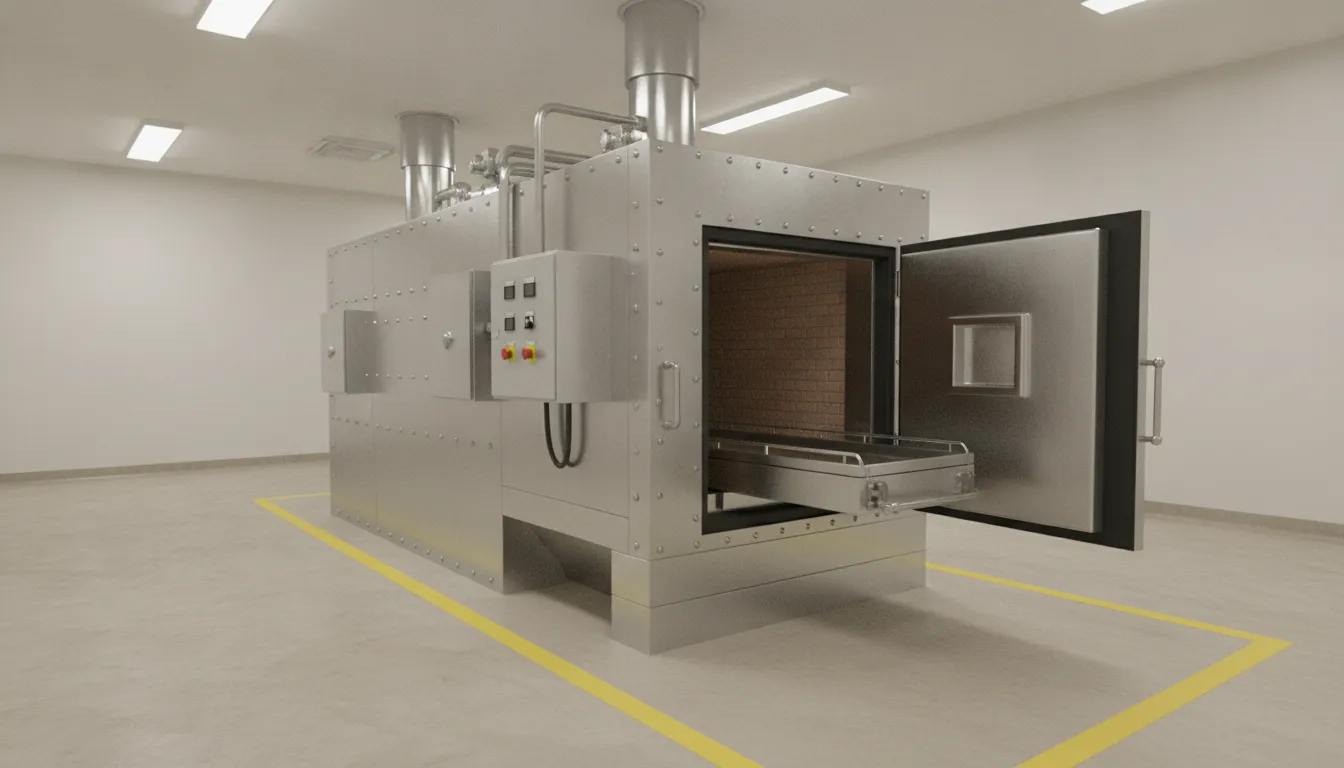
Ask the supplier and installer to address:
- Which case weights and dimensions are included in the stated rating?
- What assumptions support the cycle time or throughput statement?
- How are loading, cooling, ash processing, and identification separated in the workflow?
- What staffing and operator training does the proposed workflow assume?
- Can the layout accommodate expected growth without compromising safe movement?
Related handling decisions deserve the same care. Vischer’s transport equipment guide provides adjacent planning context for moving caskets and related loads through a facility. Keep that movement plan connected to the cremator proposal rather than treating the unit as an isolated purchase.
Which Emissions Controls and Permits Matter?
Emissions compliance is site-specific. Buyers should review the proposed combustion and monitoring system, then confirm permit, testing, recordkeeping, and operating requirements with the manufacturer, qualified installer, and applicable air authority.
A cremator should be evaluated as an emissions-producing process, not only as a heated chamber. The EPA identifies particulate matter, sulfur dioxide, nitrogen oxides, volatile organic compounds, carbon monoxide, hazardous air pollutants, and mercury among the emissions associated with human cremation. Mercury is especially important to discuss because the EPA identifies dental fillings, blood, and tissues as potential sources.
The practical buying question is not whether a brochure uses the phrase low emission. Ask how the proposed system handles combustion, temperature, air movement, exhaust, and monitoring. A primary chamber and a secondary combustion stage may be described in different ways by different manufacturers. Review the actual design, operating limits, control logic, and documentation for the model under consideration.
Monitoring can also vary. One published competitor specification describes an opacity sensor used to monitor emissions and support its stated EPA requirements. Treat that as a model-specific feature description, not as proof that any unit will meet every requirement at every location. The EPA cautions that results from one cremation facility or test program should not automatically characterize other facilities without further study.
Before ordering, build a compliance file that answers:
- Which local, state, or regional authority reviews the proposed installation?
- Does the authority require a permit, registration, notification, testing, or operating records?
- Which emissions assumptions and performance documents will the manufacturer provide?
- What monitoring, maintenance, calibration, or recordkeeping does the operating plan require?
- Who is responsible for submitting documents and responding to authority questions?
Do not rely on a national summary to replace local review. The EPA’s national emissions inventory is useful context, but it does not issue a permit for a specific facility. Ask the authority having jurisdiction for current requirements before finalizing the equipment, exhaust route, building plans, or operating schedule. This early step can prevent a technically suitable unit from becoming a poor fit for the proposed site.
Keep worker protection in the same planning conversation. Vischer’s guide to funeral home PPE requirements can support a broader review of protective equipment and workplace procedures. It should complement, not replace, the manufacturer’s operating instructions and the facility’s regulatory program.
Facility Requirements Before You Order
Confirm the building, utilities, exhaust path, loading route, clearances, and safety plan before approving a cremator. A qualified installer should review the site against the exact model drawings.
Facility planning starts with the proposed unit’s dimensioned drawings. Review overall height and length, door opening, service access, clearances, foundation or support requirements, and the route used to deliver the equipment. A published CFS 3000 specification lists a height of 8 feet 10 inches. It lists a length of 15 feet 1 inch and a door opening of 54 inches wide by 31 inches tall. Those are model-specific figures. They should never be treated as standard dimensions for all cremators.
Before you compare final proposals, walk the installation path from the delivery point to the operating room. Measure turns, doorways, floor transitions, overhead obstructions, and the space needed for staging. Then confirm where operators will load, observe controls, move cooled material, process remains, clean the area, and store tools and protective equipment.
Ask the installer to document the following items:
- Exact equipment dimensions, door opening, service clearances, and maintenance access.
- Electrical, fuel, ventilation, exhaust, and other utility requirements for the selected model.
- Foundation, floor loading, heat management, drainage, and building modifications.
- Loading equipment, movement routes, cooling and processing space, and identification controls.
- Delivery access, rigging, commissioning, operator training, and responsibility for each task.
Do not assume that an existing preparation room or utility connection will support a cremator. The building’s power, fuel, ventilation, exhaust, and structural conditions must be checked against the manufacturer’s requirements and local approvals. The exhaust route deserves particular attention because it affects both the physical design and the emissions review.
A site survey should produce more than a verbal recommendation. Request a written list of assumptions, drawings, required modifications, and open questions. If the facility is being renovated, coordinate the equipment proposal with the architect, mechanical and electrical professionals, installer, and authority having jurisdiction. Vischer’s resource on prep room layout requirements offers related planning context, although a cremator installation still requires model-specific technical review.
The goal is not to make a room appear large enough. It is to confirm that the full operating sequence can be performed safely and maintained over time. Resolve these details before purchase documents are final, when changes are easier to make and responsibilities are clearer.
How Do You Evaluate Service and Total Ownership?
Total ownership includes maintenance access, refractory and hearth wear, replacement parts, training, documentation, warranty terms, and the process for getting help. Compare the support plan as carefully as the equipment specification.
A cremator is a major operational system. Its value depends on how reliably the facility can operate it, inspect it, maintain it, and return it to service when a component needs attention. Ask what parts wear during normal use, what maintenance can be completed by trained facility staff, and what work requires an authorized technician or qualified contractor.
Refractory and hearth design deserve specific questions. A competitor describes a refractory lining that combines firebrick, precast refractory shapes, and ceramic fiber insulation. The same source describes quick-change hearth tiles intended to reduce downtime, including a stated one-day hearth repair under its described system. These are published features of that model and should be evaluated against the actual warranty, parts availability, labor requirements, and operating conditions in your proposal.
Request a support file that includes:
- Recommended inspection, cleaning, preventive maintenance, and calibration intervals.
- Parts that should be stocked on site and the process for ordering replacements.
- Training scope for operators, supervisors, maintenance staff, and new employees.
- Warranty terms, exclusions, response process, travel assumptions, and documentation.
- Commissioning records, operating manuals, diagrams, and troubleshooting procedures.
Service support should also be tested before the purchase. Ask who receives a technical question, what information must be supplied, how service needs are prioritized, and how the facility should operate safely while waiting for a repair. Avoid accepting a general promise of support without a written description of responsibilities.
Vischer’s customer guidance emphasizes needs assessment around facility size, operating volume, current equipment, budget, growth projections, and regulatory requirements. The company is a family-owned distributor serving funeral professionals nationwide and has provided funeral industry supplies since 1983. That background supports a consultative conversation, but it does not replace model-specific manufacturer documentation or an installer’s technical review.
Compare lifecycle value rather than simply choosing the lowest initial proposal. A useful review considers planned maintenance, downtime exposure, training, parts, utility needs, documentation, and future facility changes. The best fit is the option your team can operate responsibly and support after installation.
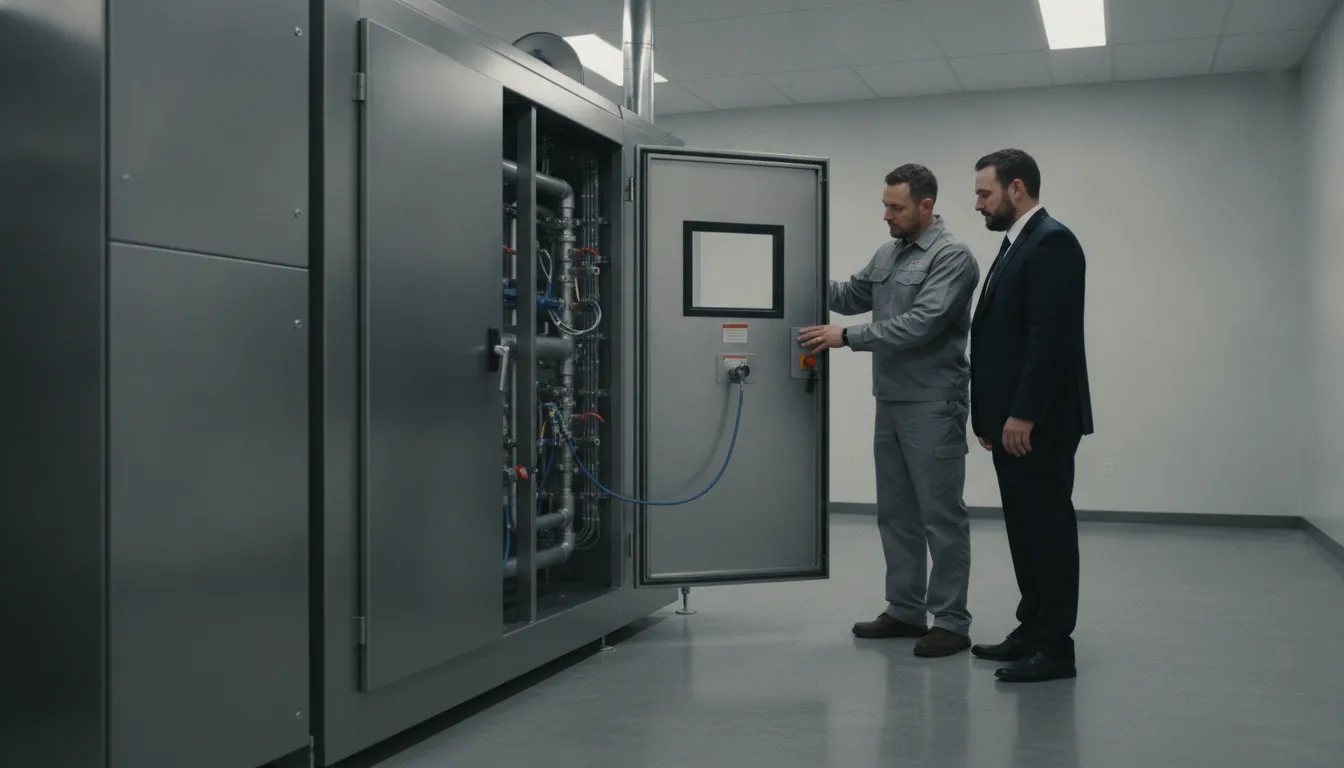
A Practical Cremator Comparison Checklist
The right cremator is the one that fits your expected case mix, operating workflow, facility, compliance path, and support plan. Compare documented evidence in each category, rather than selecting equipment from capacity or a single advertised feature alone.
Begin by putting your requirements in writing. Include current operating volume, expected growth, staffing, loading and processing steps, available space, utility options, and the records your team must maintain. A product described as high-volume or mid-size is a manufacturer classification, not a universal benchmark.
| Evaluation priority | Questions to ask | Evidence to request |
|---|---|---|
| Capacity and workflow | Does the chamber and stated capacity fit our case mix, schedule, loading method, and staffing? | Manufacturer specifications, cycle assumptions, loading requirements, and a workflow review. |
| Controls and emissions | How are primary and secondary combustion, temperature, air flow, and emissions monitored? | Control-system description, monitoring documentation, operating limits, and compliance support materials. |
| Facility fit | Will the equipment fit the building, loading path, foundation, utilities, exhaust route, and safety plan? | Dimensioned drawings, utility requirements, site-survey scope, installation responsibilities, and clearances. |
| Maintenance and support | What wears, what access is needed, and how are parts, training, and service handled? | Maintenance schedule, parts list, training terms, warranty documentation, and response process. |
| Permitting and records | Which authority reviews the installation, and what testing, operating records, or approvals apply? | Manufacturer compliance packet, site-specific permit guidance, testing requirements, and record templates. |
Use the comparison table during supplier calls and site meetings. Mark each answer as documented, pending confirmation, or outside the supplier’s scope. This keeps a persuasive feature statement from being mistaken for an approval, a permit, or a guarantee.
- Obtain written answers to unresolved capacity, utility, controls, and maintenance questions.
- Have the installer review the site before ordering and identify changes needed for delivery or operation.
- Ask the applicable authority about permits, testing, operating limits, and records before construction.
- Compare lifecycle support and documentation alongside the equipment specification.
Vischer provides consultative equipment guidance that considers facility size, operating volume, current equipment, budget, growth projections, and regulatory requirements. Ready to compare cremator options? Call 800-752-8767 today.
Frequently Asked Questions
What is a cremator?
A cremator is the combustion unit used to process human remains in a professional crematory. It is part of a broader system that includes loading, controls, exhaust, cooling, processing, identification, records, and operator safety.
How do I choose the right cremator capacity?
Start with case volume, case weights, container dimensions, specialized cases, staffing, loading, cooling, and processing steps. Compare manufacturer-rated capacity and cycle assumptions for the exact model. Do not treat one model’s published rating as a universal standard.
Will a cremator require permits?
Requirements depend on the facility’s location, design, fuel and exhaust systems, and the authority having jurisdiction. Ask the applicable air or environmental authority what approvals, testing, notifications, operating records, and permit conditions apply before ordering or building.
What emissions controls should I ask about?
Ask for a clear explanation of primary and secondary combustion, temperature and air-flow controls, monitoring, operating limits, testing documentation, and required records. The EPA identifies several pollutants associated with human cremation, including particulate matter, sulfur dioxide, nitrogen oxides, volatile organic compounds, carbon monoxide, hazardous air pollutants, and mercury. Model-specific controls still require site and jurisdiction review.
What should an installer confirm before delivery?
The installer should compare the exact model drawings with the building, loading path, clearances, foundation, utilities, exhaust route, service access, operator workflow, and safety plan. Request written assumptions and a list of required changes before approving the order.
Contact Us to Compare Cremator Options
Choosing a cremator involves more than comparing a chamber or a single capacity figure. A careful discussion can help your team organize questions around facility fit, workflow, documentation, compliance review, maintenance, and long-term support. Vischer Funeral Supplies works with funeral professionals across the United States and offers consultative guidance for equipment and supply decisions.
Contact Vischer to compare cremator options and discuss your equipment needs.