
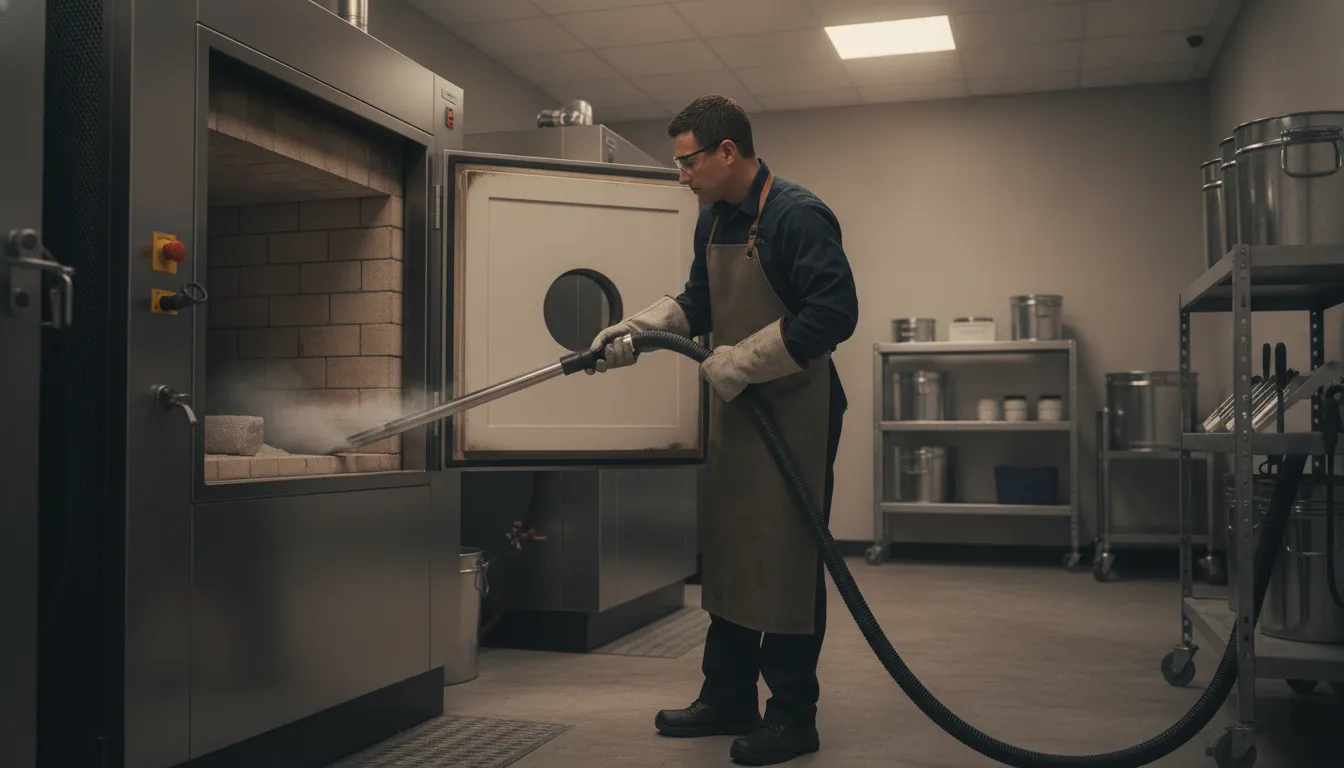
Equipment planning in a crematory is rarely about one component in isolation. The way remains are recovered, tools are handled, and daily work is scheduled can affect both operator consistency and the condition of the hearth over time.
Contact Vischer for product guidance
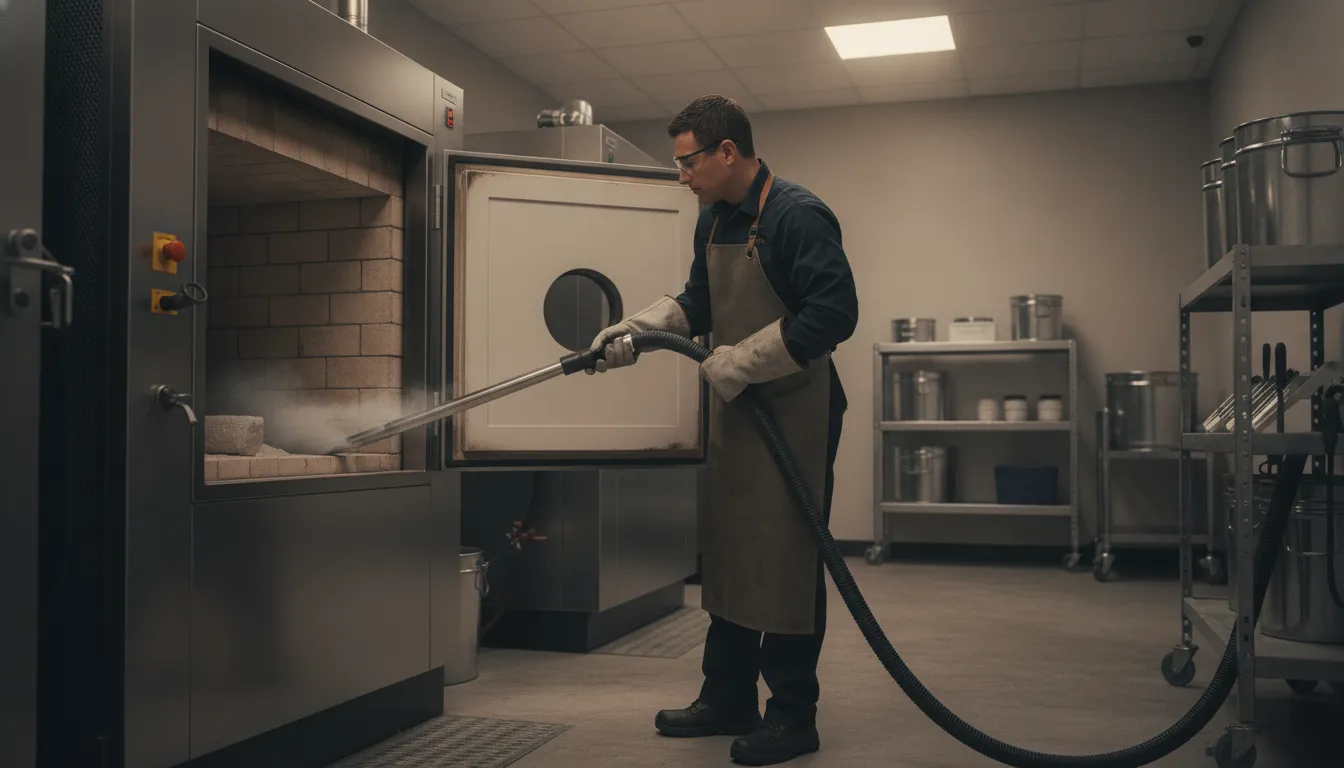
A cremation vacuum system is used during remains recovery and clean-out, after cremation, as part of a controlled approach to removing material from the hearth. The Cremation Association of North America notes that vacuum systems are preferred over cold-air blowers and emphasizes gentle handling with appropriate tools and methods. CANA’s guidance also connects advance planning with reduced fuel, labor, time, and refractory wear.
That role makes the system worth evaluating as part of the complete workflow rather than as a standalone purchase. The right questions involve where recovery occurs, how equipment and parts will be supported, what staff need to document, and how maintenance fits the facility’s operating plan.
Where does a cremation vacuum system fit in the workflow?
A cremation vacuum system is used after cremation to help recover cremated remains from the hearth during clean-out. It is a remains-recovery tool, not the cremator or retort that performs the cremation itself. Used with gentle loading, appropriate recovery methods, and a planned operating sequence, it can support cleaner handling while helping limit unnecessary abrasion to the refractory floor.
Recovery is a separate step from cremation
The cremator provides the chamber and operating environment for the cremation. Once the case is complete, the operator must recover the remains from the hearth and prepare the unit for the next part of the workflow. The vacuum system belongs in this clean-out stage. It should be evaluated as part of the complete operating process rather than as a substitute for the cremator, its controls, or its maintenance program.
This distinction matters when planning equipment. A facility may have a well-chosen cremator, but still need to examine how operators move from a completed case to remains processing. The recovery method, available tools, staff training, and the condition of the hearth all influence that handoff. A vacuum system should fit the procedures already established for the specific unit and should be used according to the applicable equipment guidance.
Why gentle recovery matters
CANA’s manufacturer contributors recommend gentle loading with rollers and the use of the right tools and methods when recovering cremated remains. The same guidance says vacuum systems are preferred over cold-air blowers for removing remains from the hearth. That does not turn a vacuum into a universal solution, and it does not replace careful operator judgment. It does establish an important planning principle: recovery should be controlled and deliberate, not treated as a rushed final task.
The reason is tied to refractory care. Refractory materials withstand the heat inside the cremator, but the hearth is also exposed to abrasion from sweeping and cleaning after each cremation. Rough handling or unsuitable methods can add avoidable wear. A gentler recovery approach supports the broader goal of protecting the working surface. Operators still need to follow the unit’s manual and the recommendations of qualified service professionals.
Plan the handoff, not just the equipment
CANA notes that a well-planned day can save fuel, labor, time, and the refractory floor. For operators, that means considering the recovery step when mapping case flow, staffing, tools, and clean-out responsibilities. The vacuum system is one component in that sequence. Review these cremation equipment planning factors alongside the cremator’s requirements, facility procedures, and long-term maintenance priorities before selecting or changing equipment.
That workflow-first approach keeps the decision grounded. The right question is not simply whether a vacuum system can be added. Ask how it will support respectful remains recovery, consistent clean-out, and careful stewardship of the cremator’s refractory surfaces.
What should operators evaluate before choosing a cremation vacuum system?
Operators should evaluate a cremation vacuum system as part of the complete remains-recovery workflow, not as an isolated appliance. The right review covers the intended task, hose and filtration path, room layout, air-management context, operator training, service support, and the records needed to maintain the equipment safely. Start with the cremator manual, site conditions, and qualified technical advice rather than assuming that one configuration suits every facility.
Begin with purpose and workflow fit. Define where the system will be used, who will operate it, what material it must handle, and how it connects to post-cremation clean-out. CANA’s installation guidance says vacuum systems are preferred over cold-air blowers for removing cremated remains from the hearth. It also emphasizes gentle handling and appropriate tools. That makes the first purchasing question practical: can the proposed equipment support the facility’s established method without encouraging rough scraping. Awkward lifting, or unnecessary movement around a hot unit?
| Evaluation area | Questions for the operator and supplier | Documentation to request |
|---|---|---|
| Purpose and handling | What recovery and clean-out tasks is the system intended to support? Does the workflow promote controlled, respectful handling of remains? | Use instructions, operating limits, and approved procedures. |
| Hose, filter, and parts path | Which hose, filter, seals, fittings, and other wear parts are required? How are they removed, cleaned, inspected, and replaced? | Parts list, compatibility information, maintenance instructions, and replacement process. |
| Facility layout | Where will the unit be stored and operated? Are hose routing, clearances, heat exposure, electrical service, access, and clean-down areas suitable? | Installation requirements, site drawings, utility needs, and access considerations. |
| Air management | How does the vacuum workflow relate to the cremator’s combustion air, draft, ventilation, and emissions-control systems? What must remain separate? | System diagrams and manufacturer guidance. Do not infer emissions performance from vacuum equipment alone. |
| People and service | What training is required for operators? Which inspections can staff perform, and when is a qualified technician required? | Training materials, service contacts, inspection steps, and escalation guidance. |
Keep air-management evidence in context. An EPA-indexed 2020 study of three crematorium ovens found that measured concentrations of several pollutants were up to seven times higher at facilities without controlled air-supply devices than at facilities with them. That evidence concerns controlled air supply and crematory emissions; it is not a performance rating for a cremation vacuum system. Ask the supplier and the responsible engineer how the complete crematory system manages combustion air, draft, ventilation, and applicable emissions requirements.
New York provides a useful example of the documentation mindset. NYSDEC recommends a site-specific inspection and maintenance program informed by manufacturers, vendors, and industry-training professionals. Its manual also identifies combustion air and draft fans among systems requiring periodic attention and notes that complex inspection or repair may require trained technicians with specialized instrumentation. Other jurisdictions may set different requirements, so confirm the rules that apply to your facility.
Finally, compare the paperwork before comparing features. A complete record should identify the model and compatible parts, explain routine checks, define operator responsibilities, and state when service must be escalated. For broader planning, review Vischer’s guide to crematory workflow and maintenance planning alongside your own layout, staffing, and maintenance records. This process keeps the purchase grounded in safe operation and long-term support.
How should vacuum equipment be integrated into crematory planning?
A cremation vacuum system should be planned as one part of the complete crematory workflow, not as an isolated purchase. Coordinate its installation with the cremator, utilities, access routes, remains-recovery process, staffing, service coverage, and backup procedures. The equipment manual, site conditions, and qualified technicians should determine model-specific requirements.
- Map the installation conditions before ordering. Confirm where the system will be positioned after a case. Document how operators will move hoses and containers, and whether doors, corridors, ceiling clearances, or floor conditions affect delivery and placement. Ask the manufacturer or installer to identify required electrical service, connections, ventilation considerations, storage space, and safe operating clearances. Do not assume that an existing crematory layout will accommodate new equipment.
- Coordinate the work with the cremator and facility schedule. Establish who is responsible for delivery, installation, testing, operator orientation, cleanup, and final sign-off. A New York replacement project provides a useful planning example: its documentation anticipated that one cremation unit would remain operational during installation and estimated a three-week project duration. That is not a universal timeline. Your actual downtime will depend on the equipment, site preparation, permits, contractor availability, and any required commissioning work. Build a contingency plan that identifies where cases will be handled if the affected unit is unavailable.
- Define the handoffs between each workflow stage. Decide who moves materials from the cremator to the recovery area, who operates the vacuum equipment. Who verifies that remains are recovered appropriately, and who transfers them for processing. Written handoffs reduce confusion during busy periods and help new staff understand which tools belong at each station. Gentle loading and careful recovery are important because sweeping and cleaning can contribute to refractory abrasion. CANA notes that vacuum systems are preferred over cold-air blowers for removing cremated remains from the hearth. Review the source guidance on crematory installation and workflow before finalizing procedures.
- Plan the surrounding equipment and staffing together. A vacuum system may need to work alongside processing equipment, transfer or infant pans, urn loaders, hand magnets, clean-out brushes, lifts, and protective equipment. Vischer’s cremation equipment and supplies category can help organize those related planning needs. Assign trained operators and specify when a qualified service provider must be called. Keep manufacturer instructions accessible, and include equipment orientation in onboarding rather than relying on informal demonstrations.
- Prepare for service, downtime, and future changes. Record serial numbers, contacts, utility information, installation documents, and approved service procedures in one location. Decide whether another unit, an alternate workflow, or scheduled outside support can maintain operations during repairs. A well-planned day can help reduce wasted fuel, labor, time, and refractory wear, but no single system or schedule fits every facility. For broader selection and layout questions, use Vischer’s cremation equipment planning guide alongside advice from the equipment manufacturer and qualified installer.
What maintenance and replacement parts deserve attention?
A reliable cremation vacuum system depends on maintenance that follows the equipment manual, records what was inspected, and identifies wear before it disrupts remains recovery. Operators should pay attention to hoses, filters, connections, fans, and related air systems, while reserving complex diagnosis and repair for qualified technicians. The exact schedule depends on the equipment, site, and applicable jurisdiction.
Start with the manual and a written inspection record
The manufacturer’s instructions should control routine maintenance, component identification, cleaning methods, and replacement decisions. Keep a simple record showing the date, equipment condition, findings, parts used, and the person who performed the work. This gives the team a practical history when symptoms recur and helps a service provider understand what has already been checked.
New York provides a useful example of why documentation matters, but its requirements should not be treated as a nationwide rule. The New York State Department of Environmental Conservation manual says cremation units must be inspected at least once per calendar year and maintained according to manufacturer instructions. It also recommends a site-specific inspection and maintenance program informed by manufacturers, vendors, and industry training professionals. Confirm the requirements that apply to your state, municipality, permits, and equipment.
Check filters and hose condition before a failure
Filters and flexible hose are practical parts-planning priorities. They are handled during normal system use and can show contamination, wear, cracking, loss of flexibility, or connection problems. Do not assume that a replacement part is compatible solely because it has a similar appearance. Match the part to the system documentation and confirm fit with the manufacturer, vendor, or qualified service provider.
Vischer’s replacement-parts pages can help teams organize a parts list, including a replacement vacuum system hose, an intermediate vacuum system filter, and a Nomex vacuum system filter. These pages are parts-planning references, not proof that every part fits every vacuum system. Record model information before ordering and consider keeping approved replacement items available if downtime would affect scheduled work.
Include fans and air systems in the maintenance boundary
A vacuum unit should not be considered in isolation from the crematory’s air movement and combustion systems. The New York manual lists combustion air and draft fans among systems for periodic inspection and maintenance. That does not establish a universal checklist or interval. It is a useful reminder to ask whether fans, controls, connections, and monitoring devices have a documented inspection path.
Operators can perform the checks their training and manual authorize. Complex inspection, troubleshooting, instrumentation, electrical work, and repairs may require professional technicians with specialized training. Refractory work also deserves an experienced specialist, since repair materials can present hazards and may require specific safety procedures. Plan service access, parts availability, and a downtime response before a component becomes an operational emergency.
How can a crematory compare options without overbuying?
A crematory can avoid overbuying by matching the equipment decision to its current workload, expected growth, facility layout, staff capabilities, service plan, and documentation needs. The best choice is not necessarily the largest or most feature-heavy system. It is the option that supports the required workflow, fits the site, and can be maintained responsibly over its useful life.
Start by documenting how the equipment would be used in daily operations. Review the number of cases your team handles, the timing of clean-out and remains-recovery work. The people assigned to the task, and the points where delays or unnecessary handling occur. Separate a current operational need from a possible future preference. If growth is expected, describe it in practical terms, such as additional operating days. Another unit, or changes in staffing, rather than buying capacity based on an untested forecast.
Use a written comparison checklist
- Workload: What tasks must the system support today, and how often will those tasks occur?
- Future needs: Which changes are documented facility plans, and which are only possibilities?
- Compatibility: Will the proposed equipment work with the existing unit, connections, available space, access routes, and related tools? Confirm model-specific requirements with the manufacturer or a qualified technician.
- Service: Who will provide installation assistance, troubleshooting, parts, and technical support? Ask what is included and what remains the facility’s responsibility.
- Training: What instruction will operators receive, and how will new staff learn the approved procedure?
- Documentation: Can the team retain the manual, training records, inspection notes, parts information, and service history in one accessible location?
- Total operating plan: Consider installation coordination, utilities, compatible replacement parts, routine labor, downtime planning, and technician access, not only the purchase amount.
Compatibility deserves special attention because a seemingly minor mismatch can create extra work after installation. Ask for written confirmation of connection requirements, approved accessories, filtration arrangements, and any limits that affect the existing crematory setup. Do not assume that a hose, filter, or attachment is universal because it appears similar. The equipment manual and the manufacturer should control the final decision.
Service and training should be evaluated alongside the equipment itself. A lower initial cost may not represent good value if operators lack clear procedures or if qualified technical support is difficult to reach. Keep a simple ownership file with the selected model information, manuals, service contacts, training documentation, and replacement-part references. This gives the next operator or technician a reliable starting point and reduces avoidable uncertainty during a repair or workflow change.
Vischer can help facilities review related planning questions through its American High Temperature Vacuum System product page and broader cremation equipment and supplies catalog. For model-specific compatibility, installation planning, or product guidance, contact Vischer for product guidance and have your facility details and equipment documentation ready.
Frequently Asked Questions
What is a cremation vacuum system used for?
A cremation vacuum system helps operators recover cremated remains from the hearth and support clean-out after a case. It is a workflow tool, not a replacement for the cremator, retort, or the operator procedures required for safe and respectful remains handling.
What should we confirm before selecting a system?
Confirm how the system will fit the facility layout, the required hose and filter path, available storage, operator training, service support, and compatibility with the crematory equipment. The equipment manual and qualified technical guidance should control model-specific decisions.
How often does cremation vacuum equipment need maintenance?
Maintenance frequency depends on the equipment instructions, operating conditions, and local requirements. Build a written inspection and parts-planning process that tracks hose condition, filters, air-moving components, repairs, and service records rather than relying on a universal interval.
Can a vacuum system be added during a crematory equipment project?
It can be considered as part of a broader workflow or equipment project, but installation should be coordinated with the manufacturer or qualified service provider. Review access, utilities, downtime, staff training, and handoffs before committing to a schedule.
Contact us to plan your cremation equipment needs
A thoughtful review of your workflow, facility layout, maintenance approach, and future needs can help clarify which equipment questions to address before making a purchase. Contact Vischer for product guidance and share the operational details you are evaluating. The right conversation can help you organize next steps while keeping manufacturer instructions and qualified technical guidance central to the planning process.