
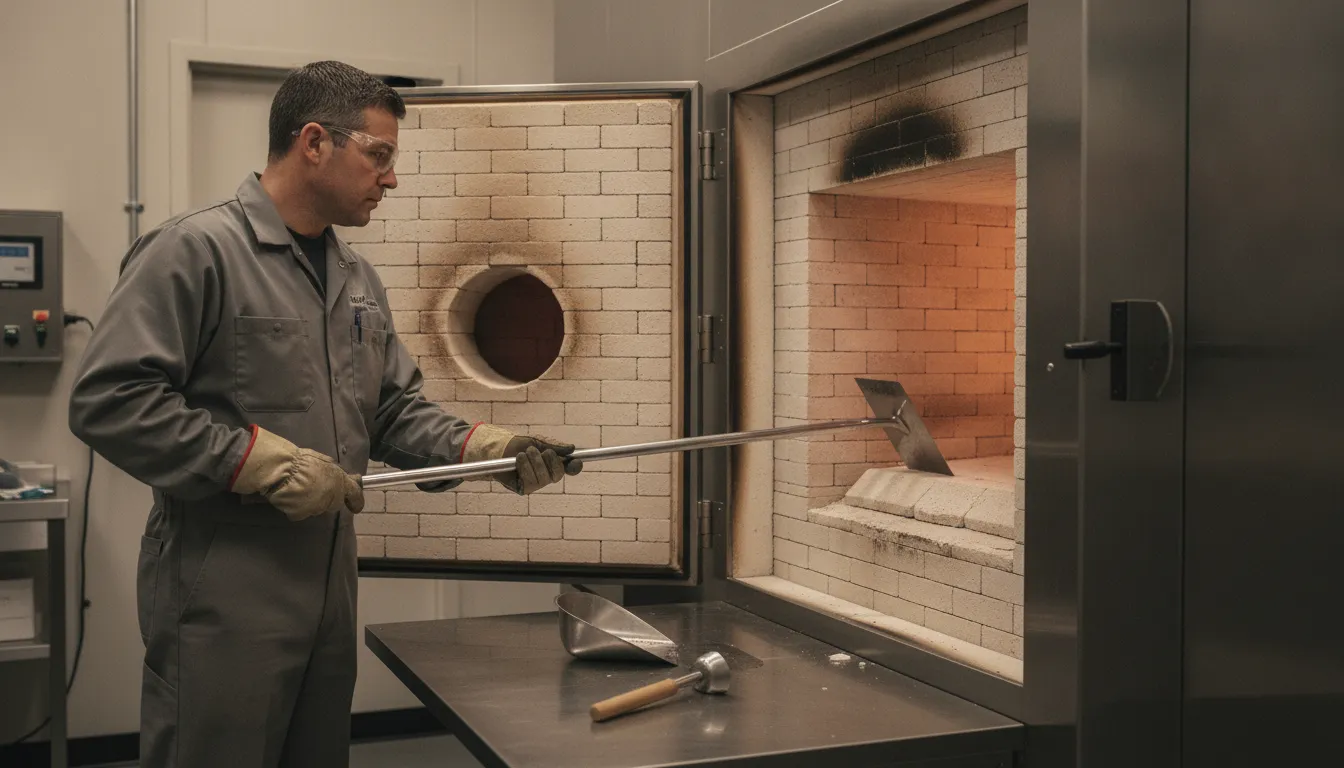
A clean retort supports respectful remains handling, protects refractory surfaces, and gives operators a clearer view of equipment condition. The right routine, however, is not a one-size-fits-all checklist. Operators should follow the cremator manufacturer’s manual, facility procedures, and applicable regulations, while keeping routine cleanout separate from service work.
Contact Vischer about cremation equipment and supply questions
Cremation chamber cleaning generally involves allowing the equipment to reach the condition specified by its manufacturer. Isolating hazards, sweeping and collecting residual material, inspecting the chamber, and documenting the work. The exact method and interval for cremation chamber cleaning depend on the equipment, facility, and governing requirements.
Some regulations require cleaning after each use or sweeping the retort interior, but those requirements should be applied alongside the equipment manual and local rules. Start by defining what a routine cleanout includes, what must be collected separately, and what findings require maintenance support.
What Does Cremation Chamber Cleaning Involve?
Routine chamber cleaning is a controlled post-cycle process: operators recover remains, sweep residual material, inspect accessible surfaces, and document the work. The exact method must follow the cremator manufacturer’s manual and the facility’s procedures, because there is no universal cleaning interval or procedure for every system.
Some regulations illustrate the level of care expected. Iowa requires a cremation chamber to be cleaned after each use, with cremated remains and pulverized materials placed in appropriate containers. See the Iowa rule for the full requirement. New York requires the retort interior to be thoroughly swept after cremation so it is reasonably free of matter, as described in its retort requirements.
Recover and separate remains carefully
After the equipment has reached the condition specified by its manual, the operator removes remaining material using approved tools and containers. The work should preserve the identity of the case throughout recovery and processing. New York rules state that cremains and other remains are collected for final processing, placed in an individual container, and not commingled with other cremains. That requirement is a useful reminder that cleanout is also a chain-of-custody task, not merely ash removal.
Inspect the chamber before returning it to service
Once loose material has been removed, visually inspect the accessible hearth, walls, door area, and other components identified by the manufacturer. Look for changes that warrant escalation, such as damaged refractory, unusual deposits, or hardware that no longer appears sound. Do not treat routine sweeping as a substitute for authorized maintenance. The cremation equipment buying guide provides broader context for retort maintenance considerations, but the equipment manual remains the controlling source for your specific unit.
Record what was done
Document the date, case identifier, operator, remains-handling completion, visible condition, and any issue sent for review. A consistent record helps supervisors identify changes over time and supports a respectful, repeatable workflow. Vischer’s customer guidance does not prescribe a universal cleaning method or interval, so records should reflect the manufacturer’s requirements and the facility’s approved operating plan.
How Should Operators Prepare for a Safe Chamber Cleanout?
Safe preparation begins before the chamber door opens. Let the equipment cool according to the manufacturer’s operating and maintenance manual. Isolate it as directed, and confirm that no one will work on a hot or energized chamber. Cleaning should be treated as a controlled task, not an improvised extension of the cremation cycle.
Confirm cool-down and isolation
The manual for the specific cremator controls the cool-down method, shutdown sequence, and any lockout or isolation steps. Operators should verify that combustion has ended, relevant energy sources are isolated, and the equipment cannot restart unexpectedly before beginning cleanout. Do not rely on a visual assumption that the chamber is safe to approach. If the condition of the equipment is uncertain, stop and involve the responsible supervisor or authorized service provider.
Prepare the room and control access
Ventilation is part of the preparation plan, not a substitute for waiting until the chamber is safe. Iowa requirements provide useful examples of facility controls: chambers must vent outdoors. The facility must have a means of bringing in fresh air to aid combustion, and the chamber room must have adequate exhaust to prevent heat buildup. Review the applicable requirements for your location and follow the equipment and facility manuals. See the Iowa cremation chamber requirements for those provisions.
Restrict access to trained personnel, keep bystanders clear, and establish where tools, approved containers, and recovered material will go before work starts. Account for heat, ash and dust, sharp or damaged surfaces, moving components, electrical energy, and any chemical or biological exposure relevant to the task. OSHA advises employers to assess hazards and exposure risks, select controls, train workers, and ensure those controls are used. Its postmortem-care page is guidance, not a standard or regulation, and does not create new legal obligations. Read the OSHA hazard-assessment guidance in that context.
Use the manual as the final authority
There is no universal cleaning interval or preparation sequence that fits every cremator. Before scheduling routine cremation chamber cleaning, confirm the approved tools, access points, isolation procedure, and escalation instructions for the installed model. Vischer’s cremator maintenance and support guide can provide planning context, but it does not replace the manufacturer’s instructions for your equipment.
Which Tools Support Routine Cremation Chamber Cleaning?
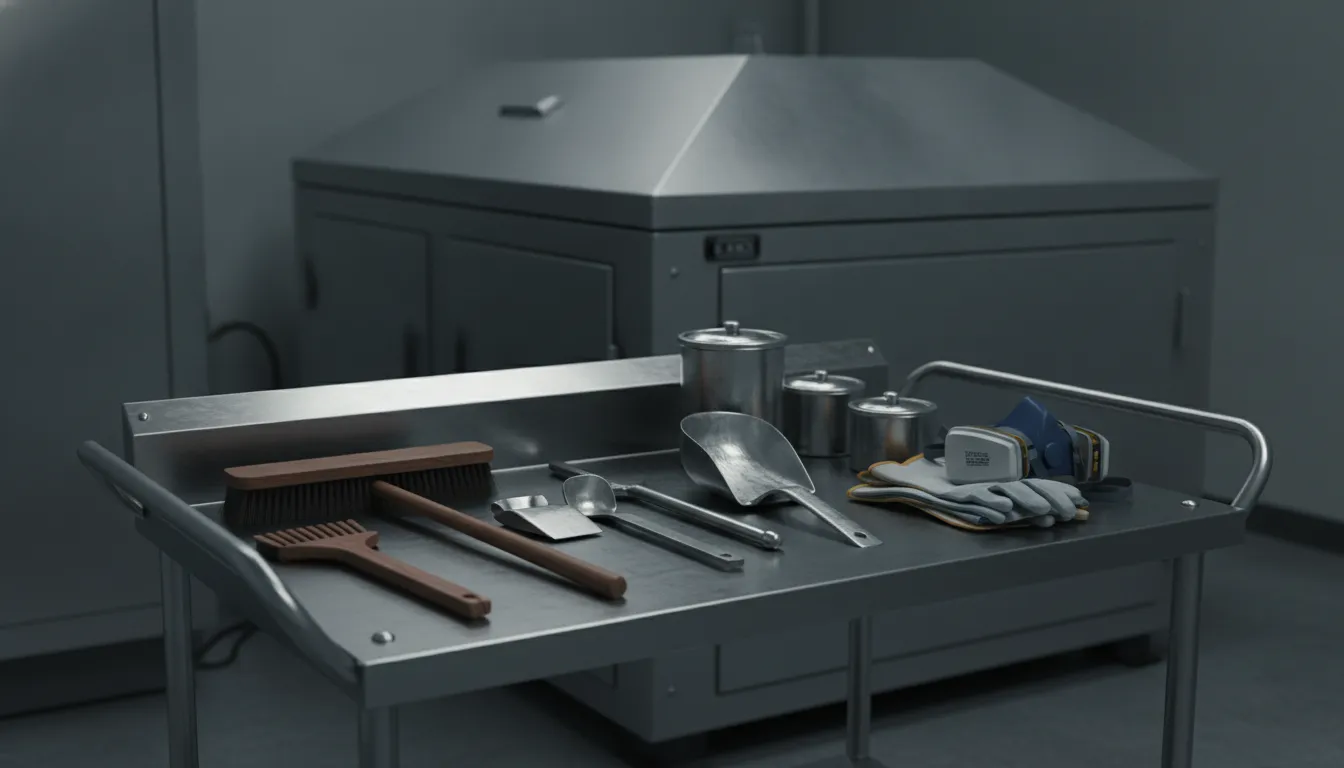
Answer: Routine cremation chamber cleaning usually depends on a small set of compatible tools for sweeping, collecting, seeing, and protecting the operator. The equipment manufacturer’s manual and your workplace procedures should determine which tools are approved for a specific chamber, surface, and operating condition.
Tool selection is not a substitute for a safe work authorization, cool-down process, or required isolation. Choose equipment that supports controlled remains recovery without damaging refractory surfaces or creating unnecessary dust. OSHA recommends assessing worker hazards, selecting exposure controls, and training workers to use those controls.
| Tool category | Role | Selection caution |
|---|---|---|
| Approved brush | Sweep loose residue from approved chamber areas | Confirm bristle material, stiffness, dimensions, and surface compatibility in the manual. A supplier description may present a heavy-duty double brush as reducing abrasion, but that is only an example, not approval for your retort. |
| Shovel, pan, and designated container | Collect residue and remains for the next authorized handling step | Use clean, suitable containers and follow identification and non-commingling procedures. Do not improvise a container that could compromise respectful handling. |
| Lighting and inspection aids | Improve visibility during a visual check | Use only equipment suitable for the work area and follow the manufacturer’s instructions. Do not enter a chamber or approach energized equipment to improve visibility. |
| Required PPE and exposure controls | Reduce contact and inhalation risks identified by the hazard assessment | Select PPE through your workplace assessment and training program, rather than assuming one kit fits every task. |
Vischer’s cremation-area cleaning brush may be a useful product reference when it matches the equipment manual and workplace procedures. For broader stock planning, review the essential cremation supplies checklist. Neither resource replaces manufacturer approval or site-specific safety controls.
What Is a Practical Step-by-Step Cleaning Workflow?
A sound cleaning workflow moves from authorization and equipment isolation to careful sweeping, individual remains handling, inspection, reset, and documentation. Treat this as a planning framework, not a universal procedure: the cremator manufacturer’s operating and maintenance manual controls the method, approved tools, and any equipment-specific requirements. Vischer’s guidance does not establish one universal chamber-cleaning interval or procedure, so confirm the steps for the retort in use.
- Confirm authorization and the manual. Verify that the cycle is complete, the responsible operator has authorized cleanout, and the current manufacturer instructions are available. Check any facility policy and applicable jurisdictional requirements before beginning. For example, Iowa rules require cleaning after each use, but local requirements and equipment manuals should be reviewed together rather than assumed to be interchangeable: Iowa’s cremation chamber rule.
- Complete cool-down and isolate the equipment. Follow the manual’s cool-down instructions and confirm that the chamber, controls, burners, and connected systems are in the condition required for safe operator access. Do not enter or reach into a hot or energized chamber. If the manual calls for lockout, shutdown, or another isolation step, complete it before cleaning.
- Control access to the work area. Limit the area to trained personnel, keep unnecessary traffic away, and use the hazard controls selected for the facility’s exposure assessment. Ventilation and exhaust systems must operate as required by the equipment and facility procedures. OSHA recommends assessing hazards, selecting controls, training workers, and ensuring those controls are used. Its postmortem-care page is guidance, not a regulation: OSHA worker-safety guidance.
- Sweep gently and collect material. Use only the brush, shovel, pan, and other tools approved for the retort. Work deliberately to minimize disturbance of refractory surfaces and airborne dust. New York rules describe thoroughly sweeping the retort so it is reasonably free of matter after cremation: New York’s retort-cleaning requirement.
- Handle remains individually. Move cremains and other collected material into the designated container for final processing. Maintain the identification and chain-of-custody practices required by the facility. New York rules specifically address collection into an individual container and prohibit commingling with other cremains. Follow the rules and procedures applicable to your location.
- Inspect the chamber visually. Once sweeping is complete, look for remaining material, unusual buildup, visible refractory damage, loose components, or conditions that differ from the normal post-cycle state. Do not scrape, repair, or disassemble components unless the manual authorizes that work for the operator.
- Reset the area and equipment. Return tools and containers to their designated locations, remove collected material according to facility procedure, and restore the room to a controlled operating condition. Keep the equipment isolated until the authorized operator confirms it is ready for the next approved use.
- Document the cleanout. Record the date, equipment identification, responsible operator, cycle or case reference, remains-handling confirmation, observed condition, and any escalation. The essential cremation supplies checklist can help teams organize commonly needed supplies, but it does not replace the equipment manual or local requirements.
When Does Cleaning Become Maintenance or Service Work?
Routine cleaning removes ash and remains from an approved, cooled chamber. Maintenance or service begins when the work involves diagnosing damage, adjusting equipment, replacing components, or restoring safe operation. The manufacturer’s operating and maintenance manual should control the boundary, because cremators differ in construction, controls, refractory materials, and service requirements. Vischer’s knowledge base does not establish one universal cleaning method or interval, so operators should not treat a general checklist as a substitute for the equipment manual.
Routine cleanout is limited in scope
After the cycle and required cool-down, trained operators may perform the cleaning steps their manual assigns to routine operation. This commonly includes removing loose ash or residual material with approved tools, collecting remains according to the facility’s procedures, and visually noting conditions that need attention. The task should not require entering a chamber, defeating a safeguard, modifying a control, or working on energized equipment.
Stop routine cleaning if the chamber does not present a normal, stable surface or if material cannot be removed using the approved process. Do not force tools against questionable refractory or attempt an improvised repair. Record what was observed, isolate the equipment according to the manual, and escalate the issue through the facility’s authorized service process.
Which conditions require service attention?
Arrange qualified, authorized service when inspection identifies damaged refractory, unusual burner behavior, suspected thermocouple or temperature-sensing problems. Exhaust or ventilation concerns, structural damage, or control, interlock, alarm, or ignition faults. A change in cycle behavior, recurring incomplete combustion, unusual heat patterns. Or an alarm should be treated as a reason to pause and investigate, not as a cue to clean more aggressively. The correct diagnostic steps and replacement requirements are equipment-specific.
Vischer provides equipment sales with consultative customer service and technical support, and its cremator maintenance and support resource can help teams plan equipment decisions and escalation conversations. It does not replace the manufacturer’s authorized service instructions. Clear records of the condition, alarm or symptom, date, and action taken will help the appropriate technician evaluate the problem while protecting continuity of service and professional standards.
How Can Teams Document Chamber Cleaning and Improve Consistency?
A clear cleaning record turns a necessary task into a repeatable operating practice. It also helps managers distinguish routine cleanout from conditions that require the manufacturer or an authorized technician.
Use a controlled checklist for each cleaning event. Record the following:
- Chamber or retort identifier, plus the responsible operator.
- Date, cycle reference, and confirmation that the equipment was isolated and safe to approach according to the manufacturer manual.
- Cleaning steps completed, including sweeping, remains handling, inspection, and reset.
- Unusual ash, residue, damage, odor, heat, or equipment behavior.
- Operator initials and supervisor or designated reviewer signoff.
Keep the signoff controlled rather than treating it as a formality. Train operators on the approved procedure, the limits of their role, and the conditions that require work to stop. OSHA recommends assessing hazards and exposure risks, selecting controls, training workers, and ensuring that workers use those controls. Its postmortem-care page is guidance, not a standard or regulation, so use it as a safety reference alongside applicable requirements and the equipment manufacturer’s instructions: OSHA guidance.
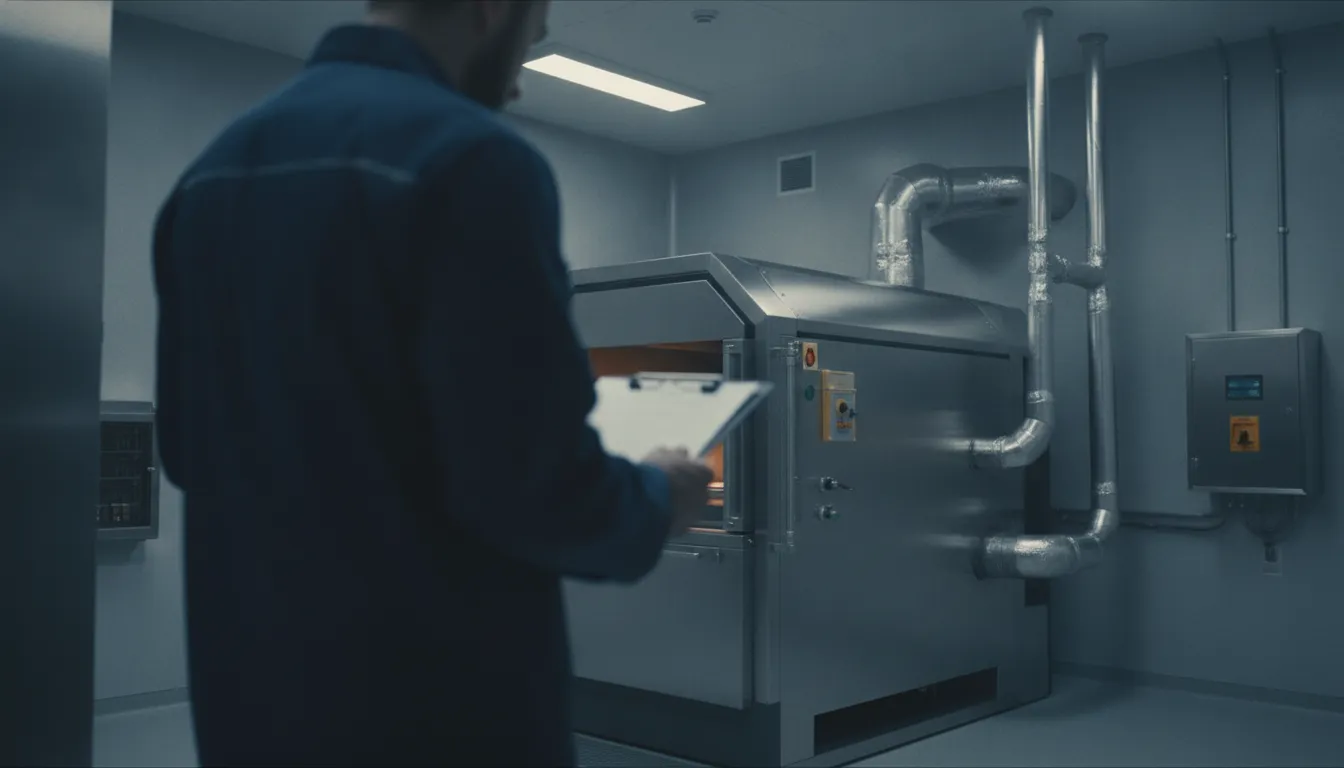
Review completed records for repeat findings. Recurring residue, refractory damage, abnormal combustion, unreliable readings, or other changes should trigger escalation instead of an improvised adjustment. Do not create a universal cleaning interval from the checklist. Keep the procedure aligned with the current manufacturer manual, and update the controlled version when the equipment, tools, or safety controls change.
Vischer serves crematories as part of its funeral-service equipment and supply business. For practical stock and workflow planning, use the essential cremation supplies checklist, then contact Vischer when an equipment or supply question needs consultative support.
Frequently Asked Questions
How often should a cremation chamber be cleaned?
Follow the cremator manufacturer’s maintenance manual and applicable local rules rather than assuming one schedule fits every retort. For example, Iowa requires chamber cleaning after each use, while New York requires the retort interior to be thoroughly swept after cremation. Keep the governing rule and equipment instructions with the site’s operating records.
Who is responsible for cleaning a cremation chamber?
Trained, authorized operators can perform routine post-cycle cleanout when the manufacturer’s procedures allow it. Service technicians should handle refractory damage, burner or control faults, exhaust problems, and other work beyond ordinary ash and residue removal. Never treat routine sweeping as permission to enter a hot or energized chamber.
How should cremated remains be handled during cleanout?
Recover remains carefully using the approved tools and containers for the equipment and facility. Keep each case’s material separated and document the transfer through final processing. New York rules, for example, require cremains and other remains to be collected into an individual container and not commingled with other cremains.
What safety controls should be reviewed before cleaning?
Verify cool-down, equipment isolation, ventilation, access control, and required protective equipment according to the manual and site hazard assessment. OSHA advises employers to assess exposure risks, select controls, train workers, and ensure those controls are used. Its postmortem-care page is guidance, not a substitute for applicable regulations.
Plan Your Cremation Equipment Support
Consistent chamber cleaning depends on clear procedures, appropriate supplies, and knowing when a question belongs with the equipment manufacturer or an authorized service provider. For guidance related to cremation equipment, cleaning supplies, or safe maintenance planning, contact Vischer Funeral Supplies to discuss your needs and next steps.