
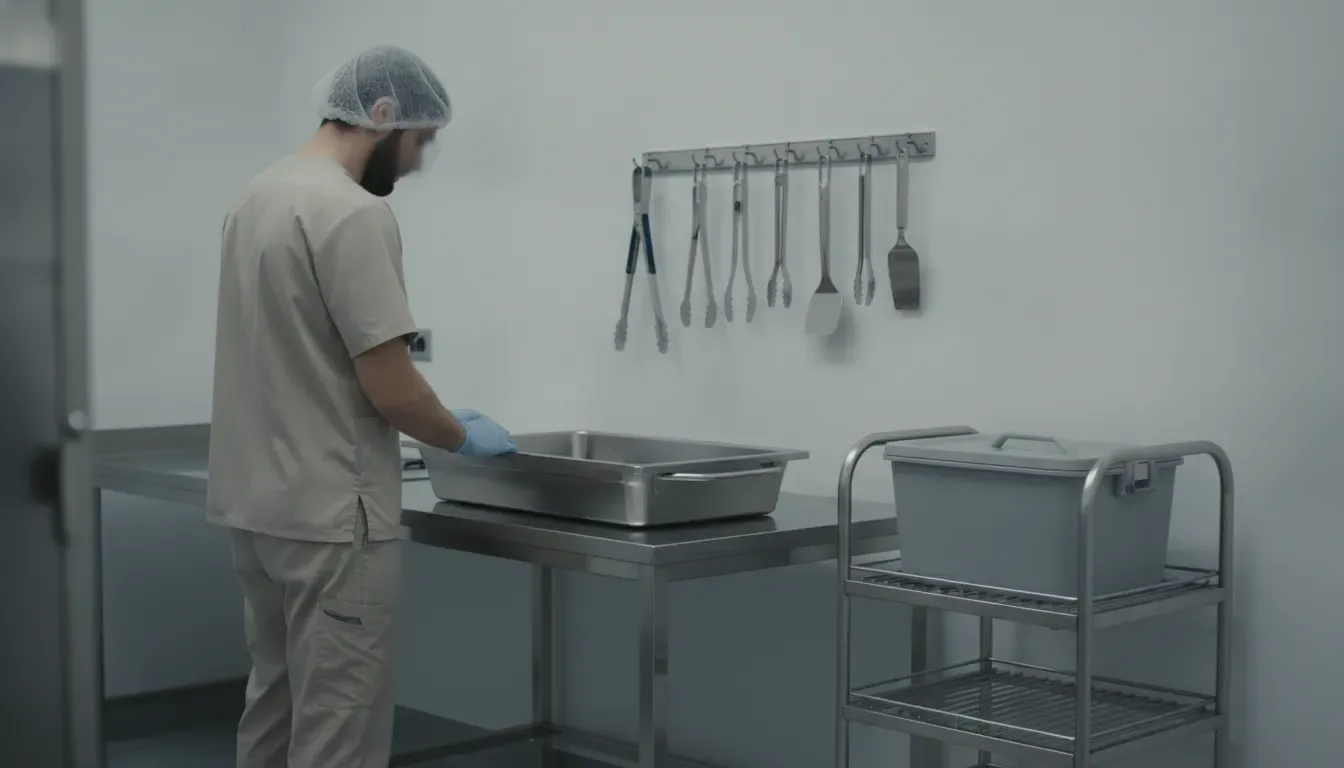
Pet cremation equipment should support more than the cremation cycle itself. A dependable pet aftercare workflow also needs dedicated ways to receive, identify, contain, cool, move, process, and document each case. For crematory operators, planning these surrounding tools alongside the primary unit can help protect chain of identity, staff safety, and the respectful service families expect.
Contact Vischer to discuss your pet cremation equipment needs.
What Makes Pet Cremation Equipment Different?
Pet cremation work shares core combustion and remains-processing principles with human cremation, but the operating details are different. Animal cases span a wide range of sizes, arrive through veterinary and aftercare channels, and often require a highly organized separation process when several cases are in the facility at once.
The right equipment plan therefore begins with the complete workflow, not a single machine. Operators should evaluate how a case moves from intake to final processing, where identification is checked, how remains are staged between steps, and which tools reduce unnecessary handling.
Design around size and case variation
A pet crematory may handle small companion animals, larger dogs, or occasional specialty cases. That variation affects the dimensions of trays and pans, the space required for movement, the cooling capacity needed between cycles, and the working height of processing surfaces. A tool that is convenient for a small case may be poorly suited to a larger one, so operators should map the range of animals served before selecting fixed equipment.
Separate individual, communal, and specialty workflows
Service offerings influence equipment decisions. Individual cremation requires especially disciplined identification and containment. Communal or partitioned workflows may require different staging practices, while specialty services can introduce additional documentation or handling needs. Equipment should make the intended workflow easier to follow rather than forcing staff to improvise with general-purpose containers.
Which Equipment Should a Pet Crematory Plan For?
A practical pet cremation equipment plan includes intake and containment tools, staging and cooling equipment, remains-processing tools, identification controls, and operator safety equipment. The primary crematory unit is important, but these supporting items often determine whether the daily workflow is controlled and repeatable.
| Equipment group | Operational role | Questions to answer before purchase |
|---|---|---|
| Trays, pans, and case containers | Contain and move each case while limiting unnecessary transfers | What animal sizes will the facility accept? Can the container be cleaned and handled safely? |
| Cooling racks and staging surfaces | Provide an orderly place for cases or remains between process steps | How many cases may be in the room at once? Does the rack fit the available route and clearances? |
| Processing stations and tools | Support controlled reduction, transfer, and cleanup after the cremation cycle | Can the station support the operator’s posture, tools, and cleaning routine? |
| Scales and identification controls | Help staff confirm case information and maintain consistent records | Where will checks occur, and how will staff document them without interrupting the workflow? |
| Heat and splash protection | Reduce exposure to heat, sparks, dust, and other task-specific hazards | What hazards are present at each station, and what does the facility’s PPE assessment require? |
Vischer’s cremation supplies category brings together processing stations, cooling racks, tools, scales, protective equipment, and related supplies. Use the category as a starting point for a workflow review, then confirm fit, capacity, compatibility, and availability for the specific facility.
How Should Operators Handle Containment and Identification?
Containment and identification are the control points that connect compassionate service to repeatable operations. Equipment should allow an operator to keep a case protected, identifiable, and easy to move without relying on memory or temporary workarounds.
Use dedicated case containment where it fits the service
A dedicated pan or tray can help limit transfers and keep a case associated with its paperwork and other required identifiers. Vischer’s Small Case Divider Pan for Pets is a pet-specific option listed in the cremation catalog. Its published dimensions are a 20-inch diameter, 4-inch height, and 7-inch height at the handles. Operators should compare those dimensions with the animal sizes they accept, their chamber and transfer path, and their cleaning process before ordering.
Make every handoff visible and deliberate
A sound identification process is more than attaching a label. Staff should define when identifiers are checked, who performs the check, and where the record is updated. The physical layout matters too. A clear intake surface, dedicated staging location, and consistent direction of travel can reduce the chance that two cases are placed together or that a container is left in an unplanned location.
What Cooling and Processing Tools Support a Better Workflow?
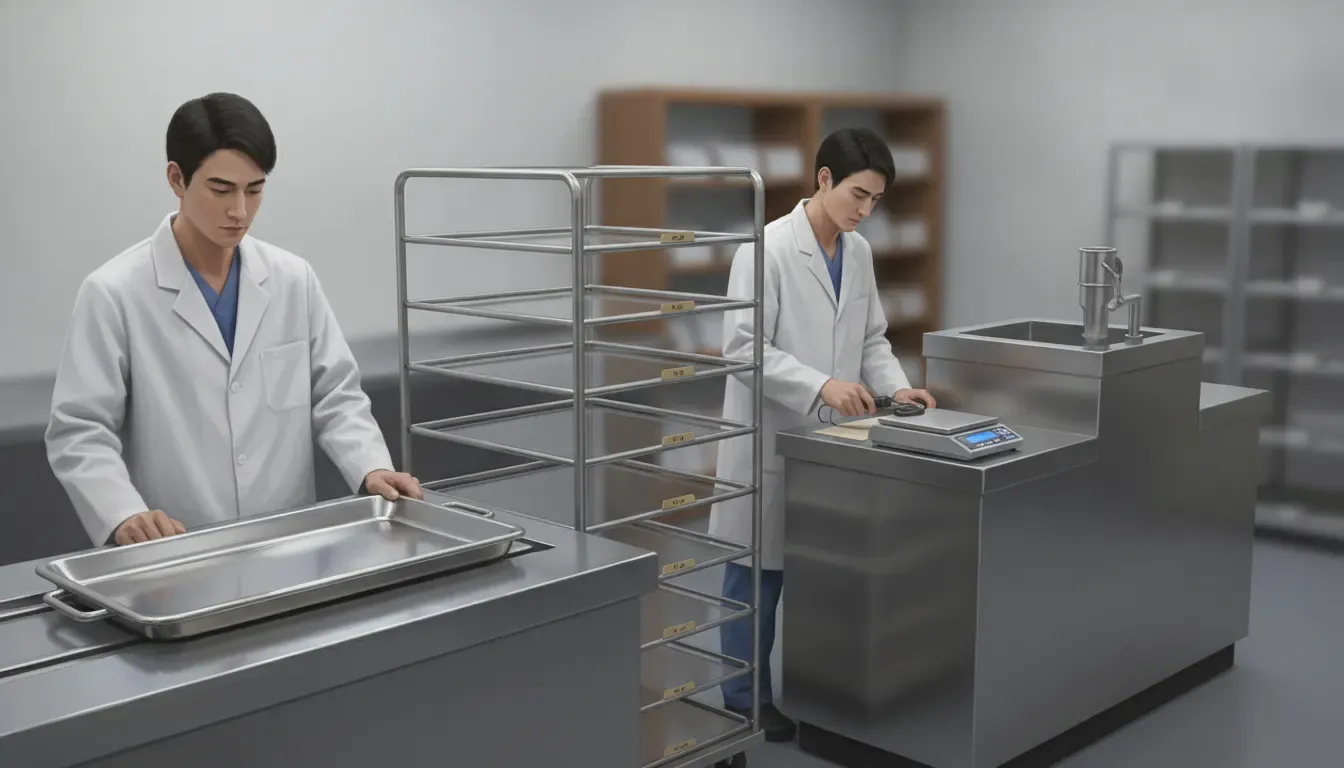
Cooling and processing areas should be planned as connected workstations. The goal is to give remains adequate time and space for the next step while keeping the room organized, cleanable, and easy for staff to navigate.
Cooling racks create controlled staging capacity
A rack gives operators a defined location for staging rather than leaving trays on floors, carts, or improvised surfaces. Vischer lists 3-tier cooling racks and other configurations in its cremation catalog. The appropriate configuration depends on room height, aisle width, expected case flow, tray dimensions, and how staff move items into and out of the area.
Processing stations should match the actual tasks
Processing stations and accessories should support the sequence used by the facility, including transfer, inspection, reduction, cleanup, and final placement. Consider working height, surface access, tool storage, power requirements, cleanability, and the direction in which material moves through the room. The existing cremation equipment buying guide covers broad retort, furnace, and facility-planning questions. This pet-focused guide addresses the animal-case workflow that surrounds those general equipment decisions.
Use measurement and verification tools consistently
Scales, metal-detection tools, and written or digital records can support consistent checks when they are placed where the work happens. They should be easy to reach, maintained according to the manufacturer’s instructions, and included in staff training. Equipment cannot replace a documented procedure, but the right placement can make the procedure easier to follow during a busy shift.
What Safety and Facility Features Matter Most?
Pet cremation equipment should be selected with the room, the operator, and the local requirements in mind. Heat, moving loads, sharp or hot tools, dust, noise, cleaning chemicals, and restricted access can all affect the facility’s risk assessment.
Match PPE to the task and the hazard
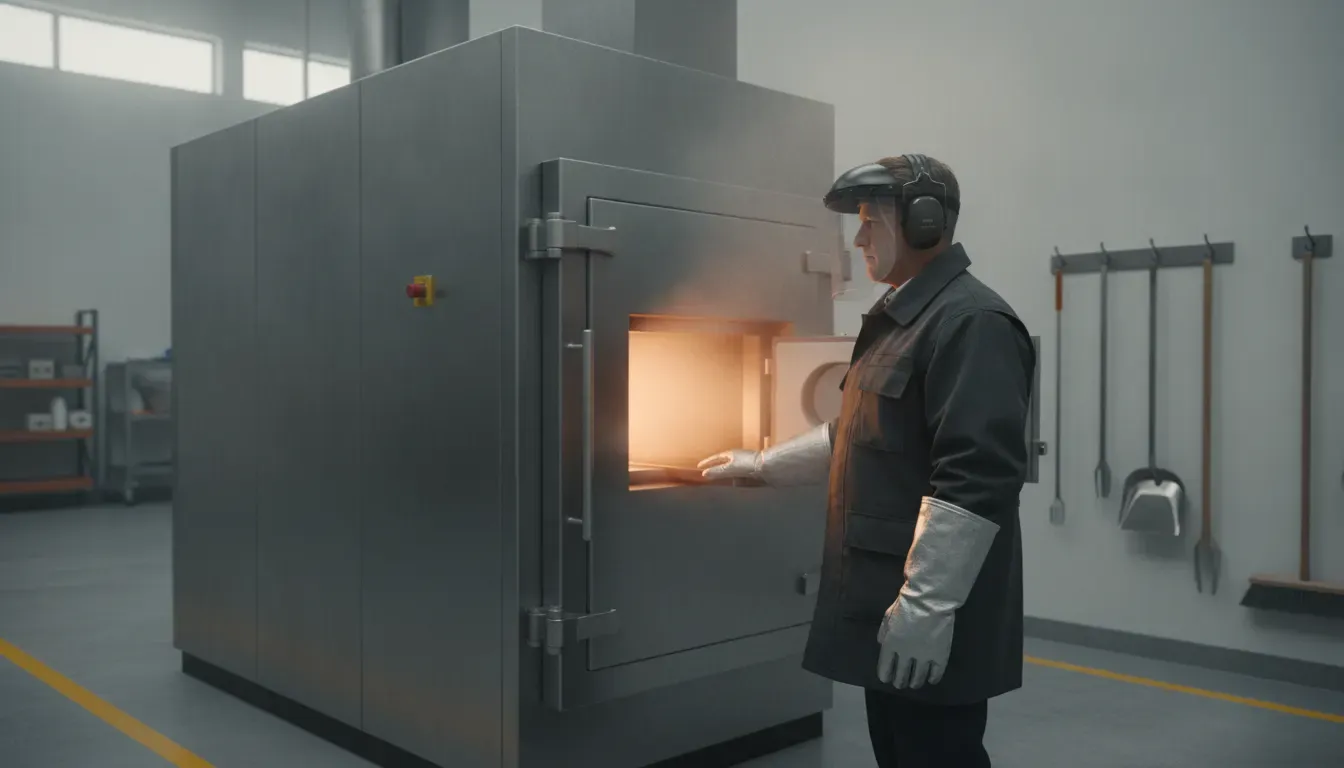
Heat-resistant gloves, face protection, protective clothing, hearing protection, and other PPE should be selected through the facility’s hazard assessment and the equipment manufacturer’s operating instructions. Vischer’s 18-inch aluminized safety gloves are one example of the heat-protection products listed for cremation operations. Operators should confirm the intended use, fit, condition, and limitations of any PPE before putting it into service.
Plan ventilation, clearances, and access before delivery
Measure doorways, turns, ceiling height, aisle width, floor conditions, utility connections, and service access before equipment arrives. A rack or station that fits on a floor plan may still create a problem if a tray cannot be turned safely or a technician cannot reach a maintenance point. Keep hot work areas separated from storage and provide clear routes for staff and equipment.
Heat exposure also deserves active management. OSHA identifies heat sources, physical activity, air movement, humidity, and protective clothing as factors that can contribute to heat illness, including in indoor workplaces. Review the OSHA guidance on employer responsibility for heat hazards alongside the facility’s own assessment. Local air-quality, building, fire, and occupational-safety requirements may also apply, so confirm the applicable rules with the relevant authority and the equipment manufacturer before installation or expansion.
How Can Operators Build a Pet Cremation Equipment Plan?
Start with the service model and work backward through the room. A written plan helps separate essential workflow controls from optional upgrades and gives vendors the information needed to recommend compatible equipment.
- Define the cases. List the animal sizes, service types, expected daily volume, and any specialty cases the facility intends to accept.
- Map every handoff. Document intake, identification, containment, staging, cremation, cooling, processing, final placement, cleaning, and recordkeeping.
- Measure the facility. Record room dimensions, door and aisle clearances, utilities, ventilation, storage, drainage, and service access.
- Assign control points. Decide where identifiers are checked, where cases wait, which staff member owns each handoff, and how exceptions are documented.
- Review safety and compliance. Confirm PPE, heat management, operator training, equipment clearances, and local permitting or inspection requirements.
- Buy for compatibility. Compare tray and pan dimensions, rack spacing, workstation height, chamber access, cleaning needs, and manufacturer support before placing an order.
Contact Vischer for help reviewing a cremation workflow and equipment list.
Pet Cremation Equipment FAQs
What is the most important pet cremation equipment?
The most important equipment is the combination that keeps each case identifiable, contained, safely moved, and correctly processed. That usually includes suitable trays or pans, staging and cooling capacity, processing tools, identification controls, and task-specific PPE alongside the primary crematory unit.
How should pet remains be kept separate?
Use a documented identification and handoff procedure supported by dedicated containers, clear staging locations, and deliberate checks at each transition. Equipment should make the procedure visible and repeatable, but staff training and records remain essential.
Do pet crematories need specialized processing tools?
Many facilities benefit from tools and workstations selected for their animal sizes, case volume, transfer route, cooling needs, and processing sequence. The right combination depends on the facility rather than on a single universal equipment package.
What should operators consider before purchasing equipment?
Review service types, animal size range, room measurements, workflow handoffs, cleaning, maintenance, PPE, operator training, compatibility, and local requirements. A written room and workflow assessment can identify constraints before equipment is ordered.