
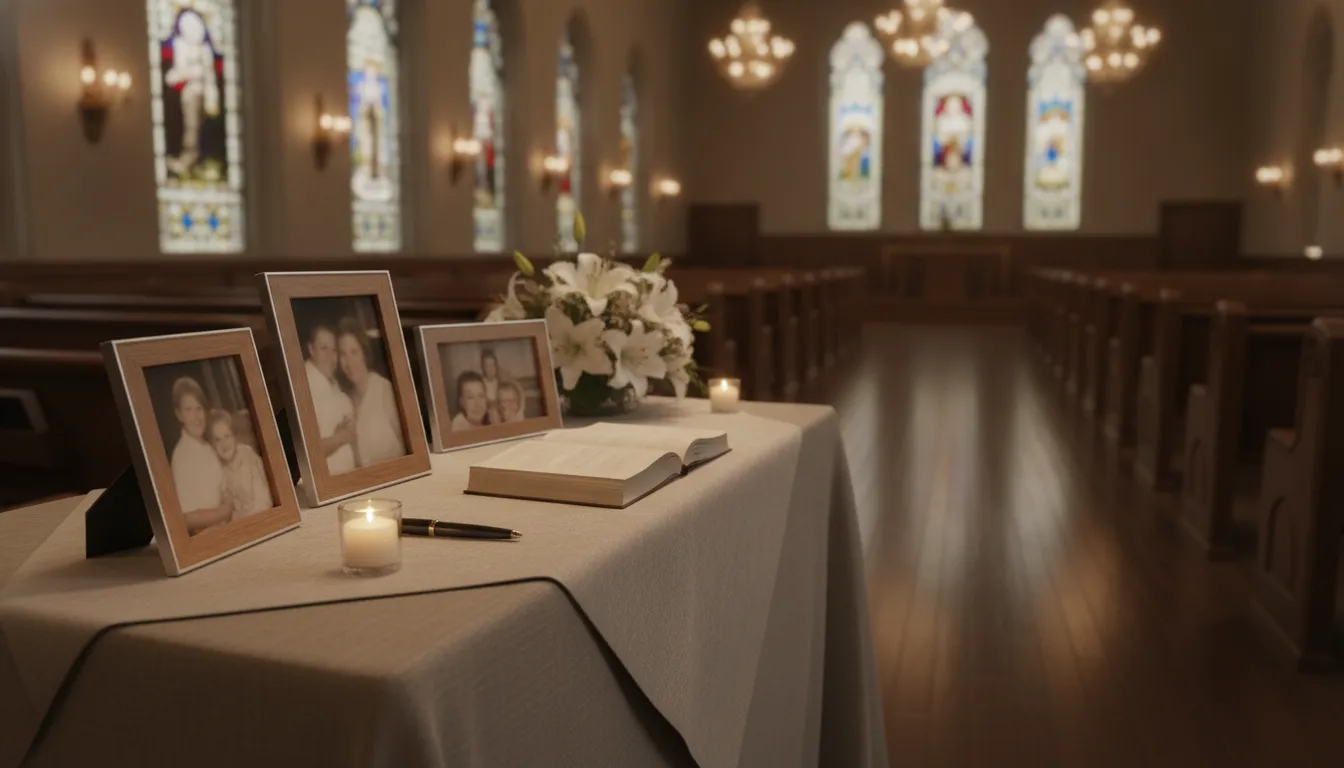
A well-planned funeral home table should help guests connect, participate, and move comfortably through the space without competing with the service itself. The strongest displays feel personal because they reflect the individual and the family’s wishes, not because they contain every available decorative item.
Contact Vischer for funeral-home display supply guidance
Effective funeral table decoration ideas balance meaningful photographs, keepsakes, flowers, guest-book materials, and restrained accents with stable placement, clear sightlines, safe passage, and a simple reset process.
For staff, that balance is an operational decision as much as an aesthetic one. A table may welcome visitors, support a memory display, keep stationery within reach, and remain easy to maintain between services. Start by defining what the display needs to accomplish, then build each element around dignity, access, and the practical realities of the room.
What Should a Funeral Home Table Display Accomplish?
A service-ready table should help families share a meaningful story while helping guests move through the space comfortably. It should be dignified, legible, stable, easy to navigate, and simple for staff to reset after the service.
Begin with the family’s wishes. Confirm the traditions, faith practices, cultural considerations, and personal preferences that should guide the presentation before choosing linens, photographs, flowers, or keepsakes. There is no single decoration style for every service. One family may prefer a restrained arrangement, while another may want a larger collection of photographs and objects that reflects the person’s life.
Think of the table as part of the room’s guest flow, not an isolated centerpiece. Visitors should be able to approach the display, read cards, sign a guest book, and step away without reaching across one another or disturbing the arrangement. Review the setup from the doorway, nearby chairs, and the main walking path. A display can look balanced from one angle while blocking movement or hiding an important item from another.
Repeatability also matters. Establish a consistent setup process that checks table stability, clear sightlines, guest access, and the path around the display. Separate family-owned belongings from funeral-home supplies during both setup and breakdown. This protects meaningful items and reduces searching before the next service.
Funeral Table Decoration Ideas for Meaningful Memory Tables
A meaningful memory table brings together photographs, personal mementos, guest materials, and a few restrained accents. Start with the family’s preferences, then arrange each element for clear viewing, easy interaction, stable placement, and an efficient reset.
Use a focal grouping to establish the story. Photographs may span childhood through recent years, helping guests see a fuller life rather than a single moment. Select a few framed images at varied heights, leaving space between them so each can be viewed without crowding. Personal mementos can add context when they reflect a vocation, hobby, place, faith tradition, or family relationship. Confirm which items the family approves and how they should be identified.
Build the guest area as a separate, approachable zone. A memory book should be easy to find without competing with the focal photographs. Include the stationery guests need, such as prayer cards, acknowledgment materials, bookmarks, or service programs, and check that pens are available before visitation begins. Vischer’s memorial register book placement guide can help teams coordinate the book and related stationery. A dedicated funeral register stand can define the signing area while keeping the main display uncluttered.
| Display element | Purpose | Operational check |
|---|---|---|
| Focal photographs | Show meaningful moments across the person’s life. | Confirm frames are stable, visible, and grouped at comfortable viewing heights. |
| Personal mementos | Add a tangible connection to interests, work, relationships, or traditions. | Confirm each item is approved by the family and protected from accidental contact. |
| Memory book and stationery | Give guests a clear way to leave names, messages, or service materials. | Place supplies within reach, provide pens, and check pages and cards. |
| Floral or symbolic accent | Introduce a restrained connection to favorite colors, flowers, or beliefs. | Keep it clear of photographs, writing space, and guest movement. |
Keep accents subordinate to the memories. A small floral arrangement, meaningful object, or coordinated runner can provide color and texture, but too many pieces make the table harder to read and reset. Before guests arrive, walk around the display and look for loose items, blocked sightlines, or anything that could be brushed onto the floor.
How Should Teams Arrange Photos, Guest Books, Flowers, and Keepsakes?
Arrange the display in clear zones: place the guest book near the welcome point. Group photographs and keepsakes in a central story area, add flowers or another symbolic accent to one side, and preserve an open approach. This sequence helps visitors understand what to do without crowding the table.
1. Start with a welcome and sign-in zone
Set the guest book, pens, and related stationery at the front or nearest accessible end of the table. Visitors should be able to sign without reaching across photographs or moving a floral arrangement. Keep spare pens and additional materials within staff reach instead of covering the display surface with supplies. If the room uses a separate stand, position it where guests naturally pause without narrowing the approach.
2. Build a readable story zone
Use the center of the table for the visual story. Group photos by life stage, family relationship, or meaningful activity rather than scattering them evenly. Place larger frames toward the back and smaller items in front, keeping each image visible from a standing visitor’s height. Include only the keepsakes the family wants displayed. A smaller collection of purposeful objects often communicates more clearly than a crowded assortment.
3. Add a stable floral or symbolic accent
Place flowers, an urn, or another symbolic item to one side of the story zone. Leave space for visitors to read the guest book and approach the table. For larger floral tributes, review Vischer’s funeral floral display setup guidance. When an urn is part of the display, urn display arrangement ideas can help staff plan a dignified focal point without mixing incompatible heights.
Talk with Vischer about practical funeral-home display options
How Do Linens, Lighting, and Color Shape a Respectful Display?
A respectful table display uses linens, light, and color to support the person’s story without competing with it. Begin with a stable, clean base linen, add only layers that improve the arrangement, and coordinate the palette with the family’s preferences and the service setting.
Build a quiet foundation
Neutral shades can keep attention on the memories, while a carefully selected color may reflect a favorite color, season, uniform, hobby, or faith tradition. A runner can add texture over a base cloth. But keep it clear of writing areas and make sure its edges do not interfere with guests or equipment beneath the table. The goal is not to create a styled event table. It is to create a setting that feels familiar and appropriate to the person being remembered.
Use lighting to support comfort and visibility
Ambient lighting should make photographs, personal objects, and guest-book materials easy to see without glare. Check the display from the approach guests will use, then adjust the light source or item placement so reflective surfaces do not become distracting. OSHA’s housekeeping guidance emphasizes clear, well-lit walking areas. The table’s atmosphere should never come at the expense of safe movement.
Warm candlelight may suit some services, but candles belong only where facility policy permits them and staff can handle them safely. Confirm placement, supervision, flame protection, and extinguishing procedures before including them. Vischer’s chapel candle display guidance can support planning.
How Can Staff Keep Table Displays Stable and Easy to Reset?
A stable display should welcome guests without narrowing their route or creating extra work. Treat setup as a short operational check, then use the same breakdown sequence after every service.
- Check the approach. Stand several feet away and identify how guests will reach the table, sign the register, view photographs, and leave. Keep chairs, flower stands, bins, and decorative pieces from constricting movement. For broader room planning, evaluate the display and funeral home furniture together.
- Protect aisles and sightlines. Keep passageways clear and review the route from the entrance, seating, guest book, and exit. Check the view staff need while carrying supplies. OSHA also recommends keeping floors clean and dry.
- Test stability. Place the table on a level surface, check for rocking or uneven legs, and keep heavier items low and centered. Elevated flowers and frames should have suitable supports. A display should remain stable when someone approaches from the side, not only when viewed from the front.
- Manage cords and spills. If powered lighting is permitted, route cords away from walking paths and inspect the floor after watering flowers, cleaning, or moving beverages. Avoid glare that obscures photographs or changes in floor level.
- Complete a guest-view walk-through. Approach from both sides and sit in nearby chapel chairs when applicable. Confirm guests can see the meaningful elements, reach the book without leaning across the arrangement, and pass without touching cords or display edges.
After the service, handle personal items first. Place photographs, keepsakes, cards, and other family-owned belongings in a designated handoff area, then confirm how they should be returned. Do not assume an item left on the table belongs to the funeral home.
Next, sort reusable frames, stands, guest books, stationery, linens, and runners by type. If an item requires cleaning or disinfection, follow the manufacturer’s instructions for that product and material. The CDC advises following manufacturer instructions for cleaning and disinfection products in its cleaning guidance. Use labeled containers, protect fragile pieces with padding, and record anything missing, broken, stained, or nearing replacement. A short inventory note makes the next setup more predictable.
Frequently Asked Questions
What should you put on tables at a funeral?
Start with a guest book or memory book, memorial stationery, framed photographs, and a small selection of meaningful keepsakes. Add flowers or another restrained accent only when it supports the family’s preferences. Keep the arrangement readable, stable, and easy to approach rather than filling every open space.
What are some ideas for centerpieces for a funeral table?
Consider a modest floral arrangement, a framed photograph, a meaningful object, or a combination of low-profile pieces. Favorite flowers or colors can personalize the display, while a runner can add texture over a base tablecloth. Keep the centerpiece low enough to preserve sightlines and leave room for guest books or photographs.
What are some thoughtful ideas for a memorial table?
Organize photographs from different stages of the person’s life with a few personal mementos, a memory book, and stationery for visitors. Group related items so the display feels intentional, and ask the family which objects, traditions, colors, or faith elements should be represented. A smaller, curated collection is usually easier to view and maintain than a crowded table.
How do you set up a celebration of life table?
Divide the table into welcome and sign-in, memories, and floral or symbolic zones. Test the guest approach before doors open, secure items that could shift, and keep aisles and passageways clear. Include a final walk-through so staff can confirm that the arrangement is meaningful, stable, and easy for guests to use.
Contact Vischer for Display Supply Guidance
A thoughtful table display depends on coordinated supplies, clear placement, and a setup process your team can repeat with confidence. If you are planning memory tables, guest-book areas, floral arrangements, or other service-ready displays, contact Vischer to discuss practical funeral-home supply options.