

A safe preparation room depends on more than having gloves and disinfectant within reach. Funeral home owners and supervisors need a repeatable process that connects the work being performed with written procedures. Protective equipment, employee training, and a clear response when an exposure occurs. That process should respect both the dignity of the deceased and the people entrusted with their care. Contact Vischer about practical PPE and safety supplies for your funeral home.
Bloodborne pathogens are infectious microorganisms in human blood that can cause disease, including hepatitis B, hepatitis C, and HIV. OSHA’s Bloodborne Pathogens Standard, 29 CFR 1910.1030, addresses occupational exposure to blood or other potentially infectious materials and calls for controls, training, PPE, and post-exposure follow-up when applicable.
The right starting point is not a product list. It is an accurate understanding of where exposure may occur during preparation, removal, cleanup, and related duties. Once those work conditions are mapped, the facility can build protections that are practical, consistent, and easier for every team member to follow. Understanding the exposure routes is the first step.
What Are Bloodborne Pathogens in a Funeral Home Setting?
Bloodborne pathogens are infectious microorganisms in human blood that can cause disease, including hepatitis B virus (HBV), hepatitis C virus (HCV), and human immunodeficiency virus (HIV). In funeral service, the relevant question is not whether a person appears ill, but whether a task could create contact with blood or other potentially infectious materials.
The OSHA Bloodborne Pathogens Standard addresses occupational exposure to blood and other potentially infectious materials. OSHA defines occupational exposure as reasonably anticipated contact with these materials through the skin, eyes, mucous membranes, or a puncture-related route while an employee performs assigned duties. That definition can apply to preparation-room work, removal, instrument handling, cleanup, and other tasks where fluids or contaminated items may be present.
How exposure can occur during funeral service work
Exposure is possible when blood or potentially infectious material reaches a mucous membrane, such as the eyes, nose, or mouth, or contacts broken skin. A puncture from a contaminated sharp can also create a route of entry. Examples of circumstances that deserve planning include:
- Handling needles, scalpels, wires, or other sharp instruments during preparation or cleanup.
- Managing leakage, drainage, or contaminated materials during transfer and removal.
- Cleaning work surfaces or equipment after a procedure.
- Touching the face or another vulnerable area with contaminated gloves or hands.
These risks are task-related. They do not mean that routine professional contact, a conversation with a family, or being in the same room as another person creates a bloodborne exposure. Nor should a team make assumptions about a decedent or family member based on appearance, diagnosis, or circumstance. A consistent, respectful process treats relevant blood and potentially infectious materials with appropriate precautions while preserving dignity throughout care.
Why the distinction matters
OSHA requires universal precautions, meaning employees treat human blood and certain potentially infectious materials as if they may transmit bloodborne disease. This approach keeps decisions tied to the work rather than guesswork about an individual. It also helps supervisors identify which job classifications and tasks may involve occupational exposure, then establish practical controls and protective measures.
This section is educational, not medical advice. Each funeral home should evaluate its own procedures with qualified safety and medical professionals. Maintain the written plan required for covered exposure, and train employees on the facility’s actual workflow. The next sections explain how to translate this definition into an exposure control plan, work practices, and task-appropriate protection.
Build an Exposure Control Plan Around the Work Actually Performed
A useful Exposure Control Plan connects bloodborne pathogens requirements to the tasks your employees actually perform. Under OSHA 29 CFR 1910.1030, covered employers must maintain a written plan designed to eliminate or minimize occupational exposure, then review it as work changes.
- Identify covered job classifications and tasks. List the positions that may reasonably encounter blood or other potentially infectious materials, such as embalmers, preparation-room assistants, removal personnel, and employees assigned to cleanup. Then describe the specific activities that create exposure potential, rather than labeling an entire department without examining its work.
- Document the exposure determination. OSHA defines occupational exposure as reasonably anticipated skin, eye, mucous membrane, or parenteral contact with blood or other potentially infectious materials resulting from an employee’s duties. Record which classifications have occupational exposure and which do not. This task-based approach helps supervisors match protections to real conditions without assuming that every employee faces the same risk.
- Set the control measures. Explain the engineering controls and work practices used to eliminate or minimize exposure. Depending on the work, the plan may address puncture-resistant, leakproof sharps containers. Safe handling of contaminated materials, handwashing, regulated-waste containers, and restrictions on eating or drinking in exposure areas. State how controls are inspected, maintained, and made available to employees.
- Specify PPE by task and exposure route. Describe the gloves, protective clothing, eye protection, face protection, or other equipment employees must use when exposure remains after engineering and work-practice controls. The employer must provide appropriate PPE at no cost to employees. Include procedures for removal, disposal or laundering, handwashing, and replacing garments that become penetrated or contaminated.
- Build housekeeping and waste procedures into the plan. Identify who cleans work areas, how spills are handled, and where regulated waste goes. Containers for regulated waste must be closable, leakproof, and labeled or color-coded. The plan should also explain how contaminated equipment and surfaces are decontaminated, using products and methods appropriate to the situation.
- Cover training, vaccination, and medical follow-up. Include initial and recurring training for employees with occupational exposure, along with instructions for questions and reporting concerns. Address availability of the hepatitis B vaccination series and confidential medical evaluation after an exposure incident. Keep the required training, medical, and incident documentation accessible to the appropriate personnel.
- Invite employee input and review the plan. Employees who perform the work can identify awkward procedures, recurring sharps hazards, or controls that are difficult to use consistently. OSHA requires the plan to be reviewed and updated at least annually, and whenever new or modified tasks or procedures affect occupational exposure. Record those updates so the written plan remains an operational document, not a shelf reference.
For the exact requirements, review OSHA 29 CFR 1910.1030. This article is educational information, not legal advice; facilities should evaluate their own operations and consult a qualified safety professional when needed.
Which Controls Reduce Exposure Before PPE Is Needed?
Answer capsule: The strongest bloodborne pathogens program does not begin with gloves. It begins by changing the work environment and the way tasks are performed, then uses housekeeping, hand hygiene, and PPE to address the exposure that remains.
OSHA identifies engineering controls and work-practice controls as the primary ways to eliminate or minimize employee exposure. In a funeral home, that means mapping each task before choosing supplies. Review preparation, removal, instrument handling, cleanup, and waste movement. For each activity, ask where blood or other potentially infectious materials could contact skin, eyes, mucous membranes, or broken skin.
Start with engineering controls
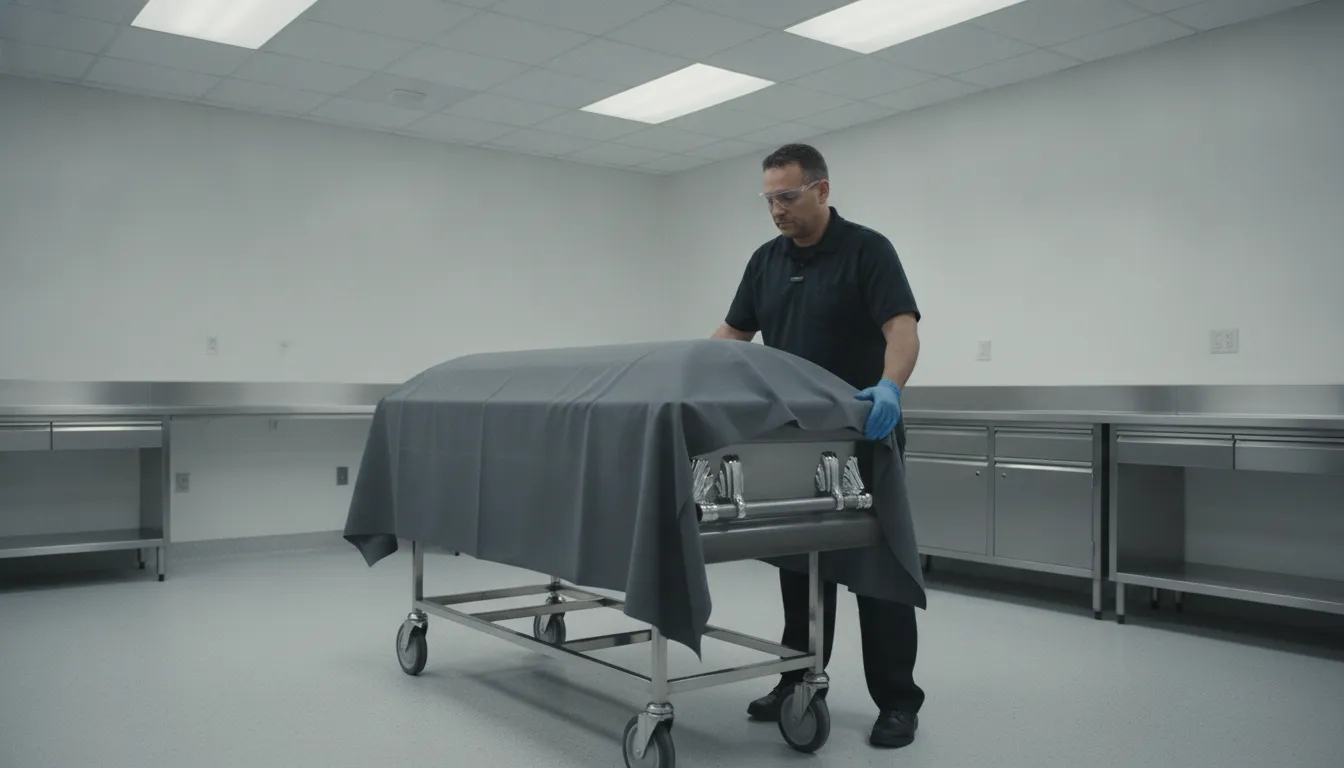
Engineering controls isolate people from the hazard. Examples include puncture-resistant, leakproof sharps containers placed where contaminated sharps are used, splash guards where appropriate, and equipment or layouts that reduce unnecessary handling. A sharps container should be within reach at the point of use, not across the preparation room. OSHA requires sharps containers to be puncture resistant and leakproof on the sides and bottom. Replace them according to the facility’s procedure before overfilling creates a new hazard.
Make work practices consistent
Work-practice controls depend on deliberate habits. Keep contaminated instruments and materials in designated areas. Do not bend, break, recap, or remove contaminated needles by hand unless a specific procedure and appropriate control require it. Keep hands away from the face, and never eat, drink, smoke, apply cosmetics, handle contact lenses, or store food in areas where exposure is reasonably likely. Remove PPE before leaving the work area, and wash hands with soap and water after removing it.
Hand hygiene should be available at the point where staff can use it without crossing clean areas. Employees should wash hands and other exposed skin as soon as feasible after contact with potentially infectious materials. If blood contacts the eyes, mouth, or another mucous membrane, flushing with water is part of the immediate response.
Control the room after the task
Housekeeping is part of exposure prevention, not an afterthought. Establish a defined process for cleaning and decontaminating work surfaces, handling regulated waste, and replacing contaminated materials. Regulated waste belongs in closable, leakproof, labeled or color-coded containers. Your disinfectant selection and handling procedure should align with the applicable OSHA requirements; see this OSHA bloodborne pathogens standards guide to disinfectant selection for a complementary workflow.
PPE remains essential when exposure remains after these controls. It is the final barrier, not a substitute for a safer setup. Task mapping should determine whether workers need gloves, protective clothing, eye protection, or face protection, and the employer must provide appropriate PPE at no cost to employees. A layered approach protects staff while preserving the dignity and consistency expected in professional funeral service.
What PPE Should Funeral Home Teams Keep Available?
PPE should match the task, the material handled, and the exposure reasonably anticipated, rather than follow a one-size-fits-all checklist. A preparation room, removal route, cleanup area, and embalming procedure can create different combinations of contact, splash, and sharp risk.
OSHA requires appropriate PPE when occupational exposure remains after engineering and work-practice controls. The employer provides it at no cost to employees. The equipment must prevent blood or other potentially infectious materials from reaching clothing, skin, eyes, mouth, or other mucous membranes. Review the OSHA Bloodborne Pathogens Standard alongside your facility’s exposure control plan.
| Task | Likely exposure concern | PPE starting point | Workflow note |
|---|---|---|---|
| Preparation and embalming. | Skin contact, fluid splash, and contamination of clothing | Mortuary gloves, fluid-resistant apron or smock, eye and face protection | Choose coverage and barriers based on the procedure and anticipated spray. |
| Removal and transport. | Uncontrolled contact with fluids, damaged skin, and contaminated surfaces | Nitrile or heavy-duty gloves, protective clothing, and footwear protection as needed | Keep task-appropriate sizes and replacement gloves with the removal equipment. |
| Cleanup and waste handling. | Spills, contaminated materials, and leakage during handling | Gloves, protective apron or full-body garment, and eye or face protection for splash risk | Pair PPE with designated waste containers and the facility’s cleanup procedure. |
| Sharps or high-splash work. | Needlestick, puncture, or exposure to eyes, nose, and mouth | Gloves selected for the task, fluid-resistant garment, goggles, and face shield when warranted | Use sharps controls first; PPE is an added barrier, not a substitute for safe handling. |
Vischer’s verified catalog includes mortuary gloves, nitrile and heavy-duty gloves, Tyvek wraparound smocks, protective aprons, and full-body garments. Browse the available mortuary protective clothing and PPE by the work each team performs. For removal crews, also consider whether a glove’s material, cuff length, dexterity, and resistance fit the actual handling conditions.
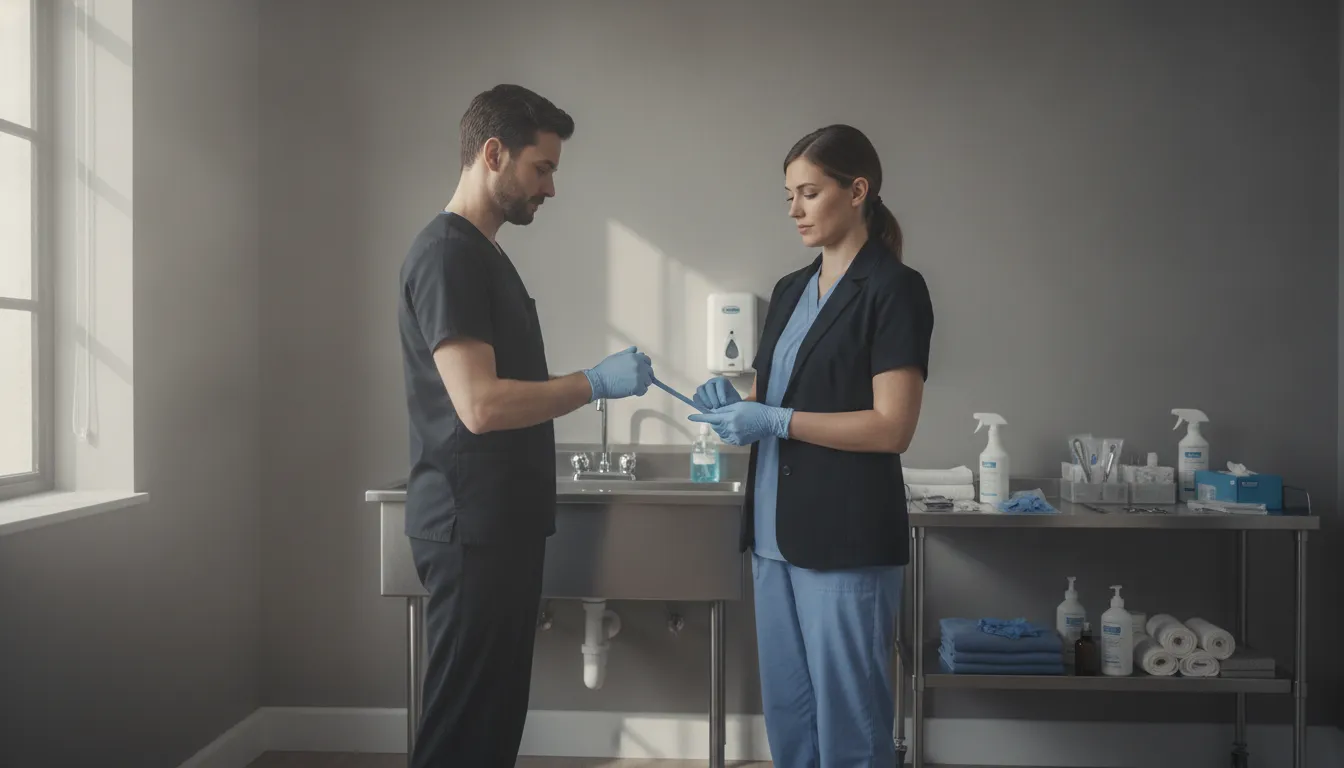
Availability matters as much as selection. Stock multiple sizes, replace damaged or penetrated garments promptly, and stage clean PPE where employees begin the task. Supervisors should periodically observe donning and doffing, confirm that supplies are accessible, and ask staff what fails during real work. Those observations can reveal missing sizes, awkward closures, or a need for better splash coverage.
Workers should remove PPE before leaving the work area and wash hands and exposed skin with soap and water after removal. Include disposal, laundering, and replacement instructions in the same written procedure so the barrier does not create a secondary contamination risk. A practical companion is Vischer’s funeral home PPE requirements guide, which can help teams turn hazard assessment into a consistent purchasing and training checklist.
Training, Vaccination, and Documentation: Make Safety Repeatable
A safety program becomes dependable when every employee can find the plan, explain the controls, ask questions, and document the steps that protect the team.
Training should begin before an employee is assigned duties where occupational exposure may occur. Under OSHA’s Bloodborne Pathogens Standard, covered employees must also receive training at least annually. The training should reflect the actual work performed in the preparation room, during removals, and during cleanup, rather than relying on a generic presentation.
Make the exposure control plan accessible
Employees should know where to find the facility’s written Exposure Control Plan and how to review the portions that apply to their work. The plan should identify job classifications and tasks with reasonably anticipated exposure. It should then describe the engineering controls, work practices, PPE, housekeeping procedures, and post-exposure process used to reduce that risk. OSHA requires the plan to be reviewed and updated at least annually, and whenever new or modified tasks and procedures affect occupational exposure. Review it after workflow changes, new equipment, or an incident, not only when a calendar reminder appears.
Training should explain the location, proper use, and limitations of engineering controls and PPE. In practical terms, that may include demonstrating sharps-container placement, safe handling techniques, hand hygiene, doffing order, waste labeling, and the approved process for cleaning a blood spill. If disinfectant selection or application is part of the lesson, Vischer’s OSHA disinfectant selection guide can support the facility’s product and procedure review. Always follow the current OSHA standard, product label, and applicable health guidance.
Document training, vaccination, and follow-through
Keep a dated training record that identifies the material covered, the trainer’s qualifications, and the employees who attended. Give employees an opportunity to ask questions and provide answers in language and terms they can understand. Supervisors should also record when a new procedure is introduced and verify that the employee can apply it safely, rather than treating attendance alone as proof of readiness.
For employees with occupational exposure. OSHA requires the hepatitis B vaccination series to be made available at no cost within 10 working days of initial assignment, subject to the standard’s provisions. Post-exposure evaluation and follow-up must likewise be made available after an exposure incident. Maintain required confidential medical records for the duration of employment plus 30 years. Retain training records according to the standard. These records help the facility demonstrate consistent follow-through while protecting employee privacy.
What Should You Do After an Exposure Incident?
After a possible exposure to bloodborne pathogens, stop the task safely. Clean the exposed area immediately. Report the incident, and obtain prompt medical evaluation through the facility’s established process.
This sequence is educational, not medical advice. Follow your facility’s exposure control plan and the instructions of qualified clinicians. OSHA directs employers to make confidential medical evaluation and follow-up immediately available after a reported exposure incident.
-
Stop the activity and make the area safe. Set down or secure the instrument, container, or material involved without creating another hazard. If a sharp is present, do not handle it with your bare hands or attempt to recap it unless a specific procedure requires that action. Alert nearby team members so the task can be paused and the area managed according to your facility’s procedures.
-
Clean the exposed area immediately. For a needlestick, cut, or other contact with broken skin, wash the area with soap and water. Do not scrub aggressively or use caustic chemicals on the wound. For a splash to the eyes, nose, or mouth, flush the affected mucous membrane with clean water or saline as directed by your facility’s procedure. Remove contaminated clothing as appropriate and prevent further contact with the material.
-
Report the incident promptly. Notify the designated supervisor or responsible person as soon as possible, even if the exposure seems minor or there is no visible injury. Explain what happened, the type of material involved, the route of exposure, the time, and the task being performed. Accurate details help the employer provide the clinician with relevant information and identify any immediate workplace controls that need attention.
-
Seek immediate medical evaluation. Use the facility’s designated occupational-health, emergency, or other clinical pathway. Do not diagnose the risk yourself or wait for symptoms before seeking guidance. OSHA’s Bloodborne Pathogens Standard requires post-exposure evaluation and follow-up to be made available after an exposure incident. The clinician will determine what evaluation and follow-up are appropriate for the individual circumstances. OSHA’s bloodborne pathogens guidance provides the governing workplace-safety context.
-
Document the event and review the controls. Complete the incident report using the facility’s process, preserving required confidentiality for medical information. Record the circumstances, equipment or sharp involved, route of exposure, immediate response, and referrals made. After the urgent response, review whether a safer device, revised work practice, better housekeeping step, or additional training could reduce the chance of recurrence. Update the exposure control plan when tasks or procedures change, as required by the applicable OSHA standard.
Supervisors should ensure the employee knows where to obtain follow-up care and who can answer questions about the incident. A calm, consistent response protects the employee, supports accurate documentation, and helps the team improve its safety practices without assigning blame.
Frequently Asked Questions About Bloodborne Pathogens
What are bloodborne pathogens in a funeral home setting?
Bloodborne pathogens are infectious microorganisms in human blood that can cause disease, including hepatitis B, hepatitis C, and HIV. Exposure can occur when blood or other potentially infectious materials contact broken skin, eyes, mucous membranes, or a sharps injury. OSHA explains the standard and covered exposure routes.
Does OSHA require a written exposure control plan for funeral homes?
A workplace with covered occupational exposure must maintain a written Exposure Control Plan identifying affected job classifications and protective measures. The plan must be reviewed at least annually and when relevant tasks or procedures change. See the OSHA regulation.
What PPE is required when handling bodies infected with bloodborne pathogens?
PPE depends on the task and expected exposure. It may include gloves, protective gowns or aprons, face shields or masks, and eye protection. Employers must provide appropriate PPE at no cost when exposure remains after engineering and work-practice controls.
How often must funeral home employees receive bloodborne pathogen training?
Employees with occupational exposure need training when initially assigned to covered tasks and at least annually afterward. Training should address the facility’s controls, PPE, procedures, and employee questions. OSHA sets these training requirements.
What should I do if an exposure incident occurs at the funeral home?
Wash or flush the exposed area immediately, report the incident to a supervisor, and seek prompt medical evaluation. OSHA requires confidential post-exposure evaluation and follow-up after a reported exposure incident. Review OSHA’s post-exposure guidance.
Keep Your Funeral Home Safety Program Ready
A dependable safety program connects written procedures with the supplies, training, and daily habits each task requires. Reviewing those elements together can help your team identify practical gaps and keep preparation, removal, and cleanup workflows consistent.
Ready to review your safety supplies and workflow? Contact Vischer today.