

A cooler that fits the room but not the workload creates daily risk. The right unit protects decedents, supports safe handling, and gives staff dependable capacity when volume rises.
Compare Vischer mortuary coolers and request practical guidance for your facility.
Mortuary coolers are dedicated refrigeration systems that preserve decedents respectfully and hygienically before burial, cremation, examination, transport, or another next step. The right unit matches expected case volume, available floor space, loading method, staff workflow, electrical service, future growth, and the range of decedents served. It should hold a stable short-term storage temperature; industry guidance commonly places the target range at 34 to 38 degrees Fahrenheit for effective preservation. Capacity planning should also account for peak periods, bariatric cases, backup needs, and enough working clearance for staff and transfer equipment. The best purchase is a system your team can load safely, monitor consistently, clean thoroughly, maintain easily, and trust during normal operations or sudden volume increases.
The question is not just which unit fits, but which one supports your people and remains dependable for years. How to choose the right mortuary coolers turns that broad decision into clear checks for capacity, layout, loading, and service. The path begins with:
How to choose the right mortuary coolers
The right cooler fits both today’s workload and the way your team handles each case. Start with case volume, then assess movement paths, room limits, and likely growth. This framework helps you compare mortuary coolers without choosing on capacity or price alone.
Capacity and workflow needs
Review your busiest weeks, not just your average case count. Build in room for delays, holidays, and unexpected intake. Since body refrigeration affects postmortem chemical changes, dependable cold storage should be treated as a core operating need.
- Set a working capacity. Count how many decedents may need storage at one time during a peak week. Add spare capacity so one delay does not disrupt intake.
- Map each transfer. Trace the path from receiving to preparation or release. Note door widths, turns, ramps, and the space staff need to load each tray safely.
- Choose a loading style. End-loading units can suit a long, clear work path. Side-loading units may fit better where the room is wide but shallow.
- Check the full footprint. Measure the unit, door swing, service clearance, and rack movement area. Also confirm that the floor, power supply, and ventilation suit the planned unit.
- Plan for growth. Compare recent case trends with expected staffing and service changes. A modular setup or extra bay may cost less than replacing an undersized cooler later.
Space and handling equipment
Capacity only helps when staff can use it with ease. Match tray height and loading direction to your transfer equipment and daily process. For a compact facility, compare upright mortuary storage solutions with end-loading layouts before choosing a footprint.
Think beyond the cooler cabinet. Leave enough clear floor space for staff, cots, lifts, and doors to move without conflict. The right layout reduces extra handling and keeps receiving areas easier to manage during a busy period.
A practical final comparison
Compare each option on usable capacity, loading method, service access, and room fit. Then review controls, cleaning needs, warranty terms, and support. If volume may rise, compare a larger unit with industrial mortuary coolers that can support a phased plan.
A good choice should solve the hardest normal day without making routine work harder. Ask the supplier to review measurements, transfer flow, and growth assumptions before the order is placed.
Compare mortuary cooler configurations
Mortuary coolers differ in how staff load them, how much room they need, and whether they can move later. The right configuration supports safe daily work without wasting floor space. Stable refrigeration also matters because cooling can limit postmortem changes, as shown in research on body refrigeration.
Configuration at a glance
Start with workflow, not appearance. Consider how decedents enter the building, which transfer equipment staff use, and how often the cooler reaches capacity. The table below shows the main fit for each common configuration.
| Configuration | Loading style | Best fit | Space planning | Key tradeoff |
|---|---|---|---|---|
| Roll-in | Cot or rack rolls inside | Simple transfers and routine holding | Needs clear approach space | Convenient access uses more floor area |
| Walk-in | Staff enter the cold room | Facilities with mixed storage needs | Requires room for aisles and racks | Flexible inside, but needs a larger footprint |
| Modular | Varies by panel layout | Planned growth or custom rooms | Panels adapt to the available footprint | Layout choices require careful planning |
| Portable | Usually direct or rack-based | Overflow, temporary use, or changing needs | Needs a suitable service location | Easy to place, but capacity may be limited |
Workflow and capacity fit
Roll-in units suit teams that want direct access with fewer transfer steps. A walk-in room can support different racks or trays within one cold space. Facilities with steady volume may prefer high-capacity mortuary coolers designed around a set holding need.
Modular systems make sense when the room must follow an unusual footprint or allow later changes. Portable units are better for short-term overflow or sites where a fixed room is not practical. In every case, staff need enough clearance to turn, load, and clean without blocked paths.
- Choose roll-in access when direct cot movement is the main concern.
- Choose a walk-in layout when staff need flexible rack placement and working aisles.
- Choose modular panels when room shape or future expansion affects the plan.
- Choose portable storage when needs may change or the installation cannot be permanent.
Installation details to confirm
Before selecting a layout, measure doors, halls, turns, ceilings, and the final service area. Confirm that the floor can support the loaded system. Also check power, drainage, ventilation, and access for service work with the installer.
Review the busiest expected day, not only the usual daily count. Extra capacity can help during seasonal peaks or local emergencies. It also needs enough room for staff to work safely. Compare that need with the space and service limits at the site.
Plan the storage method at the same time as the cooler. End-loading layouts, for example, need clear space in front of each tray position. Matching the unit with suitable body tray storage racks helps prevent a cooler from becoming difficult to use.
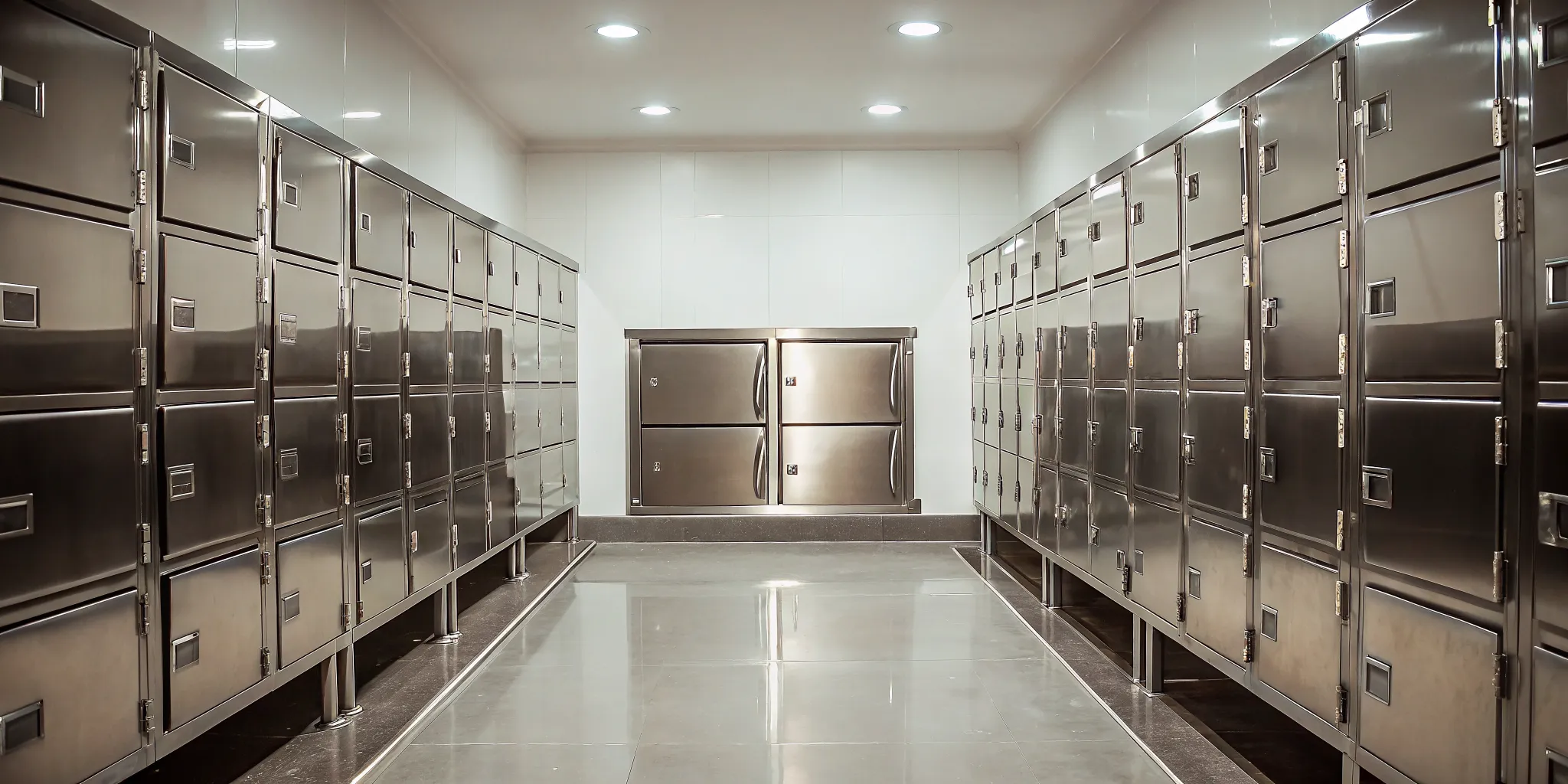
What capacity does your facility need?
A practical capacity baseline
Start with records from a typical month, then review your busiest weeks. Count how many decedents arrive each day and how long each remains in your care. Capacity depends on both figures. Three calls in one day create different needs when each decedent stays two days instead of one.
Estimate routine demand by multiplying average daily calls by average dwell time. Then compare that result with the highest number held at one time during the past year. Use the larger figure as your baseline, not the monthly average alone. This approach helps prevent a predictable busy period from becoming an emergency.
Peak demand and room to grow
A cooler should have open space during normal operations. That spare capacity supports seasonal peaks, delayed services, transfers, and short-term changes in case volume. It also gives staff room to keep cases organized. Research on body refrigeration and postmortem changes reinforces why dependable refrigerated storage matters.
Plan beyond today’s call volume. Review local population trends, planned service-area growth, new contracts, and any expected rise in trade work. A facility that often holds four decedents may need to compare six-body high-capacity mortuary coolers rather than choose a four-body unit with no buffer.
- Record average daily calls and the busiest daily call count.
- Track average dwell time and the longest common dwell time.
- Note how often current storage reaches full capacity.
- Set aside space for expected growth and surge events.
Staffing, layout, and surge plans
Rated capacity is only useful when staff can load, move, and identify each decedent safely. Check whether your team can reach every tier and move trays without blocking doors or work paths. Match the cooler layout with available lifting equipment, floor space, and staffing on nights or weekends.
Define what happens when demand exceeds the planned buffer. Your surge plan may include reserved space, an approved partner facility, or a modular expansion path. If higher tiers are part of the plan, assess compatible body tray storage racks before selecting the final cooler size.
Before ordering, test the plan against a normal week, a peak week, and a realistic surge. The right capacity serves all three without forcing unsafe handling or routine overflow.
Plan dimensions, utilities, and installation
Start with the complete equipment drawing, not the stated body capacity alone. Mortuary coolers need room for the cabinet, doors, refrigeration components, and safe staff movement. A clear site plan helps prevent costly changes on delivery day.
Room dimensions and working clearance
Measure the available width, depth, and height at several points. Note low ceilings, pipes, sprinklers, drains, columns, and any wall or floor slope. Then mark the full swing of each door and the space needed to load a tray.
Plan around the way staff will use the cooler each day. End-loading and side-loading layouts require different working areas and transfer paths. Larger high-capacity mortuary coolers may also need more space for racks and safe handling equipment.
Confirm that the finished floor can support the cooler, refrigeration equipment, racks, trays, and expected loads. Ask the building owner or a qualified engineer to review uncertain floor conditions. The installation area should also be level, clean, and ready before the unit arrives.
Utilities and operating conditions
Use the manufacturer’s approved submittal to plan electrical service, ventilation, drainage, and refrigeration connections. Do not assume that two coolers with similar capacities share the same needs. Confirm voltage, phase, circuit protection, outlet location, and disconnect requirements with a licensed electrician.
Refrigeration equipment must release heat, so review airflow and room temperature limits before choosing its location. Keep service panels and refrigeration parts reachable for routine checks and repairs. If the room gets hot, tell the supplier before the unit is selected.
Plan for alarms, temperature records, and backup power based on your facility’s procedures and local rules. Stable temperature control is a core cold-chain principle, as shown in the CDC cold-chain guidance. Your local authority can clarify which permits, inspections, and records apply to the site.
Delivery path and installation coordination
Walk the full delivery route before ordering. Record door widths, hallway turns, elevator limits, loading dock height, stairs, and overhead barriers. Compare those details with the largest shipped panel or assembled part, not only the finished cooler size.
Coordinate the supplier, installer, electrician, refrigeration technician, general contractor, and facility contact before delivery. Assign responsibility for permits, utility work, unloading, assembly, startup, and staff training. This step keeps small gaps between trades from delaying the project.
Before accepting the installation, check door movement, seals, controls, alarms, drainage, and clear access for service. Document startup readings and keep equipment records where staff can find them. For site-specific planning, Vischer’s equipment support team can help review space, capacity, and coordination needs.

Temporary versus permanent cold storage
Temporary and permanent mortuary coolers solve different capacity problems. The right choice depends on demand, available space, building limits, and how long the added capacity is needed. Start by separating short-term pressure from the facility’s normal daily workload.
When portable storage fits
Portable storage can help during renovations, equipment repairs, unusual case volume, or a planned event that may raise demand. It can also let a facility test added capacity before changing the building. This approach limits the risk of paying for space that may sit unused later.
Portable does not always mean simple. Before delivery, confirm the unit’s path, floor support, power supply, ventilation needs, drainage, security, and staff access. A stable cold environment matters because research on postmortem changes shows that refrigeration affects the condition of stored remains.
- Choose temporary storage when the need has a clear end date.
- Plan safe transfers between the temporary unit and the preparation area.
- Include delivery, setup, removal, utilities, and service in the cost review.
When a permanent installation fits
A permanent system often makes sense when added capacity supports the facility’s normal workload. It can provide a set workflow, dedicated storage space, and easier access for staff. Buyers can compare upright units, walk-in designs, and industrial mortuary coolers against the building’s layout.
Permanent installation requires more planning before purchase. Review doorways, ceiling height, floor conditions, electrical service, ventilation, and the route used for transfers. Leave room for service work and future growth. Do not fit the largest possible unit into a tight area.
Comparing the full cost
Purchase price alone does not show which choice costs less. For temporary storage, count transport, setup, rental time, removal, and any repeated use. For permanent storage, count site work, installation, energy use, planned service, and the useful life of the equipment.
Then compare those costs with the daily impact of each option. Consider staff travel, transfer steps, access during busy periods, and the risk of running short on space. Steady demand may favor a permanent unit. Short or uncertain demand may favor portable storage.
Capacity should also match the way remains enter, move through, and leave the facility. For smaller spaces, upright mortuary storage solutions may reduce the needed footprint. A layout review can show whether a temporary unit solves the issue or only moves the bottleneck.
Build a realistic mortuary cooler budget
Compare the full installed cost
The quoted equipment price is only the first line in a mortuary cooler budget. Ask each supplier for a full scope that lists delivery, unloading, assembly, start-up, and staff training. Also confirm who handles permits, inspections, and final testing. This approach makes competing quotes easier to compare.
Site work can change the final cost and schedule. Check the room dimensions, doorways, floor strength, electrical service, ventilation, drains, and access for delivery equipment. A low equipment quote may cost more after structural or electrical changes. Include those items in the same budget before approving a purchase.
Capacity affects both the purchase and the supporting site work. Compare the cost per usable position, but also check how staff will load each position. For example, high-capacity mortuary coolers may need more floor space and a clear path for safe transfers.
Estimate ownership costs and downtime risk
Build an annual operating estimate for energy, routine service, cleaning supplies, temperature checks, and expected replacement parts. Ask for compressor details, warranty terms, service intervals, and local technician availability. Energy use should reflect the room temperature, door openings, cooler size, and typical load rather than a best-case estimate.
Downtime deserves its own budget line. Refrigeration affects postmortem changes, as shown in published forensic research. A failure can force a facility to arrange temporary storage, emergency repair, or transport. Ask how quickly parts and service are available, then set a practical contingency amount.
Review what the warranty excludes and who pays for labor, travel, freight, and lost operating time. Also ask whether remote alarms or temperature logs require a fee. A feature can lower risk, but its ongoing cost belongs in the ownership estimate.
Plan for safe growth
Base capacity on typical volume, peak periods, holding time, and referral patterns. Buying too little can lead to an early replacement or costly overflow arrangements. Buying far beyond likely demand adds energy use and takes up space that may serve another purpose.
Compare expansion paths before selecting a layout. Some facilities can add a bay, rack, or separate unit without replacing the first cooler. Include the cost of future electrical work, floor space, and loading equipment. Compatible body tray storage racks may also help a facility use planned capacity safely.
Put each option into one worksheet with the same categories: installed cost, yearly operating cost, maintenance, downtime risk, and expansion cost. Note every assumption beside the estimate. This record helps decision-makers see where a lower purchase price may create higher costs later.
Evaluate support before you buy
A cooler quote covers more than the cabinet, racks, and refrigeration unit. It should also show who will help after delivery. Before choosing mortuary coolers, ask each supplier how it handles setup questions, service calls, parts, and staff training.
Questions for the supplier
Start with the support process. Ask whether you will contact the supplier, the maker, or a local service firm when a problem occurs. Find out which support channels are available and when staff answer them. A clear path can save time during a service issue.
- Who helps with delivery coordination and installation questions?
- Is phone or text support available, and during which hours?
- Who can diagnose refrigeration, controls, doors, and rack problems?
- Are service technicians available near your facility?
- Does training cover controls, loading, cleaning, and routine checks?
Ask the supplier to explain the full warranty in plain terms. Confirm its length, covered parts, labor rules, travel fees, and exclusions. Also ask who approves a claim and how long replacement parts often take. Get these answers in writing before you compare bids.
Parts and maintenance access
Service access matters because refrigeration conditions can affect postmortem changes, as shown in published forensic research. Ask whether common parts are stocked and how quickly they can ship. The supplier should name the parts that may wear first, such as door seals, controls, and rack hardware.
Build a basic maintenance plan before the cooler arrives. Assign staff to record temperatures, inspect door seals, clean surfaces, and note unusual sounds. Ask which tasks staff may perform and which require a refrigeration technician. Written maintenance steps and service records make later troubleshooting easier.
Storage hardware also deserves support planning. If your setup uses body tray storage racks, confirm that matching rollers, fasteners, and trays remain available. Ask how to order the correct part without relying on guesswork.
A fair quote comparison
Compare quotes line by line, not just by the final price. Separate equipment, racks, trays, freight, installation, training, warranty coverage, and optional service plans. Check whether each quote reflects the same capacity, loading style, and site needs. Missing items can make a lower bid cost more later.
Ask each supplier for one clear point of contact and a written support summary. Review product details for both standard and high-capacity mortuary coolers before discussing a quote. A useful supplier should help you match support, service access, and upkeep needs to the equipment under review.
Frequently Asked Questions
What temperature are mortuary coolers?
Mortuary coolers are commonly set between 34 and 38 degrees Fahrenheit for short-term preservation. Industry compliance guidance identifies this range as appropriate for slowing decomposition without freezing tissue. Temperatures above 40 degrees Fahrenheit can speed bacterial activity, while temperatures at or below 32 degrees can damage tissue. Facilities should verify local requirements and record temperatures according to their written procedures.
What is the fridge called in a morgue?
The specialized refrigerator used in a morgue is commonly called a mortuary cooler, morgue refrigerator, body refrigerator, or body box. The terms often describe similar equipment, but the configuration can differ. Upright, roll-in, walk-in, and multi-bay systems use different loading methods and footprints. Buyers should compare usable capacity, rack design, loading direction, and utility needs rather than relying on the product name alone.
How much do mortuary coolers cost?
Mortuary cooler prices vary widely by capacity, configuration, refrigeration system, and installation scope. Vischer’s mortuary cooler category includes equipment priced from $7,749 to more than $50,000. The final project cost may also include freight, unloading, site work, electrical service, assembly, startup, racks, trays, alarms, and training. Compare quotes using the same installed-cost categories and warranty assumptions.
Does a mortuary cooler need temperature monitoring?
Yes. A mortuary cooler should have a dependable way to display and monitor internal temperature. Temperature logs are often reviewed during state board inspections, and automated alerts can help staff respond before a problem becomes prolonged. The monitoring plan should define who checks readings, how often checks occur, when an alarm requires action, and what backup storage steps staff should follow.
Ready to choose the right mortuary cooler?
Waiting to replace an undersized or unreliable cooler can leave your team managing space limits during already demanding cases. Starting your review now gives you time to compare capacity, layout, workflow, and budget before the need becomes urgent. A clear plan also helps you choose equipment that fits daily operations without paying for features your facility will not use.
Ready to make a confident choice? Request guidance on mortuary cooling equipment.
Discuss your facility, available space, expected capacity, and daily workflow. Acting now gives your team room to review the details before committing to a major equipment decision. Start with practical questions, compare suitable options, and move forward on a timeline that works for your funeral home, mortuary, or crematory.