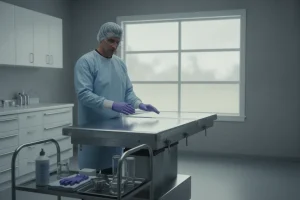

An embalming table that fits the room but fights the workflow becomes a daily burden. The right model supports safe, efficient preparation without wasting space or straining staff.
Browse Vischer Funeral Supplies embalming tables and preparation equipment.
An embalming table should match case volume, room dimensions, drainage, mobility, staff comfort, and the heaviest expected load. Folding models help preserve limited space, hydraulic models simplify positioning, and perforated surfaces support controlled washing. Vischer Funeral Supplies can help facilities compare these practical requirements before choosing equipment.
The question is not which table has the longest feature list, but which one suits your cases, staff, and room. How to choose the right embalming table starts with a clear look at daily demands, safety, and available space. The path begins with
How to choose the right embalming table
Choose an embalming table by measuring the room and transfer route, documenting utilities, reviewing case mix, and confirming safe working capacity. Then compare height adjustment, mobility, drainage, cleaning access, and service needs. Vischer Funeral Supplies can help turn those requirements into a practical equipment shortlist.
Start with the facility and case mix
Measure the prep room, doorways, turning space, and clear paths around the planned table location. Note the floor drain, water supply, electrical outlets, and ventilation layout. These details show whether a fixed, mobile, folding, or hydraulic table will work without forcing awkward changes.
Then review the range of cases the facility handles, not just its average case. Consider how often staff need added width, higher capacity, or access from every side. A table should safely support the expected work while leaving enough room for staff and equipment.
| Table type | Best fit | Main benefit | Plan for |
|---|---|---|---|
| Folding or portable | Small rooms or shared spaces | Easy storage and movement | Setup time and stable placement |
| Fixed stainless steel | Dedicated prep rooms | Simple, durable work surface | Permanent floor space |
| Hydraulic or adjustable | Frequent use or several staff members | Flexible working height | Power, service, and clearance |
| Perforated washing surface | Workflows with frequent rinsing | Direct fluid drainage | Drain position and cleanup |
Map the full prep-room workflow
Follow a case from entry through preparation, transfer, dressing, and cleanup. The table should reduce extra moves and keep tools within reach. Review how it will pair with an ideal embalming table workstation setup before choosing its size or position.
Drainage deserves the same care as the work surface. Confirm how fluids move from the table to the room drain. Check where staff will connect hoses. Also consider whether the table placement supports local exhaust ventilation. NIOSH guidance on embalming-room ventilation shows why source control belongs in workspace planning.
Account for staff and long-term use
Ask the people who will use the table to test the planned working height and reach. A fixed height may suit one person but strain another. Adjustable height can help a mixed team. Locking casters may also improve access during transfers and cleaning.
Finally, compare upkeep, service needs, storage, and the cost of changing the room. Check seams, controls, wheels, locks, and drain parts for easy cleaning and repair. Choose the simplest embalming table that supports the facility’s hardest routine task without limiting safe daily work.
Which embalming table type fits your workflow?
Folding tables fit shared or space-limited rooms, fixed tables suit dedicated preparation rooms, hydraulic tables support frequent height changes, and combination tables serve multiple tasks. Vischer Funeral Supplies recommends choosing the simplest type that supports daily case flow, safe cleaning, and staff access.
Folding and multi-height tables
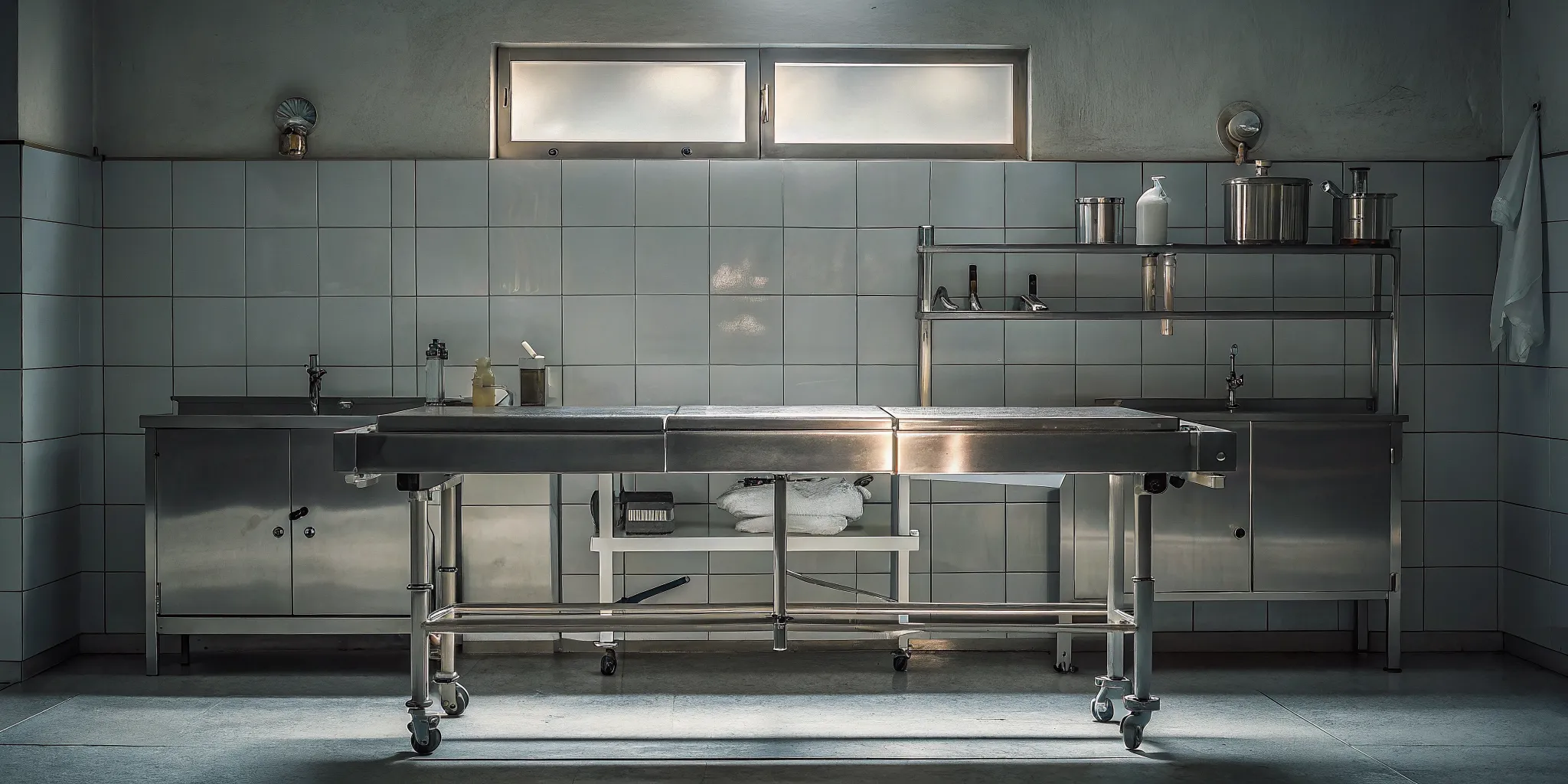
Folding tables suit smaller prep rooms, removal services, and facilities that need flexible floor space. They can be moved or stored when another task needs the room. The tradeoff is that staff must set up, secure, and inspect the table before each use.
A multi-height folding model adds more choice in working position while keeping the same storage benefit. It gives teams with different staff heights a more practical shared surface. Confirm the adjustment method, wheel locks, drainage route, and rated capacity before making a selection.
That check matters when the table moves between rooms or serves several roles. If storage is the main concern, review Vischer’s broader range of preparation supplies while planning the room as a complete system.
Fixed tables for dedicated prep rooms
Fixed tables suit facilities with a dedicated prep room and a steady, repeatable workflow. They give staff a consistent working position and remove setup steps between cases. Models with a perforated washing surface also help direct fluids during washing and preparation.
Because the table stays in place, plan the room around cleaning access, drainage, and an ideal embalming table workstation setup. Fixed height can be a drawback when several staff members share the same station. Before buying, check the table height against staff needs and the planned location of nearby equipment.
Position the table with ventilation in mind, not only plumbing and floor space. NIOSH reports that local exhaust ventilation can reduce formaldehyde exposure below the OSHA permissible limit when properly designed. This makes airflow part of the table decision for any permanent prep room layout.
Hydraulic and combination tables
Hydraulic tables fit higher-volume facilities and teams that often change the working height. They are also useful when staff need more control while positioning a decedent. That adjustment can support different tasks without moving the table to another station.
The tradeoffs are a larger footprint, added mechanical parts, and a higher level of upkeep. Check the lift range, controls, rated capacity, and service access before comparing models. If space allows, leave enough clearance for staff to work safely around every side.
Combination or dressing tables make sense when one surface must support preparation and later dressing tasks. They are practical for lower-volume firms, shared rooms, or facilities seeking more use from each piece of equipment. Choose one when flexibility matters more than the steady setup of a dedicated fixed table.
Whichever type you consider, compare it against case volume, available floor space, staff needs, cleaning routines, and planned drainage. Also confirm that the surface size and rated capacity suit the cases your facility accepts. Those details will narrow the options faster than comparing table styles by price alone.
Evaluate height, mobility, and load capacity
Working height and positioning
An embalming table should let each operator work without prolonged bending, raised shoulders, or awkward reaching. Before buying, compare the table’s full height range with the needs of every person who will use it. A powered or hydraulic lift makes changes easier during a case, while fixed and folding models require more planning.
Independent end adjustment adds another useful control. It can create a gentle working angle, support drainage, and help staff position the surface for the task at hand. Test each control while wearing gloves, and confirm that hoses or cables stay clear through the full range.
Table placement also affects exposure control. NIOSH reports that local exhaust ventilation can reduce formaldehyde exposure below OSHA’s permissible limit when the system is properly designed. Plan each working position around the hood or slot, rather than treating ventilation and ergonomics as separate choices.
Controlled movement through the facility
Mobility involves more than adding casters. Wheel size, floor seams, thresholds, slopes, and tight turns all affect how a loaded table handles. Confirm that staff can steer it without sudden shifts, then check that every brake is easy to reach and holds firmly.
Measure the full travel route before choosing a model. Include doorway width, hall turns, elevator openings, and any space needed beside other equipment. The table must also fit the planned embalming table workstation setup without blocking sinks, storage, or safe walking paths.
- Check the table’s widest point, including rails, handles, and controls.
- Test casters on the facility’s actual flooring and across each threshold.
- Engage all brakes and apply light pressure from several directions.
- Confirm that cords, hoses, and drains will not trail into the travel path.
Safe working capacity
Choose load capacity from the cases the facility must handle, not its usual average. The listed limit should cover the decedent plus any body support, tray, tools, and force applied during normal work. Ask whether the rating applies in every raised, tilted, and moving position.
Capacity also affects table width, frame size, stability, and ease of movement. A wider, higher-capacity model may improve support, but it can create problems at doors or narrow workstations. Compare capacity and dimensions together, then test the route with enough turning room on both sides.
Review the manufacturer’s instructions for use before making a final choice. Confirm the rated load, brake procedure, lift controls, and limits on moving an occupied table. Train staff on those limits, and remove the table from service if the frame, casters, brakes, or lift system show damage.
What surface and drainage design do you need?
Choose a surface and drainage design that works with the room’s plumbing, cleaning routine, and case volume. Solid convex tops provide an open cleaning path, while perforated washing surfaces support steady runoff. Vischer Funeral Supplies advises tracing the complete drain path before ordering.
Solid convex and perforated surfaces
A solid convex surface slopes gently from its raised center toward a surrounding trough. This design directs fluids away from the working area while keeping the body supported on one continuous surface. It also leaves fewer openings where residue can collect.
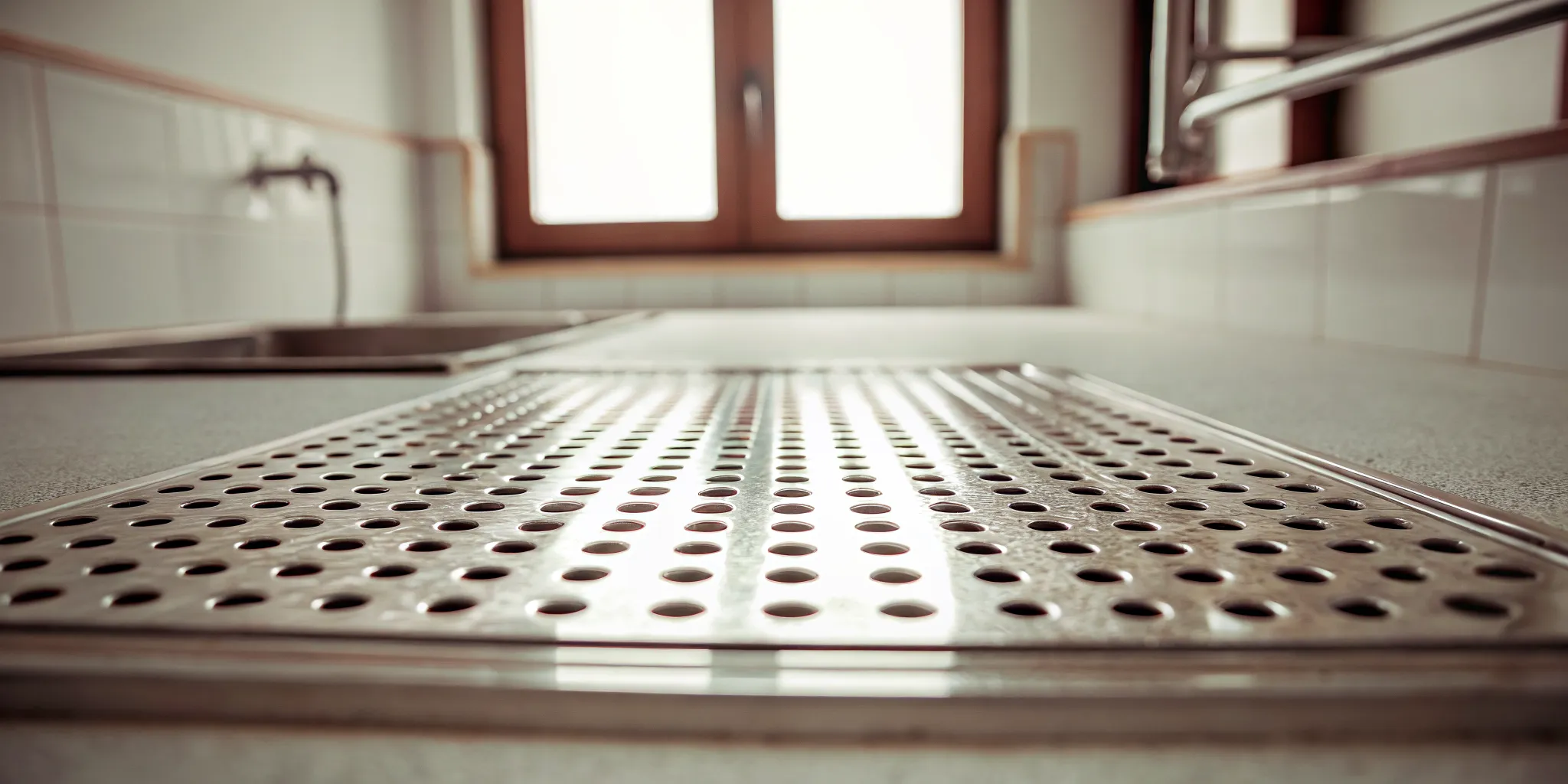
A perforated washing surface lets fluids pass through openings into a lower basin or drainage area. It can support frequent washing and fast runoff, but staff must clean both the upper surface and the space below it. Before choosing one, confirm that every lower area is easy to see, reach, rinse, and dry.
Neither design is right for every facility. A solid convex top may suit teams that want a simple, open cleaning path. A perforated top may fit a facility that needs steady drainage during wash-heavy procedures. Compare both choices against your process, not appearance alone.
Drain path and splash control
Trace the full path before ordering an embalming table. Start at the washing surface, then follow the trough, drain outlet, hose, and final plumbing connection. Check that the hose can run without sharp bends, low spots, or a trip hazard across the floor.
A deep, smooth trough helps contain runoff and guide it toward the outlet. Raised edges and a well-placed faucet can also limit splash outside the work zone. Test whether staff can direct rinse water without spraying nearby walls, controls, storage, or electrical equipment.
- Confirm the drain outlet size, location, and direction.
- Measure the distance and drop to the room connection.
- Plan a hose route that stays clear of feet and casters.
- Check access to strainers, traps, and removable parts.
- Review faucet reach, water pressure, and likely splash points.
Surface drainage does not replace air controls. NIOSH reports that embalmers may face formaldehyde concentrations averaging up to 9 ppm during embalming. Treat table drainage, splash control, and room ventilation as separate parts of the prep-room safety plan.
Cleaning access and plumbing fit
Stainless steel gives staff a durable, practical work surface, but the table design still determines how easy cleaning will be. Inspect seams, corners, welds, trough transitions, and hardware. Smooth, open areas are easier to rinse and check than tight gaps or hidden ledges.
Ask how staff will reach beneath the surface and around the drain after each case. Removable components should come out without a long teardown. The table should also leave enough room to clean the floor and inspect plumbing connections for leaks.
Finally, match the table to the existing room before delivery. Record water supply locations, drain height, outlet direction, floor slope, and available clearance. A well-planned embalming table workstation setup should keep service lines reachable without crowding the working side of the table.
Plan for room layout and storage constraints
A table must fit the room, but that is only the first test. It must also support safe movement, cleaning, supply access, and each step of daily prep work. Map the full setup before ordering an embalming table.
Measure the room and work paths
Start with a simple floor plan that marks walls, doors, fixed cabinets, sinks, floor drains, and utility points. Include door swing and the space taken by carts when they are parked. Then measure the route from the transfer entrance to the table.
Mark where staff stand during transfer, preparation, washing, and dressing. Leave room to move around the table without shifting equipment each time. Check whether a raised table, side tray, or attached accessory changes the required clearance.
- Measure every access point. Record room dimensions, doorway widths, hall turns, thresholds, and elevator space before selecting the table size.
- Map movement around the table. Trace the transfer path and staff positions. Test the plan with carts, lifts, and other mobile equipment shown at full size.
- Review storage needs. List supplies used at the table each day, then assign each item a clean, easy-to-reach storage location.
- Confirm utility connections. Match the planned table location with water, drainage, power, and ventilation points. Ask qualified trades to review changes before purchase.
- Allow cleaning clearance. Keep enough open space to reach the floor, wall edges, table base, and nearby fixtures during routine cleaning.
- Walk through a normal case. Follow the complete workflow from transfer through dressing. Note every extra turn, blocked path, and supply retrieval.
Match storage and utilities to the workflow
Storage should follow frequency of use. Keep daily supplies close to the primary work position, while reserve stock can sit farther away. A wall-mounted embalming service station may preserve floor space and keep key controls near the table.
Utility planning deserves the same care as table size. Confirm that hoses and cords reach without crossing work paths. Check the drainage route, outlet placement, and ventilation layout with the right trades before equipment arrives.
Ventilation placement affects more than comfort. NIOSH reports that a local exhaust system with slot hoods can reduce formaldehyde exposure below the OSHA permissible limit. Review the NIOSH ventilation guidance with the facility’s safety and ventilation professionals.
Test the layout before purchase
Use painter’s tape or cardboard to mark the proposed table footprint on the floor. Add the expected working clearance around it. Place carts, hampers, and mobile lifts in their normal positions, then have staff walk through a typical case.
This trial often shows storage conflicts that measurements alone miss. A cabinet door may block a cart, or supplies may require repeated trips across the room. It can also show whether matching the embalming table and machine creates a cleaner work path.
Document the final layout with measurements and connection points. Compare that plan with the table’s full dimensions, including its highest position and attached parts. This last check helps prevent costly room changes after delivery.
Build a realistic embalming table budget
A realistic budget covers the table’s full working life, not just its purchase price. Start with your current case volume, room layout, and the tasks the table must support. Then compare the costs of owning, using, cleaning, and maintaining each option.
Compare preparation equipment options from Vischer Funeral Supplies.
Cost beyond the purchase price
Ask for a complete delivered quote before comparing options. Freight, liftgate service, inside delivery, assembly, and removal of old equipment can change the total. Fixed or powered tables may also need plumbing, drainage, electrical work, or floor changes before use.
Accessories belong in the first budget, too. Confirm whether the quoted table includes a headrest, body bridges, arm supports, drain tubing, splash guards, and other needed parts. Also check whether an ideal embalming table workstation setup needs added fixtures or storage.
Cleaning time is an operating cost that repeats after every case. Look for smooth surfaces, reachable drains, and parts that staff can remove without special tools. A design that is hard to clean may cost less upfront but use more staff time.
Fit, service, and future use
Durability has value only when the table can also be serviced. Ask who handles repairs, how replacement parts are ordered, and how long common parts remain available. Review the warranty terms, but also learn what routine care is required to keep coverage valid.
Plan for the work your facility may handle later. A versatile embalming table may support dressing, washing, or other prep tasks and reduce the need for more equipment. Capacity, width, height adjustment, and mobility should fit both routine cases and likely future needs.
Facility needs can extend beyond the table itself. For example, NIOSH reports that local exhaust ventilation can reduce formaldehyde exposure below OSHA’s permissible limit. Include related room upgrades in the capital plan rather than treating them as surprise costs.
Buyer checklist
Use the same questions for every quote. This makes tradeoffs clear and helps prevent a low initial price from hiding higher costs later.
- What is included in the delivered and installed price?
- Which hookups, room changes, and accessories are required?
- How long does cleaning take after a typical case?
- Can staff reach and clean every drain and surface?
- What routine care does the table need?
- Who provides service, parts, and warranty support?
- Does the table fit the room, workflow, and storage plan?
- Will its capacity and functions meet future needs?
Finally, compare each choice over the years you expect to use it. Give more weight to fit, upkeep, service access, and staff time. The right budget supports safe, steady work without paying for features your facility will not use.
Match the table to your facility and case mix
The right embalming table depends less on a feature list and more on the work your facility handles each week. Start with case volume, case range, room layout, and the tasks performed on the surface. These details help separate useful features from added cost or complexity.
Funeral home and forensic workflows
An independent funeral home may need one table to support preparation, dressing, viewing preparation, and other routine work. A combination or folding design can make sense when room space is tight or the surface serves several roles. Before choosing a multipurpose model, map each task and note how often staff must move, store, or reset the table.
Forensic facilities often face a broader case mix and more washing work. A perforated washing surface may suit that workflow because it supports drainage during procedures. Review forensic equipment options alongside the room’s sinks, service connections, and clear paths for staff. Do not assume a table made for one setting will fit the other.
Dedicated and multipurpose use
Dedicated use can simplify daily setup because the surface stays assigned to one type of work. A multipurpose table may be practical when space is limited, but staff must account for each change between tasks. Ask who will use it, how often it will move, and which accessories must remain close at hand.
Also check whether an ideal embalming table workstation setup would keep hoses, instruments, and controls in a consistent place. Frequent washing puts drainage, access around the table, and cleanup steps higher on the buying list. The best layout supports the actual work without forcing staff to keep shifting equipment.
Ventilation should be reviewed as part of the full prep-room plan, not treated as a table feature. NIOSH reports that local exhaust ventilation can reduce formaldehyde exposure below the cited OSHA limit when designed and used correctly. This fact supports asking how the selected table will sit near the facility’s existing ventilation.
A documented supplier brief
Put your case-mix review in writing before requesting quotes. Use recent operating records to note typical volume, unusual cases, washing frequency, and the share of tasks needing dedicated space. Include doorway widths, available floor area, drain location, storage limits, and any need to move the table.
Give each supplier the same brief, then ask direct questions:
- Which table types fit our stated case mix and washing needs?
- What is included, and which parts or accessories must be ordered separately?
- How should staff clean the surface and inspect drainage points?
- What delivery, assembly, warranty, and service support are available?
- Can you confirm the table’s dimensions, load rating, and fit with our planned workstation?
A strong supplier should explain tradeoffs, flag mismatches, and document the model, options, lead time, and support terms. Keep that record with the purchase file so future staff can understand why the table was selected.
Frequently Asked Questions
What is the difference between an autopsy table and an embalming table?
An embalming table supports preparation work in a funeral home, with features such as drainage, mobility, and adjustable positioning. An autopsy table is designed for postmortem examinations and may include integrated sinks, stronger washing systems, or built-in ventilation. Some models support both uses, but buyers should compare the table’s intended purpose, drainage design, dimensions, and rated capacity before purchase.
Can an embalming table be used for other purposes?
Some embalming tables can also support washing, dressing, cosmetic preparation, or other approved mortuary tasks. Combination and folding models are often selected when one surface must serve several roles. Before using a table for another purpose, confirm the manufacturer’s instructions, load rating, surface design, and cleaning requirements. Staff should also plan how the table will be cleaned and reset between tasks.
How do you clean and maintain a stainless steel embalming table?
Follow the table manufacturer’s cleaning instructions after every case. Remove residue, clean the surface and drainage path with compatible products, rinse as directed, and dry the table fully. Inspect seams, troughs, hoses, casters, brakes, and removable parts for buildup or damage. Avoid products or tools that can harm stainless steel. Schedule repairs promptly if drains leak, wheels loosen, or controls stop working correctly.
What is the weight capacity of a bariatric embalming table?
Weight capacity varies by model, so buyers should confirm the manufacturer’s rated limit for every working position. Bariatric tables commonly provide wider surfaces and higher capacities than standard models. For example, one oversized hydraulic embalming table is listed with an 850-pound capacity. The selected rating should cover the decedent, supports, tools, and forces applied during routine work.
Ready to Choose the Right Preparation Table?
Waiting to replace an unsuitable table can prolong daily workflow problems and leave your team working around limits in mobility, drainage, or available space. Starting your review now gives you time to compare practical options before an urgent equipment need narrows the decision. Clear priorities can help you choose a table that fits your room, procedures, staff, and budget without paying for features you will not use.
Review Vischer Funeral Supplies preparation equipment options.
A focused equipment review can make the next conversation more productive and keep the final decision tied to your actual workflow. Contact the Vischer Funeral Supplies team with your room needs and questions before you commit.