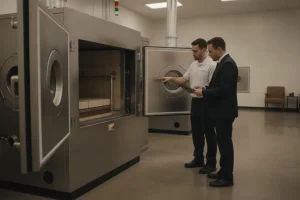
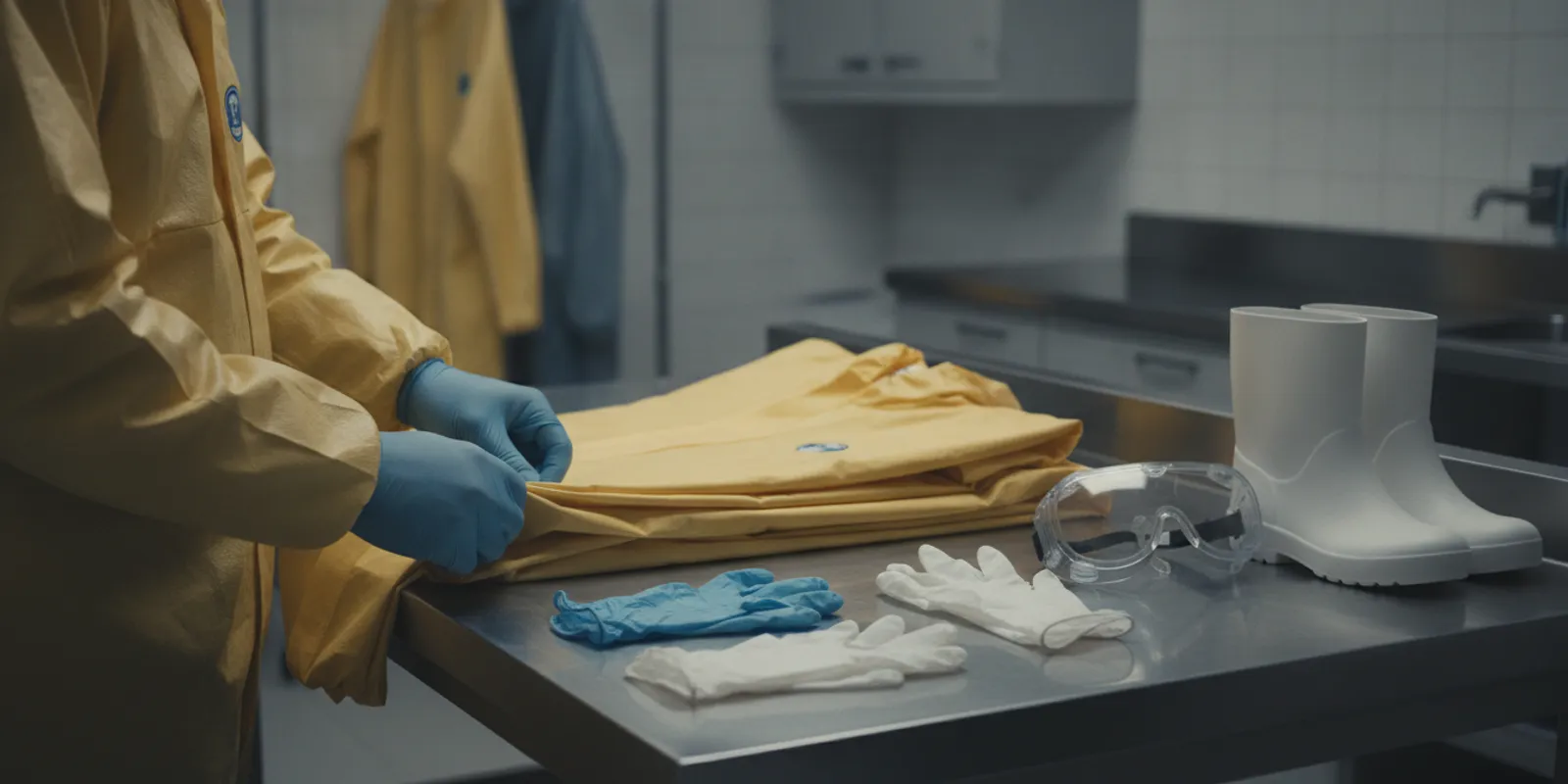
Forensic protective equipment is not one standard kit for every assignment. Teams need to match protection to the work, the site conditions, and the hazards identified by their agency or facility. A task-based plan helps staff prepare consistently, reduce avoidable exposure, and keep evidence-handling practices in view without treating a shopping list as a substitute for training or local procedures.
Talk with our team about protective supplies
What should a forensic protective equipment plan do?
A useful plan connects each activity with the hazards staff may encounter and the controls their facility has adopted. It should tell people what to select, when to change or remove it, where to dispose of it, and how to restock the work area.
Start with the work rather than a preferred product. Scene documentation, evidence collection, transport, autopsy support, and routine preparation can involve different conditions. The person responsible for the assignment should review the available hazard information and applicable agency procedures before work begins. Do not assume that a single glove, garment, or face covering is appropriate for every task.
For each task, write down:
- The activity and location: Identify the specific work, surfaces, materials, and any transition between clean and potentially contaminated areas.
- Potential exposure routes: Consider contact, splash, puncture, and airborne hazards as applicable to the site assessment. Have the designated safety lead determine which risks are relevant.
- Required controls: Record the protective equipment and work practices specified by the agency or facility, including any task-specific restrictions.
- Change and disposal points: Decide when items must be changed, where used items go, and how staff avoid carrying contamination into vehicles, offices, or clean storage.
- Responsible roles: Name who checks supplies, communicates changes, and follows up on a damaged or missing item.
The U.S. Department of Justice resource guide is intended to help law enforcement, corrections, and forensic science professionals evaluate, acquire, and use equipment. Treat acquisition as one part of a broader operational decision: confirm that an item fits the intended activity and your organization’s own safety requirements before putting it into service (U.S. Department of Justice equipment resource guide).
How do you match equipment to a forensic task?
Choose protection from a documented task assessment, not from habit or appearance. The right selection depends on the hazards, expected contact, task duration, dexterity needs, fit, compatibility with other equipment, and the facility’s written procedures.
A practical way to make decisions is to use a task-and-control matrix. It does not replace a formal hazard assessment or your agency’s protocols; it gives staff a repeatable prompt for checking whether a selection has been considered and approved.
| Work situation | Planning question | What to confirm before work |
|---|---|---|
| Scene or facility entry | What hazards and access conditions are known? | Follow the site lead’s assessment and approved entry procedures; confirm the designated protective clothing and footwear approach. |
| Evidence handling | What could contact the worker, the item, or the work surface? | Confirm the approved hand protection, change points, and handling procedure for the evidence type. |
| Work involving splash or surface contamination | What exposure routes are relevant to this specific activity? | Have the safety lead confirm the required eye, face, clothing, and hand protection as a compatible set. |
| Sharps or puncture concern | Could an item or waste stream contain a sharp? | Use the facility’s approved sharps-handling and disposal process; make the designated disposal container accessible. |
| Exit and equipment cleanup | How will used items be removed without spreading contamination? | Confirm removal sequence, waste handling, hand hygiene, and the route back to clean areas. |
Keep the matrix specific enough to guide action. “Wear PPE” is not an adequate task instruction: it leaves the selection, timing, and disposal decisions unresolved. Name the role that approves the selection and point to the relevant procedure. If information about a hazard is missing, pause and ask the responsible supervisor or safety professional instead of improvising.
Which equipment groups should teams plan for?
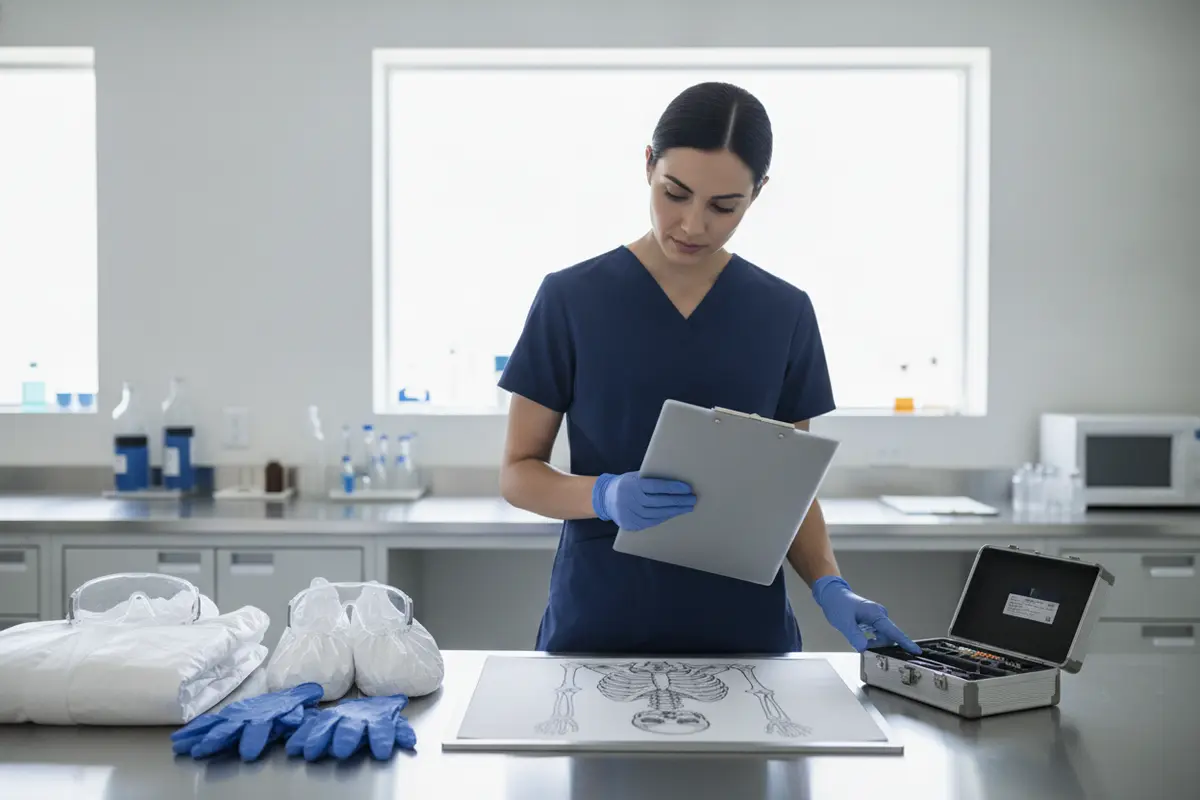
Plan around protective functions and the task, rather than treating a product category as a complete kit. A facility’s qualified safety personnel must determine which items are suitable and required in a given setting.
- Hand protection: Identify the glove type, fit, and change frequency allowed by local procedures. Keep options organized by size so staff are not tempted to use an ill-fitting pair. Vischer’s catalog includes MicroFlex gloves, Shamrock gloves, and blue nitrile gloves in an extra-large size; product availability and suitability should be confirmed for the particular need.
- Protective clothing and footwear: Use the garment and footwear approach specified by the task assessment and facility procedure. Vischer lists white Tyvek boot covers; verify the intended use, fit, and compatibility with the rest of the selected equipment.
- Eye and face protection: Consider whether the planned activity creates a relevant eye or face exposure and follow your organization’s approved selection. Confirm that the protection fits with any other equipment and does not interfere with safe work.
- Sharps controls and disposal: Equipment alone does not make sharps handling safe. Follow written collection and disposal procedures, and keep the facility’s designated container available where the work requires it. Vischer offers a sharps container in its catalog.
- Task-specific supplies: Some facilities may need additional preparation or medical supplies, but the list depends on the scope of work. Review the preparation equipment and supplies category or medical products catalog as starting points, not as a substitute for the organization’s assessment.
Make clear that products within a broad category are not interchangeable by default. Confirm the manufacturer’s intended use, labeling, sizing, and limitations. If a product is not clearly approved for the task, request review rather than inferring performance from its appearance or name.
How can teams protect evidence and reduce cross-contamination?
Keep evidence-handling steps and worker-protection steps coordinated. A defined sequence for putting on, changing, and removing equipment helps staff avoid moving material from one surface or zone to another.
Before work, identify clean and potentially contaminated areas, the path between them, and a place for used items. Staff should know which items must be changed between evidence items or tasks according to the applicable protocol. Avoid touching clean supplies with used gloves, and do not set clean equipment on a surface that has not been designated for that purpose.
- Prepare the work area. Gather the approved supplies and disposal materials before beginning. Keep clean stock separate from used items.
- Check fit and condition. Inspect equipment before use. Set aside damaged, wet, or otherwise unsuitable items according to facility procedure.
- Follow the task sequence. Use the organization’s instructions for handling evidence, changing protection, and moving between work zones.
- Remove equipment carefully. Follow the taught removal method and dispose of or clean items as directed. Do not carry used items into clean areas unless the procedure explicitly permits it.
- Reset the area. Replenish supplies, manage waste, and report shortages or failures before the next assignment.
These are planning prompts, not a universal decontamination protocol. The correct methods depend on the hazard and the organization’s approved procedures. Make sure staff can find the current instructions and know whom to contact when an unexpected material, damaged item, or exposure concern arises.
How should supplies be stored, checked, and replenished?
Store protective equipment so staff can identify the correct item, keep clean stock protected, and notice shortages before an assignment. A simple owner-and-check schedule is more useful than relying on memory during a busy shift.
Separate items by type and size, label storage locations plainly, and keep clean equipment away from used supplies and waste. Follow manufacturer storage directions and local requirements for temperature, packaging, shelf life, and inspection. Do not assume that a sealed package or a familiar product remains suitable indefinitely; check its condition and any date or handling information provided with it.
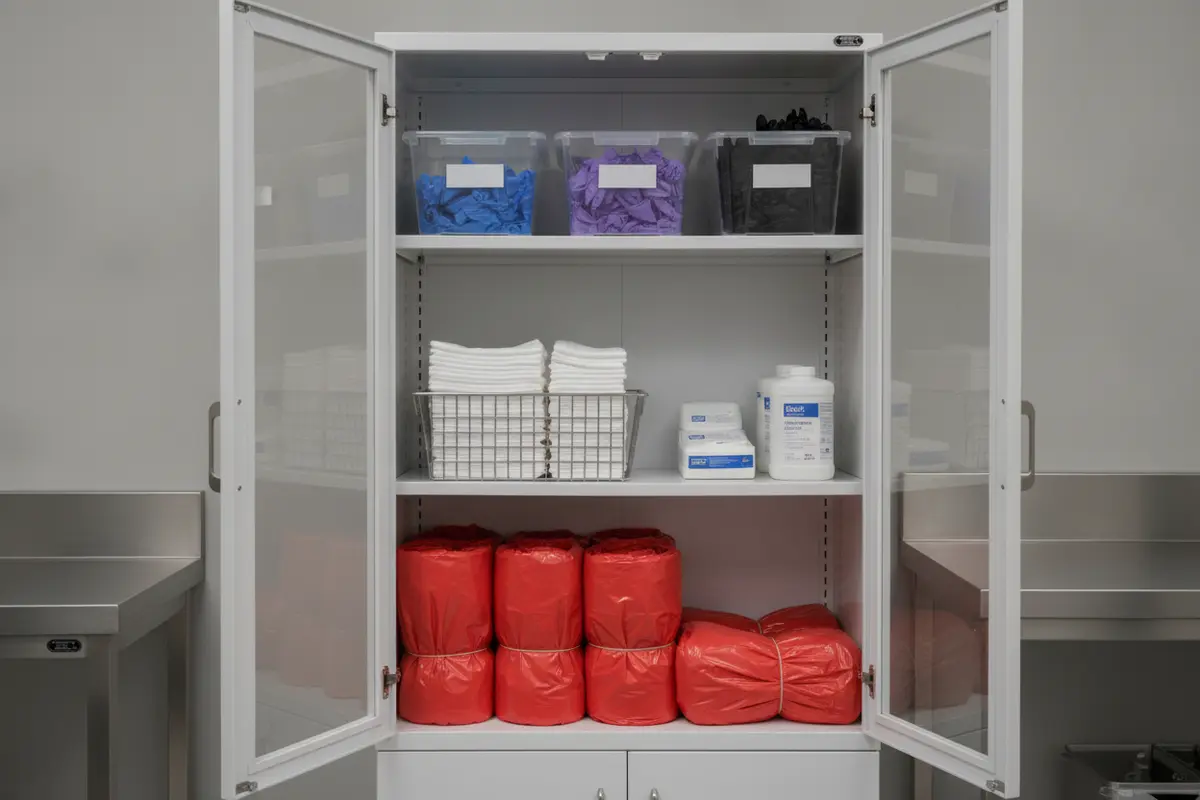
A recurring check can cover:
- Whether the required types and sizes are available at the point of use.
- Whether packaging is intact and items are clean and in usable condition.
- Whether disposal containers and associated supplies are present where needed.
- Whether stock is stored according to product directions and facility policy.
- Whether low stock, damaged products, or recurring fit issues have been reported and addressed.
Assign checks to a named role and define when they happen, such as during a routine room review and after a high-use assignment. Use a short log with date, checker, item or location, issue, and follow-up owner. The purpose is to surface a gap early—not to create paperwork that no one reviews.
What should a team check before buying or replacing equipment?
Confirm the operational need first, then verify product fit, use instructions, supply continuity, and staff readiness. A purchase decision should close a documented gap and be reviewed by the people responsible for safety and daily use.
Before ordering, ask these questions:
- What task is this for? Record the work and hazard assessment that supports the choice.
- Who approves it? Confirm review by the person or role responsible for the relevant safety procedure.
- Will it fit the team and workflow? Check sizing, compatibility, dexterity needs, storage, and disposal implications.
- What does the manufacturer specify? Review intended use, instructions, limitations, and care or storage information.
- Can staff obtain the right item consistently? Consider sizes, replenishment responsibility, and what happens when the preferred item is unavailable.
- Does the procedure need revision or training? Communicate any approved change before the equipment becomes part of routine work.
The Idaho State Police crime scene manual describes a crime scene discipline lead role that participates in equipment maintenance and troubleshooting and supplies crime-scene attire and PPE. That is a useful reminder to make ownership explicit: assign someone to resolve equipment problems and maintain access to the approved supplies, rather than leaving responsibility diffuse (Idaho State Police Crime Scene Manual).
For a facility that needs catalog options, Vischer’s medical products and preparation supplies pages can help staff review available categories. Have the organization’s safety lead verify whether a particular product meets the task need before purchasing or adopting it.
How should teams handle a change or unexpected condition?
When conditions differ from the plan, staff need a clear stop-and-escalate path. A practical response assigns who pauses the activity, who reassesses the hazard, and who approves the revised controls before work resumes.
Equipment planning is not a one-time choice made at procurement. A scene may present an unknown material, a damaged item, a shortage of the expected size, or a change in the task. The written procedure should help staff recognize that the original selection may no longer fit and explain whom to contact. Avoid informal substitutions based only on what happens to be on hand.
Agree on a simple response sequence with the people responsible for safety:
- Pause when the plan no longer fits. Stop the affected activity when safe to do so and avoid proceeding on an assumption about an unfamiliar hazard or unsuitable equipment.
- Notify the right person. Contact the supervisor, scene lead, or designated safety professional identified in local procedures. Share what changed, what task is underway, and what supplies are unavailable or compromised.
- Reassess and approve. Have the authorized person review the new information and determine whether the task can continue, what controls are needed, or whether additional guidance is required.
- Communicate the decision. Make sure everyone affected understands the approved change, the work boundary, and any revised handling, removal, or disposal steps.
- Record and follow up. Document the issue and action through the facility’s required process. Replace defective items, restore stock, and update instructions or training if the event exposed a recurring gap.
Use drills or routine walk-throughs to confirm staff can find the escalation contact and the relevant written procedure. Keep the exercise focused on decisions rather than memorizing product names. For example, ask what a worker should do if the planned glove size is unavailable or a package is damaged. The expected answer should point to the local approval process, not invite an improvised replacement.
Team handoffs also deserve attention. Before transferring responsibility between shifts or work groups, communicate any equipment shortage, changed hazard information, pending cleanup, or restricted area. A short handoff note can prevent the next person from assuming that the normal setup is available or that a task has been completed. Assign one person to close the loop on unresolved issues so a report does not disappear between teams.
How can a facility make the plan usable day to day?
Put the approved decisions where staff prepare for the work, and test the process with the people who use it. A concise procedure, visible stock locations, and a clear escalation route make the plan easier to follow under changing conditions.
Start with one common assignment and walk through it with staff. Ask them to locate the required equipment, identify the change and disposal points, and explain what they would do if a size is missing or an item is damaged. Note confusing steps, then revise the written instructions with the appropriate safety or supervisory approval.
Review the plan when the work changes, a new hazard is identified, equipment is replaced, a supply problem repeats, or staff report that the procedure is difficult to follow. The review should consider the hazard assessment, manufacturer information, training needs, storage, and disposal together. Keep records in the format required by the agency or facility.
Contact Vischer to discuss protective supply options
A dependable forensic protective equipment plan is built around the actual task, approved procedures, and consistent follow-through. Review it with qualified safety personnel, keep supplies organized, and update the process whenever the work or its risks change.