Choosing chemical splash goggles funeral professionals can rely on starts with the task, not the product photo. Eye protection should match the liquids, splash potential, room conditions, and other protective equipment involved in the work. A careful selection process helps a funeral home, mortuary, crematory, or forensic facility build a practical program without treating one style of eyewear as suitable for every job.
Ask us about eye-protection supplies for your facility
When are chemical splash goggles appropriate?
Chemical splash goggles are designed to create a closer barrier around the eyes than ordinary spectacles, making them an option to evaluate where a liquid splash could reach the eyes. The right choice depends on the hazards identified for a specific task and on the manufacturer’s use and care instructions.
In funeral-care settings, possible eye hazards are task-dependent. Staff may handle fluids, cleaning products, or other chemical preparations, and work practices vary by facility. This guide is about selecting eye protection—not a complete personal protective equipment plan, a chemical-specific risk assessment, or a determination that goggles alone are adequate.
Start by reviewing the facility’s written procedures and the safety information for the substances in use. Consider where splashes could come from, how much liquid may be handled, whether a worker may lean or turn during the task, and whether ventilation or other controls are needed. Consult the product’s safety data sheet and workplace safety lead when deciding on PPE. Do not assume that all goggles resist every chemical or protect against vapors.
For a broader look at preparation-room supplies, review Vischer’s funeral home preparation supplies and equipment. A general supply category is not a substitute for checking whether a particular item meets a facility’s hazard assessment.
How should a facility choose the right goggles?
Choose goggles by matching their design, markings, fit, and compatibility to the task and the facility’s written safety requirements. Before ordering, confirm product specifications with the manufacturer and verify that the model works for the people who will wear it.
1. Match the eyewear to the hazard
Identify the substance or splash hazard first. Check its safety data sheet and the facility’s procedures for the appropriate eye and face protection. Goggles made for chemical splashes differ from impact-style goggles; a vent design that is appropriate for one use may not be suitable for another. For chemical splash protection, Michigan State University’s guidance describes chemical-splash goggles with indirect vents and cautions against direct-vented impact goggles. See its eye and face protection guidance for areas with chemicals.
Look for the manufacturer’s intended-use information and applicable markings. MSU notes that safety glasses certified to ANSI Z87.1 are acceptable in its guidance, while separately specifying the chemical-splash goggle type. Do not translate that statement into a universal rule for every task or facility: verify current requirements and suitability with the employer’s safety procedures, product documentation, and appropriate safety professional.
2. Check seal and fit on the wearer
A goggle must sit securely and comfortably enough to be worn as intended. Check that the sealing surface lies evenly against the face, the strap holds the eyewear in position, and there are no obvious gaps that undermine the intended barrier. Facial hair, face shape, prescription eyewear, and head coverings may affect fit. Try the model on the actual wearer, rather than relying only on a catalog image or a nominal size.
Fit should be checked with other required PPE in place. Eyewear can shift when a worker adjusts a respirator, face covering, hood, or head covering. Conversely, goggles may interfere with another item or create pressure that makes it difficult to keep both pieces positioned correctly. Where compatibility is uncertain, consult manufacturers or a qualified safety professional; do not improvise a combination and assume it works.
3. Consider fogging, visibility, and wear time
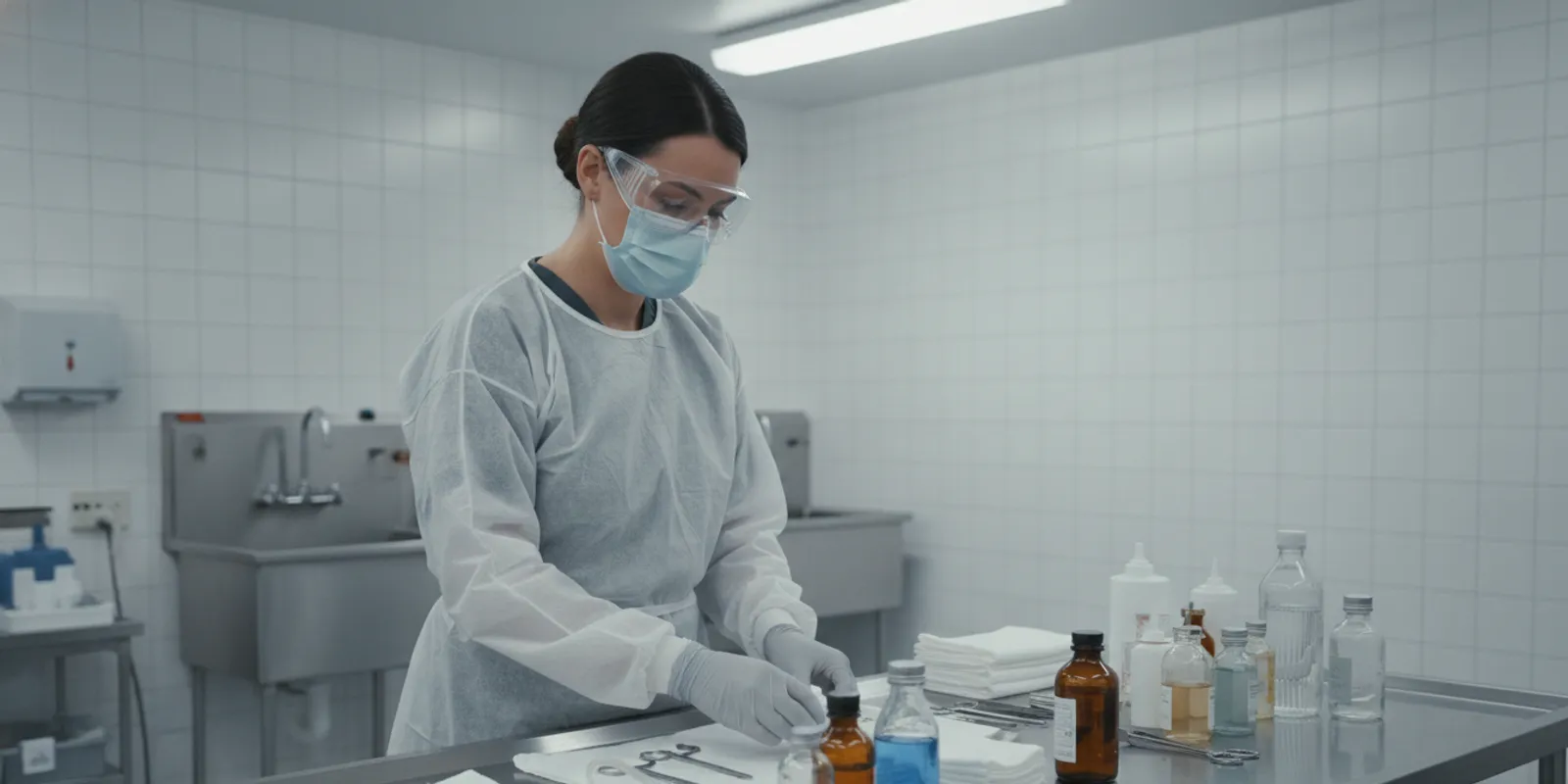
Workers need a clear field of view to perform tasks safely. Ask whether the lens treatment, ventilation design, and fit are appropriate for the room and expected duration of use. Fogging can lead people to lift or remove goggles, so assess visibility during a realistic trial. Anti-fog features, if offered, should be checked against the manufacturer’s instructions and the cleaning products used by the facility.
Comfort matters because poorly fitting eyewear may be adjusted or removed at the wrong moment. Evaluate strap pressure, weight, coverage, and compatibility with corrective lenses. Some models are designed to fit over prescription glasses, but that feature should be verified for the wearer and should not compromise the seal or stability. Cornell’s guidance explains that some goggles fit over corrective lenses and describes goggles as a sealed barrier against splashes and concentrated solutions in laboratory work; use it as general eyewear context, not as a funeral-specific rule. Read Cornell EHS guidance on eye protection.
4. Verify care, reuse, and replacement guidance
Confirm whether the model is intended for single-user reuse, shared use after cleaning, or another arrangement. Follow the manufacturer’s cleaning, disinfection, inspection, and storage directions. A lens that is scratched, cracked, distorted, or difficult to see through may no longer be suitable. Establish who checks the equipment and how damaged eyewear is taken out of service.
Facilities ordering other PPE can compare their eyewear plan with the categories in Vischer’s medical products for funeral homes and mortuaries and Shamrock gloves and supplies. These catalog pages are starting points for product review, not confirmation that a specific item meets a particular exposure requirement.
What is the difference between goggles and other eye protection?
Goggles, safety glasses, and face shields offer different forms of coverage, so they should not be treated as interchangeable. The table below is a planning aid; the task hazard assessment and product documentation determine what is appropriate for a given job.
| Protection option | General design consideration | Questions to resolve before use |
|---|---|---|
| Chemical splash goggles | Designed to fit around the eyes and form a closer barrier against splashes; models differ in vents, seal, and intended use. | Is the model specified for the hazard? Does it fit the wearer and work with other PPE? What do care instructions require? |
| Safety glasses | Typically provide impact-oriented eye coverage; side protection and ratings vary by model. | Does the hazard assessment permit this design, or is a closer splash barrier needed? Are markings and coverage suitable? |
| Face shield worn with eye protection | Can add coverage to the face, but it should not automatically be treated as a replacement for suitable eyewear. | Does the procedure call for a face shield in addition to goggles or glasses? Is the combination compatible and manufacturer-approved? |
The table is not a PPE selection ruling. For example, Johns Hopkins notes that chemical splash goggles seal tightly to the face and can protect against large splashes, while some may be rated for vapors. The phrase “some may” matters: verify each model’s rating and intended use rather than assuming vapor protection. See Johns Hopkins guidance on eye protection.
A face shield may be appropriate as additional protection for a task, but its presence does not by itself establish that eye protection is adequate. Check the facility’s procedures and hazard assessment for the complete combination. Likewise, eyewear alone does not replace gloves, protective clothing, ventilation, safe handling methods, or training when those controls are required.
How can teams make goggles part of a dependable workflow?
A dependable workflow makes clean, suitable eye protection easy to identify, use, and maintain. Assign responsibilities in writing so workers know what to wear, where equipment is kept, and what to do when an item is contaminated or damaged.
Turn the hazard review into a practical task map rather than a generic instruction to “wear eye protection.” For example, list each preparation-room activity on a separate line, identify the substances and splash points involved, and note the approved eye and face protection combination from the facility’s assessment. A product used during one controlled transfer may present different splash opportunities from a task involving rinsing or cleanup. The example is a prompt for local review, not a recommendation that any particular task always requires the same model.
Have the people who perform the work review the map before it becomes a purchasing specification. Ask them to demonstrate how they put on the goggles, check the seal, reach for tools, and work with any other required PPE. If the eyewear shifts, obstructs vision, or interferes with another item during that walk-through, pause and resolve the fit or compatibility question before relying on it. Document the model and the reason it was selected so a later replacement order can be checked against the original need.
- Identify the task and exposure. Review the work steps, substances, splash potential, and applicable written procedures. Involve the person responsible for safety when the risk or required PPE is unclear.
- Specify approved equipment. Record the model or required performance characteristics, intended use, and any compatibility requirements in the facility’s purchasing or PPE guidance. Avoid vague instructions such as “wear goggles” when different designs offer different protection.
- Store goggles where they stay clean and accessible. Keep them in a designated location, protected from dust, scratches, and contamination. Separate clean equipment from items awaiting cleaning or inspection.
- Inspect before use. Check the lens, seal, strap, and fasteners for damage, soil, deterioration, or impaired visibility. Remove questionable eyewear from service and follow the facility’s replacement procedure.
- Put on and adjust before exposure. Follow training and manufacturer directions. Check fit with the rest of the required PPE in place, then avoid touching or lifting eyewear during a task that presents an exposure risk.
- Clean and return equipment correctly. Follow the product instructions and facility procedure for cleaning, disinfection, drying, and storage. Do not share eyewear until it has been handled according to those directions.
- Revisit the plan when work changes. New products, processes, equipment, or staff may change the task assessment. Update purchasing specifications and training rather than relying on an old assumption.
Make the routine workable for the whole team. A simple posted checklist can identify the task, required eyewear, other PPE, inspection points, cleaning method, and contact person for questions. Training should explain why a particular design is selected and what to do if a seal does not fit, vision fogs, or equipment fails.
Keep related supplies organized as part of the same workflow. For example, facilities can review appropriate nitrile exam gloves, protective boot covers, and sharps containers alongside their written procedures. These examples do not establish which PPE is needed for a specific job; confirm that separately through the facility’s hazard assessment.

What should you ask before purchasing chemical splash goggles?
Before placing an order, resolve the questions that affect protection, fit, cleaning, and replenishment. A short review with the people who perform the work can prevent choosing eyewear that is uncomfortable, incompatible, or unsuitable for the identified hazard.
- What exact tasks and substances will the goggles be used for, and where can a splash occur?
- What do the facility’s procedures, safety data sheets, and safety lead specify for eye and face protection?
- Does the manufacturer’s documentation identify the model for the intended splash hazard and describe any limitations?
- Does the design have the correct venting and sealing features for the task?
- Can each intended wearer obtain a stable fit, including over prescription eyewear where needed?
- Will the goggles work with required gloves, face shields, respirators, protective garments, or head coverings?
- How will staff check visibility and fogging under actual working conditions?
- What are the cleaning, disinfection, drying, inspection, storage, and replacement instructions?
- Who owns inventory checks, training updates, and removal of damaged equipment?
- How will the facility document the model selected and why it suits the assessed task?
Resolve uncertainty before relying on eyewear in a task. Ask the manufacturer for model-specific information, and consult the appropriate workplace safety professional when the exposure, compatibility, or applicable requirement is not clear. Product listings and general guidance cannot replace that assessment.
Contact Vischer to discuss protective supplies for your facility
Frequently Asked Questions
These answers offer general selection context. Follow the facility’s hazard assessment, applicable requirements, and the manufacturer’s instructions for the specific product.
Are chemical splash goggles the same as safety glasses?
No. They have different designs and may be intended for different hazards. Goggles generally fit closer around the eyes, while safety glasses vary in coverage and are often impact-oriented. Check the task assessment and product documentation to determine which type is suitable.
Can workers wear splash goggles over prescription glasses?
Some models are designed to fit over corrective lenses, but fit and compatibility vary. Have the worker try the specific model with other required PPE in place, and verify that the eyewear remains stable and performs as intended.
Do chemical splash goggles protect against vapors?
Do not assume they do. Some models may carry a vapor-related rating, but protection depends on the specific design and its documentation. Confirm the hazard and required protection with the manufacturer’s information and the facility’s safety professional.
How often should goggles be cleaned or replaced?
Use the manufacturer’s cleaning and care directions, together with the facility’s procedures. Inspect goggles before use and remove damaged, contaminated, or vision-obscuring eyewear from service according to the established process. Replacement timing depends on the product’s condition and instructions, not a universal schedule.
When chemical splash goggles are selected through a task-based review and supported by fit checks, training, inspection, and care, they can be one useful part of a facility’s eye-protection plan. Reassess the choice whenever the work, substances, or required protective equipment changes.