
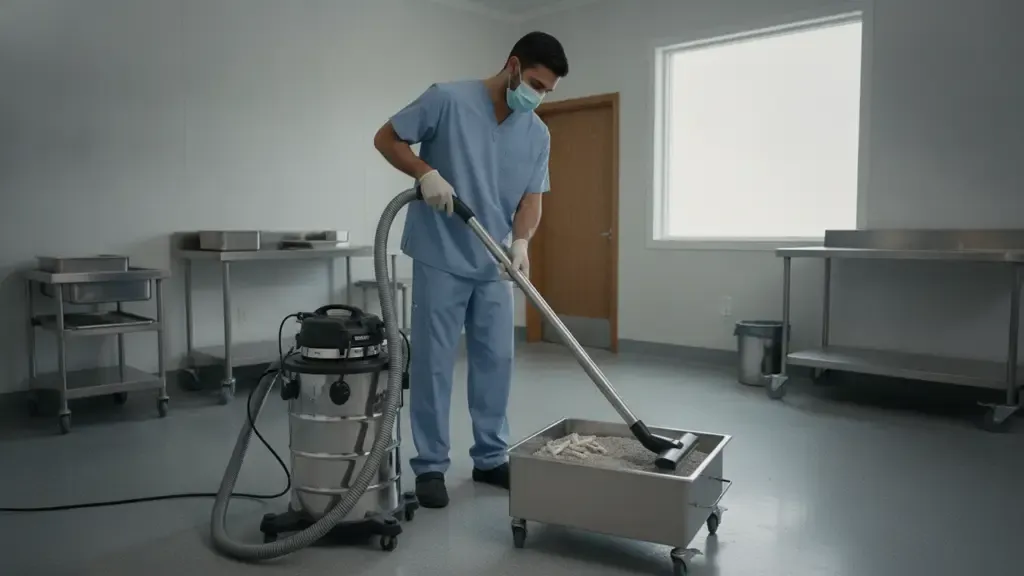
A cremation vacuum system helps a crematory team collect cooled cremation residue in a controlled, repeatable way. The right setup is more than a motor and hose: operators need compatible tools, a defined handoff from the chamber, filter controls, safe storage, and a maintenance routine that protects both equipment and staff. This guide explains how to evaluate the workflow and what to ask before specifying a system for your facility.
Contact Vischer to discuss a cremation vacuum system for your workflow.
What does a cremation vacuum system do?
A cremation vacuum system is a specialized collection unit used to move cooled cremation residue from a processing area into a controlled collection container. It supports the transfer stage after the retort cycle and cooling period, helping operators keep residue collection orderly and reducing unnecessary manual handling.
It should not be treated as a substitute for a crematory’s operating procedures, equipment manual, or required protective measures. The vacuum, hose, extension, nozzle, filters, and collection method must be selected and used as a complete system. Product literature and the equipment manufacturer remain the authority for temperature limits, service intervals, and approved applications.
How does a cremation vacuum fit into the daily workflow?
A dependable workflow separates authorization and identification controls from equipment operation. The vacuum is one tool in the processing sequence, not the control that establishes identity or determines when remains are ready to handle.
- Confirm the operating handoff. Follow the crematory’s documented process for confirming that the cycle is complete, the chamber and residue are sufficiently cooled, and the operator is authorized to begin collection.
- Inspect before connection. Check the cord, housing, casters, hose, couplings, extension, nozzle, container, and filter components. Look for cracks, loose fittings, heat damage, unusual wear, or residue that could restrict airflow.
- Stage the path. Position the unit where the hose can reach the work area without crossing a walking route or creating a trip hazard. Keep the cord and hose clear of hot surfaces and moving equipment.
- Collect with the approved tool. Use the nozzle and extension intended for the system. Work methodically rather than forcing the hose into corners or using an improvised attachment that could damage the equipment.
- Complete the transfer. Follow the facility’s process for checking the collection container, securing the material, cleaning the work area, and documenting the handoff before the next processing step.
- Shut down and inspect. Turn the unit off using the normal control, allow components to cool as directed, and record any symptom that needs service before the next use.
The goal is a predictable sequence that operators can perform consistently. A clear staging point and a short pre-use check often prevent more disruption than trying to correct a clogged hose or damaged fitting during a busy shift.
Which components should buyers evaluate?
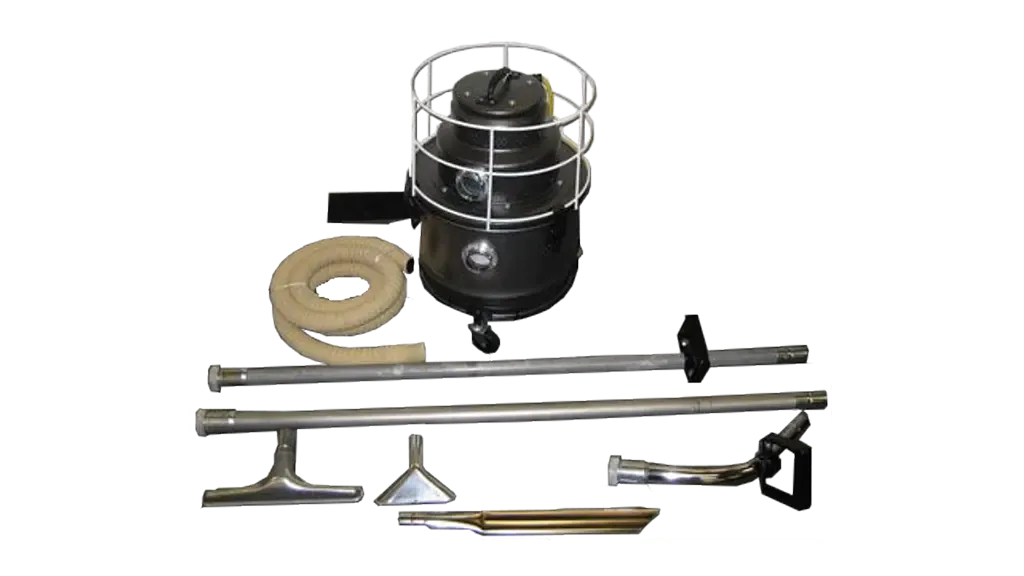
Buyers should evaluate the vacuum as a complete operating kit. A capable motor matters, but access, reach, filtration, clean-out tools, mobility, and replacement-part availability determine whether the system fits the room and the team’s habits.
| Component | Workflow question | Maintenance question |
|---|---|---|
| Vacuum unit and motor | Can operators position it without obstructing the processing area? | What inspection and service instructions apply to the motor and housing? |
| Hose and couplings | Does the reach support the room layout without stretching or sharp bends? | How are wear, cracks, heat exposure, and blocked airflow checked? |
| Extension and nozzles | Do the tools provide access to the intended collection points? | Can the tools be cleaned, stored, and replaced without improvised repairs? |
| Filters | Does the filtration arrangement match the manufacturer’s instructions? | What is the inspection, cleaning, and replacement process for each filter? |
| Casters, cord, and controls | Can the unit move and connect safely in the planned staging area? | How are casters, plugs, strain relief, and switches checked? |
Vischer’s listed American High Temperature Vacuum System is described as a portable unit with casters, a 2 HP motor, a 60-inch aluminum extension with clean-out tools, a heavy-duty hose, and a 30-foot cord. Treat those as product-specific listed features, then confirm fit and operating requirements for your facility before ordering.
How should a cremation vacuum system be maintained?
Maintenance should be based on the manufacturer’s instructions, the facility’s use rate, and the conditions in the processing room. The schedule below is a planning framework, not a replacement for the equipment manual or qualified service advice.
Before each use
- Check the housing, lid, wheels, cord, plug, hose, couplings, extension, and nozzle for visible damage.
- Confirm the hose path is open and that filters and collection components are installed as specified.
- Make sure the unit is positioned on a stable surface with controls accessible to the operator.
- Remove the unit from service if it shows exposed wiring, a damaged plug, a cracked hose, overheating, unusual noise, or loss of suction.
After each use
- Follow the shutdown, cooling, emptying, and cleaning instructions supplied for the system.
- Inspect the hose and tool connections for residue buildup that could restrict airflow.
- Store extensions and nozzles so they are supported and protected from impact, heat, and contamination.
- Record a recurring symptom instead of repeatedly resetting or forcing the equipment back into service.
At the planned service interval
- Review filters, seals, fasteners, casters, electrical components, and motor performance against the manufacturer’s schedule.
- Replace wear items with compatible parts rather than choosing a substitute based only on appearance.
- Review operator training and update the pre-use checklist if the room layout, equipment, or workflow has changed.
Electrical or mechanical repairs should be handled by a qualified person under the facility’s safety program. When service requires access to hazardous energy, use the employer’s energy-control procedure and follow applicable OSHA requirements. Do not improvise around a failed interlock, damaged cord, hot component, or blocked system.
What are the most common workflow problems?
Most avoidable problems begin before the vacuum is switched on. A short list of failure points gives supervisors a practical way to improve consistency.
- Using the wrong tool for the area. An attachment that does not match the intended surface can slow collection or damage the hose and nozzle.
- Ignoring airflow changes. A sudden loss of suction can point to a full container, blocked hose, displaced filter, poor connection, or equipment fault. Stop and follow the troubleshooting instructions instead of continuing to force the unit.
- Staging in a traffic lane. A long cord or hose across a path creates a preventable trip and handling risk. Establish a repeatable staging position.
- Skipping replacement-part planning. A small consumable or wear item can take the system out of service if no compatible replacement is available.
- Mixing models or unapproved components. Keep the model identity and approved accessory information with the maintenance record.
- Treating residue collection as an isolated task. The handoff from the chamber, processing station, collection container, and final identification step should be documented as one controlled workflow.
For larger equipment decisions, Vischer’s cremation equipment buying guide covers broader facility, capacity, emissions, and vendor-support considerations. This article stays focused on the specialized vacuum and residue-collection step.
Which replacement parts should a crematory keep available?
Keep replacement planning proportional to the system’s use and the time required to obtain a compatible part. At minimum, identify the approved hose, filter, nozzle, and connection components for the selected model, then ask the supplier how each item is sold and matched.
Vischer lists a Replacement Hose for Vacuum System and an Intermediate Filter for Vacuum System. The filter listing identifies the item as a two-pack. Availability, compatibility, and replacement timing should be confirmed for the exact unit in service.

What should you ask before buying a cremation vacuum system?
Ask questions that connect the product to your room, case volume, operators, and service plan. A useful quote request should identify the work the system must perform rather than asking only for the motor size.
- What residue-collection workflow and operating conditions is the system designed to support?
- Which hose, extension, nozzle, filter, and collection components are included?
- What are the manufacturer’s limits for temperature, use, cleaning, and storage?
- How does the system fit the distance between the retort, processing area, and collection point?
- Which replacement parts are model-specific, and which should be kept on hand?
- What training, troubleshooting guidance, and service support are available?
- What information should the facility provide before a supplier recommends a configuration?
Bring the room layout, intended operators, current equipment, service history, and any recurring airflow or access problem to the conversation. Those details help separate a useful recommendation from a generic equipment list.
Request guidance from Vischer on a cremation vacuum system and compatible replacement parts.
Frequently asked questions
What is a cremation vacuum system used for?
A cremation vacuum system is used to collect cooled cremation residue as part of a crematory’s documented processing workflow. The facility should follow its own identification, cooling, PPE, cleaning, and equipment procedures.
How often should a cremation vacuum be serviced?
Use the manufacturer’s maintenance schedule as the baseline, then adjust inspections for actual use and operating conditions. Check the unit before and after use, and remove it from service when damage, overheating, unusual noise, or loss of suction appears.
What replacement parts matter most?
Hoses, filters, nozzles, couplings, seals, cords, and other wear items should be identified for the exact model. Confirm compatibility and replacement intervals with the manufacturer or supplier instead of substituting parts by appearance alone.
Can one vacuum system fit every crematory?
No. Room layout, reach, staging space, processing workflow, operator needs, and service support all affect fit. Review the complete setup and provide facility details before selecting a configuration.