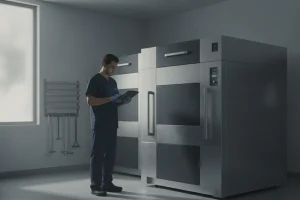
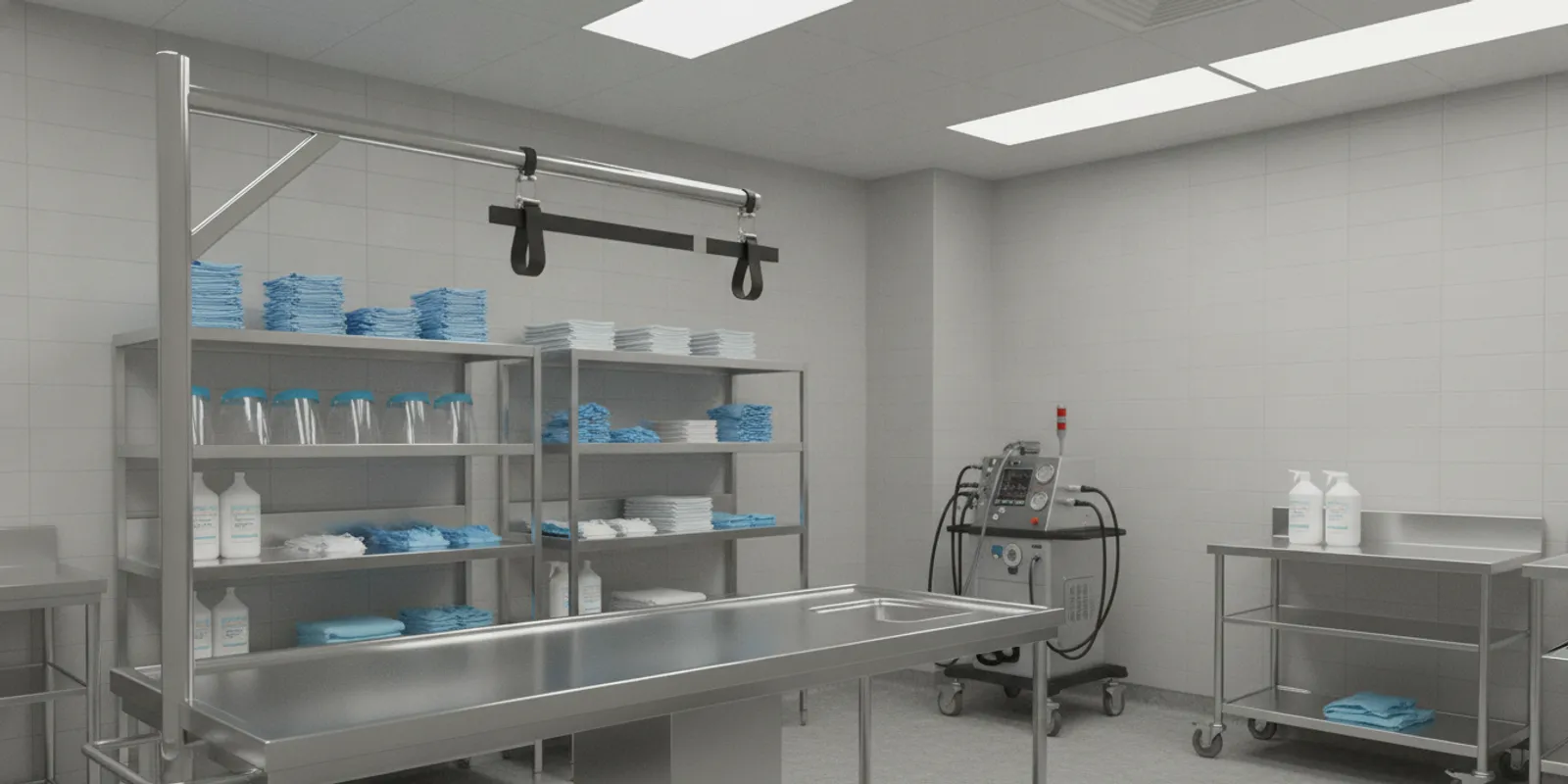
Morgue safety equipment is not a single kit or shelf of supplies. It is the combination of protective gear, handling aids, cleanup resources, and operating practices that help a team manage the work in its facility. A useful plan starts with tasks and risks, then checks whether staff can find, use, clean, and replace each item when needed.
Talk with our team about morgue safety equipment
What should a morgue safety equipment plan cover?
A practical plan accounts for routine preparation, movement, cleanup, and less frequent or unusual work. It should reflect the facility’s actual rooms, staffing, procedures, and applicable safety program—not a generic list detached from how the team operates.
Begin by mapping the work instead of shopping by product category. Write down what employees do, where they do it, what equipment they use, and what could expose them to a hazard or strain. Include receiving and moving, preparation, handling contaminated items, waste and sharps disposal, surface cleaning, and equipment maintenance. The responsible safety lead should review this map with staff and refer to current facility procedures and applicable requirements.
Then group equipment by function:
- Personal protection: gloves and other protective clothing or barriers selected for the task and facility policy.
- Safe handling: transfer aids, positioning supports, and transport equipment appropriate to the load and route.
- Exposure and cleanup response: supplies and tools specified in the facility’s exposure-control, cleaning, and waste procedures.
- Organization and readiness: storage, inspection, replenishment, and training processes that keep supplies usable.
This functional approach keeps the plan focused. It also helps identify gaps that a product list can hide: protective gear may be available but stored far from the task, a handling aid may not fit through a doorway, or a used item may lack a clear cleaning and inspection procedure.
Make the map concrete by following a task from start to finish. For a routine move, note where the team retrieves the aid, who checks it, the route it travels, where it is cleaned afterward, and where it returns. For a cleanup task, identify the supplies and instructions staff need at the point of work, along with the process for separating used materials and reporting a shortage. These walk-throughs reveal handoffs that a room-by-room inventory can miss.
How do you identify the right equipment for each task?
Match each item to a defined task, hazard, and user. Selection should account for the work environment and the manufacturer’s instructions, while facility leadership verifies suitability through its own risk assessment and policies.
For each task, ask a short set of questions before choosing or replacing equipment:
- What is the task? Separate activities that are often grouped together, such as receiving, moving, preparation, cleanup, and disposal.
- What can go wrong? Consider exposure, puncture or cut hazards, awkward reach, lifting or pushing strain, slips, and equipment failure, as relevant to that task.
- Who will use the item? Check that intended users can access it, understand the instructions, and use it in the available space.
- What happens after use? Decide how it is cleaned, decontaminated, inspected, stored, or discarded under facility procedures.
- How will readiness be maintained? Assign responsibility for checking stock, documenting defects, and arranging replacement or service.
A glove choice, for example, should be based on the task, fit, material compatibility, and the facility’s policies rather than color or appearance alone. The available medical products for funeral homes and mortuaries and MicroFlex glove options can help a team compare product categories; they do not replace the facility’s hazard assessment or manufacturer guidance.
Similarly, a transfer or positioning aid should be selected around the movement it supports, the number of staff involved, the route, and the equipment’s instructions. A flexible stretcher or body positioner may be relevant to particular workflows, but suitability depends on the specific use and handling plan.
Before approving a choice, compare the item with the actual room and route rather than a floor plan alone. Check dimensions, turning space, doorway clearance, access to storage, and whether staff can approach and operate it without blocking another task. If a product has adjustable parts or a specific operating sequence, have intended users review the instructions and identify what orientation or training is needed. A mismatch discovered before purchase is easier to address than one discovered during a move.
It also helps to write down the reason for a selection. A brief record might name the task, the need identified, the item considered, the relevant instructions reviewed, and who approved the decision. This keeps replacement decisions consistent when staff change or a similar item is ordered later. If the task or room changes, that record gives the team a starting point for reevaluating suitability rather than assuming an old choice still fits.

Which equipment groups belong on the checklist?
Use the checklist as a prompt for a local review, not as a universal prescription. An item belongs in the plan when it addresses a task or risk identified by the facility and has a defined use, care, and replacement process.
| Equipment group | Planning question | Readiness check |
|---|---|---|
| Protective gloves and clothing | Does the selection match each task and the facility’s protective procedures? | Confirm access, fit options, condition, storage, and restocking responsibility. |
| Handling and positioning aids | Does the aid support the planned movement and fit the route and workspace? | Review instructions, condition, safe-use training, cleaning, and inspection. |
| Sharps and waste controls | Are collection and disposal steps clear for the work performed? | Check placement, capacity, access, and disposal arrangements under policy. |
| Cleaning and decontamination supplies | Are the correct supplies available for the surfaces and equipment in scope? | Follow product labels and facility procedures; check stock and storage. |
| Storage and communication | Can staff quickly locate supplies and report a problem? | Label locations, assign checks, and document shortages or defects. |
For example, a powder-free nitrile glove option may be one item to evaluate, while a sharps container is relevant only where the facility’s work and disposal procedures call for one. Confirm product details and intended use before purchase. A product page cannot determine which protective equipment or disposal method is appropriate for a particular exposure scenario.
Use the table as a gap-finding tool during a room walkthrough. Mark an item as ready only when the team can identify its purpose, find it in the expected location, explain any applicable use or care instructions, and name who handles replenishment or defect reporting. If one answer is unclear, record it as a follow-up rather than assuming that the presence of an item means the need is covered.
Some categories overlap, but the responsibilities should remain clear. A disposable supply may need stock monitoring and a defined disposal path; a reusable aid may need inspection, cleaning, and a designated storage location. If several teams share an item, note who returns it and how other users know it is ready. Those details make the checklist useful between formal reviews, not just during purchasing.
How should teams plan safe movement and ergonomics?
Movement planning is part of safety equipment planning. Look at the whole route and the work team’s method, rather than assuming that having a cart or stretcher alone removes handling risk.
Review the pathway from the point of receipt to the work area and any onward destination. Note narrow turns, thresholds, ramps, floor transitions, doors, storage obstructions, and places where staff may need to reposition or pause. Confirm that the selected equipment can move through the route and that staff know its operating limits and procedures. Do not improvise a lift or transfer method when staff have not been trained or the situation falls outside the facility’s plan.
A useful movement review considers:
- Where the transfer begins and ends, and how privacy is maintained along the route.
- How many staff members the procedure requires and how they communicate during a move.
- Whether the aid, handles, wheels, brakes, straps, or other components need an inspection before use.
- How a team will respond if the route is blocked or equipment is damaged.
- How the aid is cleaned, returned, and kept available for the next task.
Walk the path at the pace and with the equipment used in normal work. Look for places where a door must be held open, a turn requires backing up, or a parked item narrows the passage. These details can affect the sequence of work and whether the aid is easy to control. Note any obstruction or clearance question and resolve it through the facility’s established process before treating the route as ready.
Agree on simple communication before a move. Staff should know who directs the movement, what signals or verbal cues are used, and when to pause if a person, object, or equipment issue changes the plan. The written procedure should also say what to do if the equipment does not operate as expected: stop, secure the situation under facility procedures, report the defect, and use an approved alternative only when the team is trained to do so.
Army Public Health Center guidance for mortuary affairs operations includes material on ergonomic concerns and decontamination procedures. That is a useful reminder to include both human factors and equipment care in the planning conversation; facilities should consult their own applicable requirements and procedures rather than treating a reference for a different operational context as a substitute for them. See TG 195A Safety and Health Guidance for Mortuary Affairs Operations.
How do you organize cleaning, storage, and replenishment?
Every reusable item needs a clear path from use to cleaning, inspection, and storage. Every disposable supply needs an owner who checks stock and knows how to report a shortage.
Write the process down in a way staff can follow during ordinary operations. Identify which products and methods are approved for each surface or device, who is responsible for each step, where clean equipment is stored, and how used items are separated. Follow the applicable product label, equipment instructions, and facility procedures. Do not assume that one cleaning product or method is suitable for every material or device.
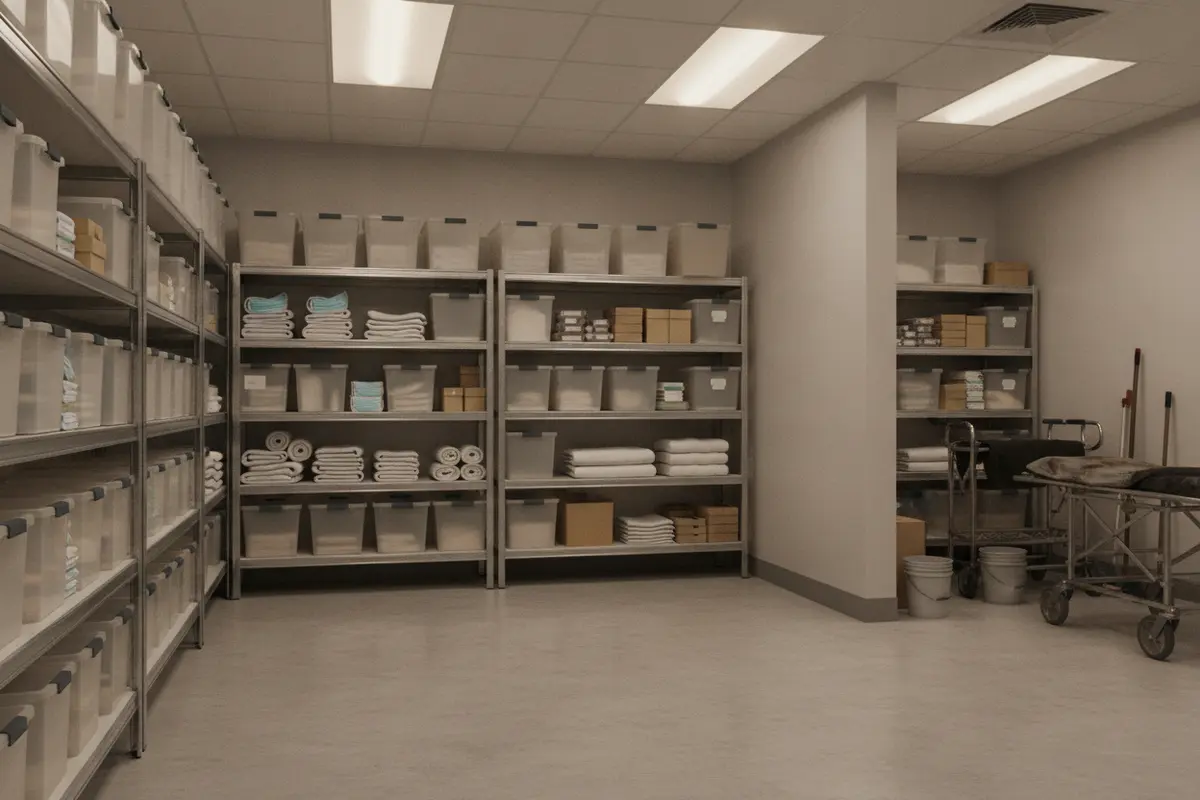
Set up storage so that clean, ready-to-use supplies are distinct from used equipment and waste. Keep frequently needed items easy to locate, and avoid storing items where they can be damaged, contaminated, or obstruct access. The exact arrangement will depend on the room and workflow. If the facility handles contaminated equipment, include the people, supplies, and designated area required by the established decontamination process.
Use a simple readiness log or checklist that records:
- Date and person completing the check.
- Whether critical supplies are present, usable, and within any applicable shelf-life or manufacturer limits.
- Equipment condition, defects, and whether an item was removed from service.
- Cleaning or service actions due and who owns the follow-up.
- Shortages, orders or replacement actions, and confirmation that the gap was resolved.
Keep the log proportionate to the operation. A short, consistently completed check is more useful than an elaborate form that no one maintains. Review recurring shortages or damage with the team. These patterns may point to a storage, training, equipment-fit, or ordering issue rather than an isolated lapse.
Build the check into an existing handoff or opening routine where practical, and define what counts as an escalation. For instance, staff should know whether to mark a damaged aid out of service, whom to notify, and how to identify an approved backup. For supply gaps, note whether a substitute has been reviewed under facility policy or whether the task must wait until the appropriate item is available. A clear decision path reduces uncertainty without encouraging improvised substitutions.
Review the storage layout from the user’s point of view. Can staff distinguish clean and used items without relying on memory? Are frequently needed supplies placed where they can be reached without moving unrelated equipment? Can a shortage be reported without leaving a task unfinished? If the answer is no, adjust the layout or process and then explain the change to the people who use it. Labels and checklists should support procedures, not replace the training needed to follow them.
How can you put the plan into practice?
Turn the assessment into an assigned, reviewable plan. A brief walkthrough with the people who do the work is often the fastest way to find practical problems before they become routine.
- Walk the workflow. Observe normal tasks in each relevant room and route. Ask staff where equipment is hard to reach, difficult to maneuver, or unclear to clean.
- Compare needs with what is on hand. Record each item’s location, condition, intended task, and any instructions or training needed.
- Resolve gaps by priority. Escalate hazards through the facility’s established process. Select or replace equipment only after confirming intended use, compatibility, and requirements.
- Assign owners. Name who orders supplies, checks equipment, documents defects, and verifies that corrective actions are completed.
- Practice the procedure. Orient staff to where supplies are stored and how equipment is inspected, used, cleaned, and reported. Use the facility’s training process.
- Revisit after change. Review the plan when rooms, tasks, staffing, equipment, or procedures change, and after a problem reveals a gap.
One practical exercise is to choose a routine task and ask a staff member to show, rather than simply describe, each step. Can they locate the relevant supplies? Do they know what condition checks apply? Can they follow the planned route and explain what happens when equipment needs cleaning or repair? Record points where the written procedure, storage arrangement, or available equipment does not match actual practice. Then assign each correction to a specific owner and set a follow-up date through the facility’s normal process.
Separate immediate concerns from longer-term improvements. A reported hazard or defective item should go through the facility’s established response process. Other observations—such as a confusing storage location or a recurring delay—can be logged for review and assigned for correction. This distinction keeps a walkthrough from becoming only a list of purchases and helps the team address procedural or organizational gaps as well.
Do not treat a purchase as the end of the process. New equipment may need to fit existing storage, movement routes, cleaning practices, and staff training. Check the manufacturer’s instructions and confirm that the facility can maintain the item as intended. If staff cannot explain where it belongs or what to do after use, the plan needs another step.
What should you ask before buying or replacing equipment?
Before placing an order, document the need and confirm the product fits the intended workflow. A short question list helps compare options without relying on a name or photograph alone.
- What specific task and identified need will this item address?
- Are dimensions, capacity, materials, and operating features suitable for the intended setting?
- Does the manufacturer describe the intended use and required inspection or maintenance?
- Can staff use and clean it under the facility’s procedures?
- Will it fit the route, doorway, storage space, and other equipment already in use?
- What accessories, replacement components, training, or service may be needed?
- Who will approve the selection, receive it, inspect it, and put it into the workflow?
Compare options against the same requirements rather than comparing only product names. A simple review sheet can record the intended task, dimensions that matter, compatibility with the workflow, instructions available, cleaning and inspection needs, and any training or storage changes. If an answer is unknown, mark it for confirmation before ordering. This makes tradeoffs visible and gives the reviewer a basis for discussing whether an alternative meets the same need.
When replacing an item, ask why the current one is being replaced. Wear, damage, poor fit, repeated downtime, or a changed workflow can point to different requirements for the next selection. Check whether the existing procedure still applies and whether other equipment depends on the item being replaced. A replacement that matches an old specification may not address a new route, storage limitation, or task; conversely, a new feature is not a benefit if staff cannot use or maintain it as intended.
For broader preparation-room needs, review the preparation supplies and equipment category. Product availability and specifications can change, so verify current details with the supplier and manufacturer before relying on them for a safety decision. Vischer has supplied funeral homes, crematories, and forensic facilities since 1983, and its product range includes preparation supplies, medical products, and handling aids. That catalog context can support a purchasing discussion, while the facility remains responsible for its task assessment and procedures.
Contact Vischer to discuss equipment for your workflow
Frequently Asked Questions
These answers offer a starting point for planning, not a replacement for the facility’s risk assessment, training, or applicable requirements.
Is there one standard morgue safety equipment kit?
No single list fits every facility and task. Build the checklist from the work performed, risks identified, equipment instructions, and the facility’s safety procedures. Review it with the staff who use the equipment.
Which items should be checked most often?
Set check frequency through facility policy and manufacturer instructions. At minimum, assign responsibility for confirming supplies are available and usable and for reporting defective equipment, shortages, or cleaning needs before an item is used again.
Can a product listing determine whether equipment is safe for our facility?
No. Listings can help compare available products and specifications, but the facility should confirm intended use, compatibility, training, and applicable requirements before choosing or using equipment.
When should a morgue safety equipment plan be reviewed?
Review it on the schedule set by the facility and whenever tasks, rooms, equipment, procedures, or staffing change. A reported defect, near miss, or repeated supply gap is also a reason to check whether the plan needs an update.
A clear morgue safety equipment plan connects each item to a task, a responsible person, and a routine for use and care. Revisit that connection with staff so the equipment remains practical, available, and consistent with the facility’s procedures.