

Church chairs for funeral homes should support a calm guest experience and a practical staff workflow. The right seating keeps services comfortable, helps the chapel look orderly, and makes setup, cleaning, movement, and storage easier. This guide compares two common directions, Padded Chapel Chairs and Stakmore stack chairs, so funeral home operators can choose based on the way each room is used.
Call 800-752-8767 to discuss church chairs for your funeral home.
Quick answer: Padded Chapel Chairs are a strong starting point when upholstered comfort and a coordinated presentation matter most. Stakmore stack chairs deserve consideration when a facility changes room layouts often or needs flexible storage. The best choice depends on the room, service patterns, handling route, and care plan.
What Should Funeral Homes Look for in Church Chairs?
Answer capsule: Look for church chairs that balance comfort, presentation, movement, storage, durability, and maintenance. A chair that looks appropriate but makes every room reset harder may not be the right operational choice.
Funeral home seating serves more than a single ceremony. Chairs may be used for services, visitations, memorial gatherings, overflow seating, arrangement meetings, or community events. Staff need to move them through doors, arrange them consistently, clean them between uses, and return them to storage without unnecessary effort.
- Guest comfort: Consider seat support, back support, seat depth, and the length of typical services.
- Room flexibility: Decide whether the chapel needs one formal layout or several repeatable arrangements.
- Storage: Measure the storage area and the complete route between storage and the room.
- Durability: Review the frame, fasteners, upholstery, connectors, glides, and expected handling frequency.
- Presentation: Choose a finish, color, and overall style that fit the chapel and remain easy to keep orderly.
Begin with service flow rather than a product photo. A dedicated chapel may place more weight on comfort and visual consistency. A multipurpose room may value chairs that staff can move and store quickly. Include the employees who reset the room in the evaluation. Their experience can reveal tight corners, difficult doorways, awkward lifting, or floor conditions that a specification sheet will not show.
Measure the room and the handling route
Record the chapel dimensions, aisle widths, door clearances, storage capacity, corners, thresholds, and any elevator or ramp route. Note where guests enter and where staff need to walk. If chairs must be moved while a room is partially occupied, that constraint should influence the decision.
Test a sample chair in the actual building when possible. Have staff move it from storage to the chapel and back. Ask whether one person can handle it safely, whether the frame catches on trim, and whether the glides move quietly on the floor. A short trial can prevent a visually attractive choice from creating extra work after delivery.
Padded Chapel Chairs vs. Stakmore Stack Chairs: Which Fits Your Facility?
Answer capsule: Padded Chapel Chairs emphasize upholstered comfort and a coordinated chapel appearance. Stakmore stack chairs offer a traditional chair profile with flexibility for facilities that change layouts or need compact storage. Confirm the exact model options before ordering.
Vischer’s Padded Chapel Chairs category is a useful starting point when cushion comfort and consistent presentation lead the decision. The Stakmore Chairs category is a comparison point when a facility values a traditional appearance and flexible movement or storage. Exact finishes, dimensions, cushion choices, and handling features vary by model.
| Consideration | Padded Chapel Chairs | Stakmore Stack Chairs |
|---|---|---|
| Primary strength | Upholstered comfort and a coordinated chapel presentation. | Portability, flexible room changes, and a traditional appearance. |
| Best starting point when | Comfort and cushion or color coordination are central priorities. | Staff frequently rearrange rooms or need efficient storage. |
| Questions to confirm | Available upholstery, colors, frame options, dimensions, and connection features. | Folding or stacking method, finish, storage route, dimensions, and handling needs. |
| Operational focus | Comfort, presentation, cleaning, and repeated chapel use. | Movement, storage, multipurpose use, and quick setup. |
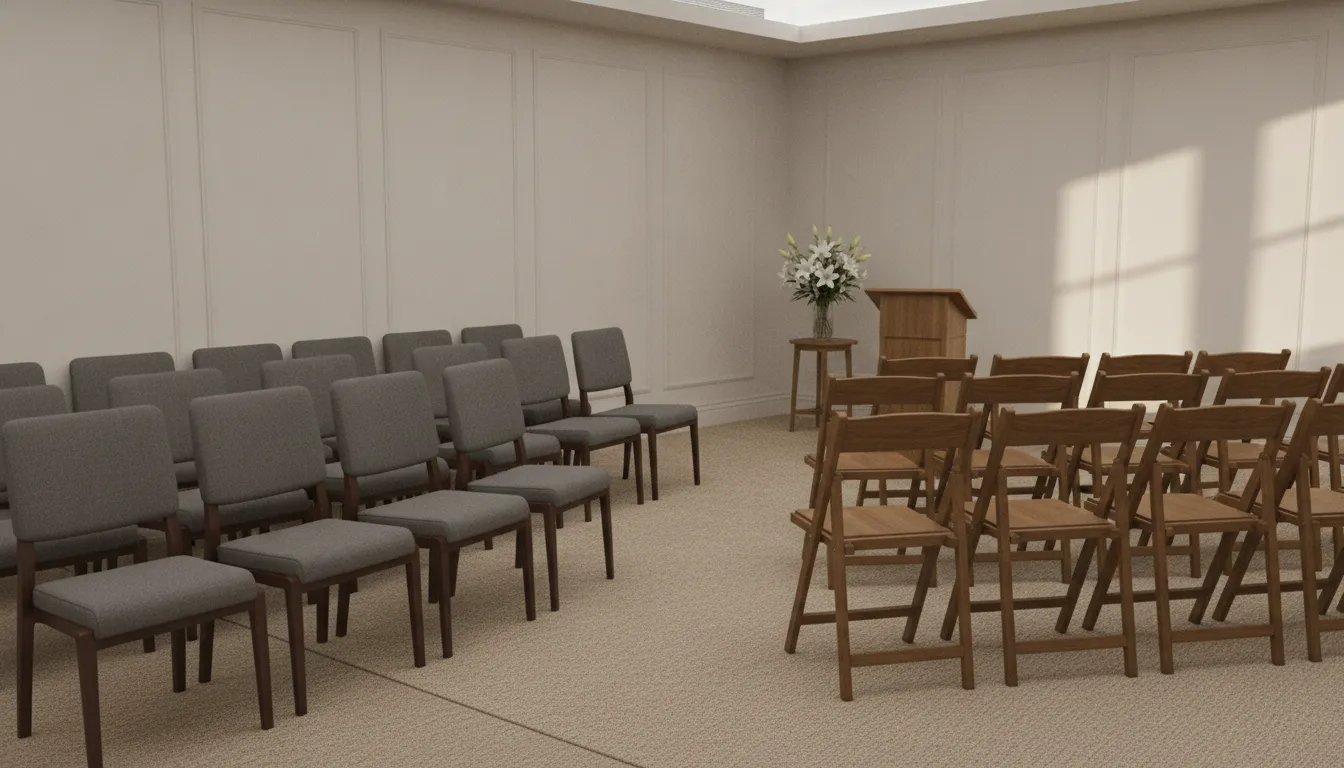
Neither style is universally better. A dedicated service room may favor upholstered comfort and a consistent look. A room that serves several purposes may favor stacking, folding, and transport. Separate the primary seating group from occasional-use chairs if that makes storage and replacement planning easier. Keep a record of the model, finish, cushion or upholstery option, quantity, intended room, and care instructions.
How Do Cushion, Fabric, Color, and Frame Choices Affect Use?
Answer capsule: Cushion, upholstery, color, and frame choices affect both the guest experience and the daily workload. Evaluate comfort and visual coordination alongside cleaning instructions, traffic levels, and how chairs will be handled.
Cushioning should feel supportive rather than simply soft. If possible, let staff and sample users sit in a chair long enough to assess pressure, posture, seat depth, and ease of standing. This is especially important when families may remain seated through extended services.
Upholstery has an operational role as well. Ask for the manufacturer’s recommended cleaning method before ordering. A material that looks good in a sample may be less practical if it shows marks easily or requires products your team does not routinely keep on hand. Do not assume that a general cleaner is safe for every fabric, finish, or cushion.
- Comfort: Compare cushion feel, back support, seat depth, and arm options.
- Cleaning: Match the material to the facility’s established care routine.
- Color: Coordinate with flooring, walls, furnishings, and the existing chapel style.
- Frame: Review construction and finish for frequent movement and use.
- Floor protection: Check glide design and replacement procedures for the intended flooring.
Confirm which options apply to the exact configuration under consideration. Categories can contain multiple models, and not every color, cushion, frame, arm, or glide option applies to every chair. For broader room planning, review Vischer’s guide to creating a comforting chapel space.
When Do Ganging and Layout Features Matter?
Answer capsule: Ganging and layout features matter when a chapel must stay orderly, support different service formats, or be reset quickly. Choose the feature staff can operate confidently while preserving clear circulation and floor protection.
Ganging mechanisms connect chairs into aligned rows. This can make an arrangement easier to navigate and help the room look intentional when families arrive. Before ordering, ask how the connector engages and releases, whether staff can operate it comfortably, and how the chairs behave when moved or stored.
- Map recurring layouts. Identify arrangements for services, visitations, overflow, meetings, and other gatherings.
- Test connected chairs. Check row alignment from the entrance and front of the room.
- Have staff perform a reset. Watch for awkward lifting, difficult connections, scraping, or unnecessary steps.
- Review circulation. Leave practical walking space and avoid filling every available area.
- Inspect floor contact points. Look for glide wear that could cause noise, scuffing, or uneven movement.
- Confirm building requirements. Review accessibility, fire, and egress requirements for the intended layout.
For more facility context, compare this article with Vischer’s funeral home furniture buying guide and complete chapel chair guide. These resources help connect a chair decision to the rest of the facility.
How Should Funeral Homes Clean and Maintain Church Chairs?
Answer capsule: Protect church chairs with a repeatable care routine. Follow upholstery instructions, address visible spots promptly, inspect frames and connections regularly, and remove damaged chairs from service before a minor issue becomes a larger problem.
Start by removing loose dust and debris with a suitable vacuum attachment, taking care around seams and edges. For spots or spills, use only a cleaner approved for the specific upholstery. Apply it to a clean cloth rather than saturating the chair, and test the product in an inconspicuous area first.
Allow the chair to dry fully before returning it to storage or arranging it for a service. Avoid aggressive scrubbing, excessive moisture, and improvised chemicals. If a mark does not respond to the recommended method, document it and request guidance instead of escalating to a harsher product.
Use a repeatable inspection cadence
Cleaning addresses appearance, while inspection addresses performance. Look for loose hardware, frame damage, worn floor glides, unusual rocking, and connections that no longer engage or release smoothly. Set aside any chair with a condition that could worsen during use, then follow the appropriate repair or replacement process.
- After busy use: Remove visible debris, address fresh spots, and return chairs to their assigned location.
- On a regular schedule: Check upholstery, frames, fasteners, connectors, and floor glides.
- During facility reviews: Record recurring issues and identify chairs needing professional attention.

What Should Be on a Church Chair Buying Checklist?
Answer capsule: A sound buying decision starts with measurements and staff workflow. Confirm room uses, storage route, comfort, handling features, care requirements, delivery details, and long-term ownership costs before placing an order.
- Measure the full route: Include rooms, aisles, door clearances, corners, elevators, and storage.
- List every room use: Note services, visitations, overflow, meetings, and other gatherings.
- Estimate service volume: Consider attendance, frequency, and how often the room is reset.
- Trial comfort and handling: Sit in a sample and have staff move it through the actual route.
- Confirm specifications: Ask about dimensions, upholstery, colors, frame finish, arms, glides, ganging, folding, and stacking.
- Ask delivery questions: Confirm lead times, access, assembly, inspection, and damaged-shipment procedures.
- Consider ownership cost: Include storage, cleaning, inspections, replacement parts, and expected service life.
Use the chapel furniture category to review related facility options. Then compare the configurations that fit your plan. If you need help narrowing the choices, provide room dimensions, typical attendance, storage limitations, and common layouts when you contact Vischer.
Ready to choose church chairs for your funeral home? Call 800-752-8767 today.
Frequently Asked Questions
What are church chairs called in a funeral home?
In a funeral home, church chairs generally means movable chapel seating used for services, visitations, memorials, overflow seating, and other gatherings. The chairs should fit the room’s service flow and storage plan.
Which type of chair is best for a funeral home?
There is no universal best style. Padded Chapel Chairs may be a good starting point when upholstered comfort and coordinated presentation matter most. Stakmore stack chairs may be a better fit when staff frequently change layouts or need flexible storage.
What should funeral homes compare before buying church chairs?
Compare comfort, dimensions, upholstery, color, frame finish, floor glides, ganging, folding or stacking, storage, cleaning instructions, delivery, and the way staff will move the chairs. Confirm the exact options for the model you are considering.
How should funeral home church chairs be cleaned?
Follow the manufacturer’s care instructions, test cleaning products in an inconspicuous area, address spots promptly, and avoid excessive moisture or aggressive scrubbing. Inspect the frame, hardware, connections, and floor glides on a regular schedule.
Get Guidance on Church Chairs for Your Funeral Home
Choosing seating is easier when the recommendation reflects the room, staff workflow, and families your facility serves. Review the Padded Chapel Chairs and Stakmore Chairs categories, then gather your measurements and storage requirements.
Vischer Funeral Supplies has provided funeral home equipment and supplies since 1983. Contact Vischer with questions about church chairs, configurations, and facility needs.