
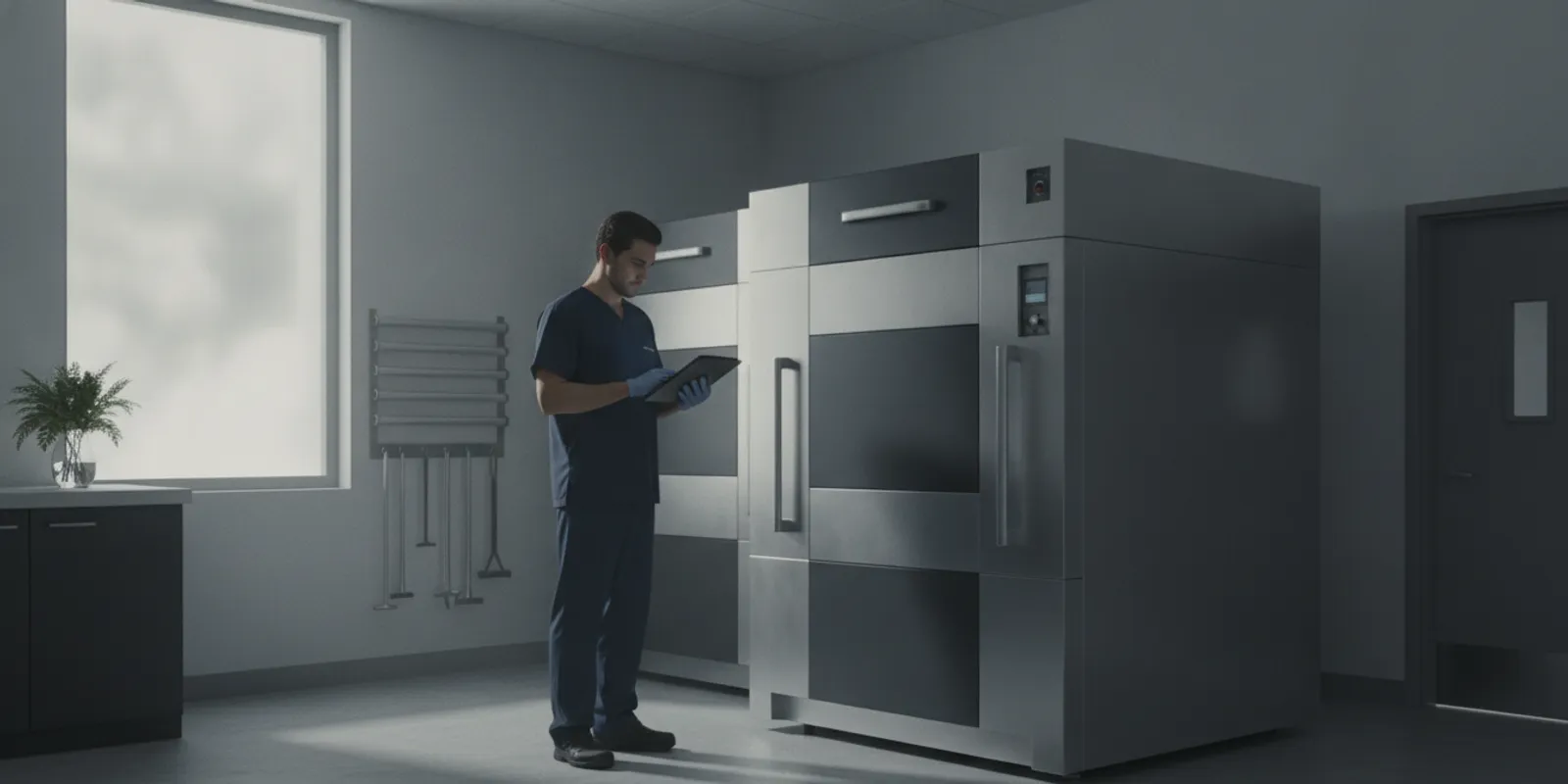
Crematory OSHA requirements are not a single checklist that fits every facility. The applicable workplace rules depend on the tasks employees perform, the hazards present, and the regulations that apply in the facility’s state. A useful compliance program connects those requirements to daily work: identify risks, train staff, maintain equipment, and keep procedures and records current.
Contact Vischer about your crematory safety supply needs
What do crematory OSHA requirements cover?
They cover worker health and safety across the tasks performed at a crematory, not only operation of the cremation unit. Start with a facility-specific review of each job and work area, then map the hazards to applicable federal, state-plan, and local requirements. This guide is an operational planning aid, not a substitute for legal advice or a site-specific safety assessment.
Depending on the facility and its work, the review may need to consider exposure to blood or other potentially infectious materials, chemicals used in preparation or cleaning, heat, moving equipment, lifting, sharps, slips and falls, and emergency response. Not every hazard or standard applies to every task. Do not assume that a policy written for a funeral home or another crematory automatically fits your operation.
The National Funeral Directors Association provides OSHA compliance resources addressing subjects such as the Formaldehyde Standard and Bloodborne Pathogens Standard. Washington State’s crematory regulations also reference OSHA’s bloodborne pathogens standard for human-remains handling. These are useful starting points, but the Washington rule is jurisdiction-specific and should not be treated as a nationwide summary: NFDA OSHA compliance resources and Washington crematory regulations.
How should a crematory identify workplace hazards?
Use a written hazard review that follows the work from receiving through preparation, cremation, processing, cleaning, and maintenance. Assign a responsible person to review each task with the employees who perform it. Document the hazards, existing controls, remaining concerns, and the person responsible for follow-up.
- List tasks, not just rooms. Include routine work, unusual cases, cleaning, equipment service, and emergency conditions. A hazard can appear during a task even if it is not obvious from a room inspection.
- Ask who may be exposed and how. Consider employees, temporary workers, contractors, and anyone entering the work area. Note whether exposure may occur through handling, contact, inhalation, heat, equipment movement, or a spill.
- Review existing protections. Check written procedures, equipment safeguards, ventilation or other engineering controls where applicable, safe work practices, and required protective equipment. A supply on a shelf is not proof that a hazard is controlled.
- Prioritize corrections. Address urgent hazards promptly. Give each remaining action an owner and due date, and check that the correction works in practice.
- Repeat the review when work changes. Reassess after new equipment, chemicals, processes, rooms, or job duties are introduced, and after an incident or near miss reveals a gap.
Walk the actual route used by staff. Observe how items are moved, where supplies are stored, how cleaning is performed, and what happens when a process is interrupted. Ask employees which steps are awkward or regularly skipped. These observations can reveal a mismatch between the written procedure and real work.
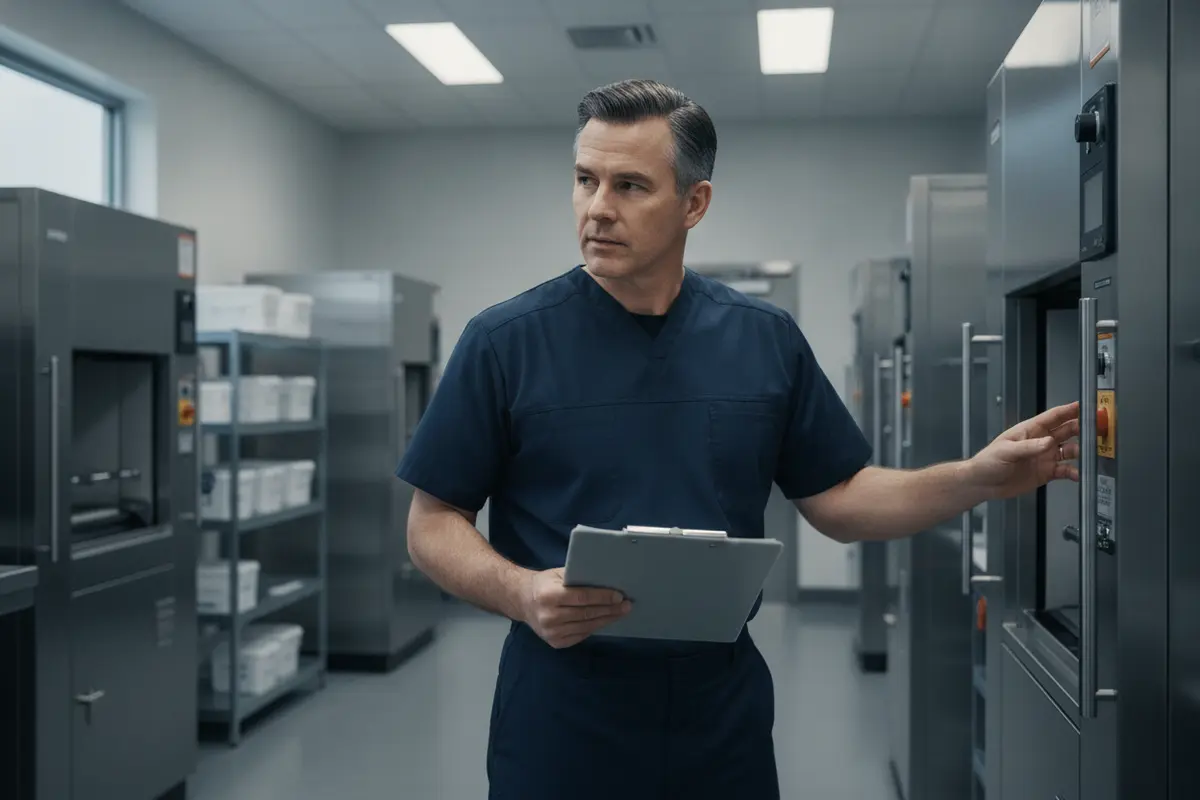
Which safety topics deserve a task-by-task review?
Prioritize the exposures created by your own work. Use applicable OSHA standards and state or local requirements to determine what controls, training, and documentation are required; do not infer a legal requirement from this example list alone.
| Work area or task | Questions to review | Useful planning records |
|---|---|---|
| Human-remains handling | Could staff contact blood or other potentially infectious materials? Are handling and cleanup steps clear? | Applicable exposure-control procedures, training records, and incident documentation |
| Chemical use and storage | What products are used, where are their hazard instructions available, and how are spills handled? | Current product safety information, inventory, procedures, and training records |
| Cremation equipment operation | Are operating limits, authorized users, startup and shutdown steps, and stop-work conditions clear? | Manufacturer instructions, operating procedures, training, inspection, and service records |
| Cleaning and maintenance | Can workers identify hazards before access, isolate equipment where required, and select task-appropriate controls? | Cleaning procedures, maintenance history, and records of corrective actions |
| Manual handling and movement | Are routes, staffing, lifting aids, and communication adequate for the load and space? | Work instructions, equipment checks, and reports of strain or near misses |
| Emergency situations | Do workers know how to stop work, summon help, and report a spill, injury, equipment issue, or exposure? | Emergency contacts, response procedures, drills or training, and incident follow-up |
The table is a planning prompt, not a complete compliance checklist. Requirements vary with the hazard and jurisdiction. For example, a state rule can address crematory operations specifically while federal standards still apply according to their scope. Have a qualified safety professional or the appropriate regulator help resolve questions about which rule applies to a particular task.
How do training and written procedures support compliance?
Training should prepare each employee for the work they are authorized to do and the hazards they may encounter. Keep it tied to actual tasks and applicable requirements. A generic orientation is not enough if staff later operate unfamiliar equipment, handle a new product, or respond to a different type of incident.
- Explain the hazards associated with each assigned task and how employees can recognize changing conditions.
- Demonstrate safe work practices and equipment procedures, then verify that the employee can perform them.
- Explain when to stop work, restrict access, and notify a supervisor rather than improvise.
- Provide information on required protective equipment, limitations, care, replacement, and storage as applicable to the task.
- Document the subject, date, trainer, attendees, and any follow-up needed. Keep records in a location supervisors can access.
Write procedures in plain language and place them where they are useful. A concise checklist near a work area can reinforce a longer policy, but it should not conflict with manufacturer instructions or applicable rules. Review forms for stale product names, outdated contacts, changed duties, and unclear responsibilities. Include contractors in coordination where their work could affect employees or equipment.
What equipment and supplies should operators plan for?
Choose equipment and consumable supplies by matching them to identified tasks, hazards, applicable requirements, and the manufacturer’s instructions. This is more reliable than buying products based on a broad label such as “crematory safety.” Confirm product specifications and suitability with the supplier and your safety lead before use.
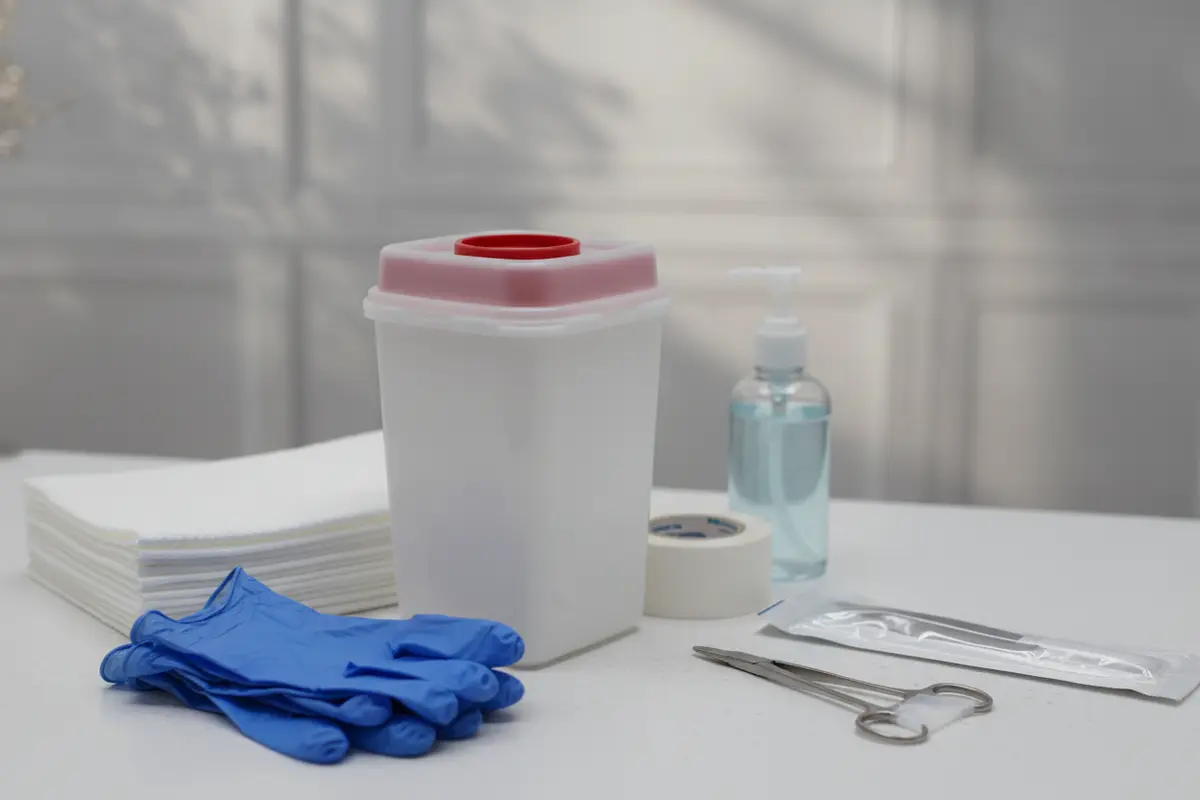
Depending on the facility’s work, the planning list may include protective gloves, other task-appropriate protective equipment, sharps containers, preparation-room supplies, and equipment-specific service items. Vischer’s catalog includes medical products for funeral homes, sharps containers, and MicroFlex gloves. These links are product references, not a determination that a particular item satisfies a particular regulatory requirement.
For each selected item, verify fit for purpose, compatibility with the task, user instructions, storage conditions, inspection needs, and replacement process. Keep required supplies accessible at the point of use. Assign someone to monitor stock and remove damaged, expired, or unsuitable items according to product instructions and facility procedure. Ensure staff know what to use and when; availability without training can create false confidence.
How can a facility keep its compliance records useful?
Good records help a facility show what it planned, what it taught, and what it corrected. They should be accurate, easy to find, and maintained for the periods and in the manner required by applicable rules. Ask a qualified advisor to confirm retention requirements; this guide does not set legal retention periods.
Build a simple record system around the work:
- Hazard reviews: dated assessments, identified controls, action owners, and closure checks.
- Training: topics, dates, participants, trainer, and competency follow-up as appropriate.
- Equipment: instructions, authorized operators, inspections, service, and repair history.
- Products: current safety information, purchase or substitution review, and storage instructions.
- Incidents and near misses: prompt reports, investigation findings, corrective actions, and communication to affected staff.
Use a recurring review schedule, but do not wait for the calendar if a change or event calls for an earlier review. Look for patterns: repeated supply shortages, recurring handling difficulties, overdue service, or incidents that point to unclear procedures. A record is useful only when someone reviews it and follows through.
How can operators build safety checks into daily work?
Use brief checks at natural handoffs in the work rather than relying on memory alone. The facility should set a cadence that fits its operation and applicable rules; the examples below are workflow ideas, not legally prescribed intervals.
- Before a task: confirm the work area is ready, required supplies are available, equipment condition is acceptable, and the employee is trained and authorized for the task.
- During work: follow the written procedure, keep the work area orderly, and pause if conditions differ from what the employee was trained to expect.
- At handoff: communicate equipment status, unresolved hazards, and any restricted area or follow-up action to the next responsible person.
- After an issue: report injuries, exposures, equipment problems, spills, and near misses promptly through the facility’s established process.
A supervisor can periodically compare these checks with actual practice by observing the work and asking staff to explain what they would do in an unusual situation. Keep the discussion practical and non-punitive. The goal is to find confusing instructions, unavailable supplies, or equipment conditions before they contribute to harm. Assign owners for any changes and revisit them to verify that they were completed.
For purchased equipment or supplies, make receiving part of the process. Check the shipment against the order, retain the applicable instructions and safety information, and identify who will inspect, store, or maintain the item. If a product is substituted, review whether the new item is suitable for the intended task and whether procedures or training need to change. A change in brand or model may affect fit, use, storage, or compatibility, so do not treat substitutions as purely administrative.
What common planning gaps should a crematory avoid?
Facilities can have written policies and still miss practical risks. Watch for these recurring gaps as you evaluate your own program:
- Copying a template without adapting it. Check that every procedure matches the equipment, chemicals, staffing, and tasks at your location.
- Treating PPE as the entire solution. Evaluate whether procedures, equipment, and other controls can reduce exposure before relying on personal protective equipment alone.
- Allowing informal equipment use. Make authorization, training, stop-work authority, and escalation steps clear.
- Leaving maintenance outside the safety program. Coordinate service and cleaning plans so employees know when equipment is not available and what precautions apply.
- Failing to update after a near miss. Review what happened, correct the underlying process where possible, and communicate the change.
Do not assume that a product purchase, posted sign, or completed training form by itself establishes compliance. The facility should be able to explain how it identified the hazard, selected controls, prepared staff, and verifies that those controls remain effective.
Frequently Asked Questions
Do the same OSHA requirements apply to every crematory?
No single answer fits every facility. Applicability depends on the work, hazards, jurisdiction, and relevant standards. Review federal requirements and any applicable state-plan or state-specific rules with a qualified safety professional or regulator.
Does a crematory need a written safety program?
Written plans or records may be required for particular hazards or standards. Regardless of the exact paperwork required, documented procedures, training, hazard reviews, and corrective actions help a facility manage work consistently. Confirm the specific documentation obligations that apply to your operation.
Does buying gloves or other protective equipment make a facility compliant?
No. The facility needs to identify hazards and select controls that suit the task and applicable requirements. Product selection, training, use, maintenance, and replacement all matter; a catalog description alone cannot establish compliance.
How often should a crematory review its procedures?
Review procedures on a planned schedule and whenever work, equipment, products, staffing, or hazards change. An incident, near miss, inspection finding, or manufacturer update may also signal that an earlier review is needed.
Contact Vischer to review your facility’s safety supply plan
A practical compliance program is an ongoing part of respectful, reliable crematory operations: review the work, equip and train people appropriately, keep records current, and act when conditions change.