

A mortuary stretcher and a mortuary cot may describe overlapping equipment, but the label alone does not decide which tool belongs in a removal kit. A wheeled mortuary cot is generally the adjustable platform used for first calls, transfers, and vehicle loading. “Stretcher” can describe that same class or a flexible, folding, scoop, or transfer aid depending on the product.
Model specifications should control the purchase: rated capacity, width, height, loading method, wheel control, folding behavior, transfer needs, and vehicle fit. This comparison keeps the focus on choosing the right equipment combination without turning the page into a generic category list.
Call 800-752-8767 to compare cot and stretcher options for your team.
What Is the Difference Between a Mortuary Stretcher and Cot?
Answer: A wheeled mortuary cot is typically built for repeated rolling, height adjustment, restraint, and vehicle loading. A stretcher may be a wheeled cot or a separate flexible, folding, scoop, or transfer device. Confirm the exact model’s dimensions and operating instructions instead of assuming two products with similar names perform the same job.
| Equipment type | Primary use | Capacity or width question | Loading and maneuverability consideration | Relevant Vischer link |
|---|---|---|---|---|
| Wheeled mortuary cot | First calls, routine transfers, and vehicle loading. | Verify the model’s rated capacity, overall width, deck width, and weight. | Compare wheels, brakes, height controls, handles, loading height, and vehicle opening. | Mortuary cots category |
| Bariatric or oversized cot | Calls requiring a verified higher rating or wider frame. | Match the rated capacity and width to the route, bed, doorway, and vehicle. | Plan for width, load-wheel measurement, height range, staff control, and storage. | MOBI F1200 or MC-100A-OS |
| Flexible stretcher | Tight routes, stairs, uneven access, or situations requiring a flexible aid. | Confirm the manufacturer’s rating, usable width, and handling limits. | Does not automatically replace a wheeled cot for long rolling routes or vehicle loading. | Flexible stretchers |
| Transfer board | Bed-to-cot or surface-to-surface transfer support. | Confirm board length, width, rated load, and the transfer method. | Use with a documented transfer process; it is not a wheeled vehicle-loading cot. | Transfer boards |
The table is a starting framework, not a substitute for the product manual. Capacity, width, height, and loading claims belong to the exact model page and the manufacturer’s documentation.
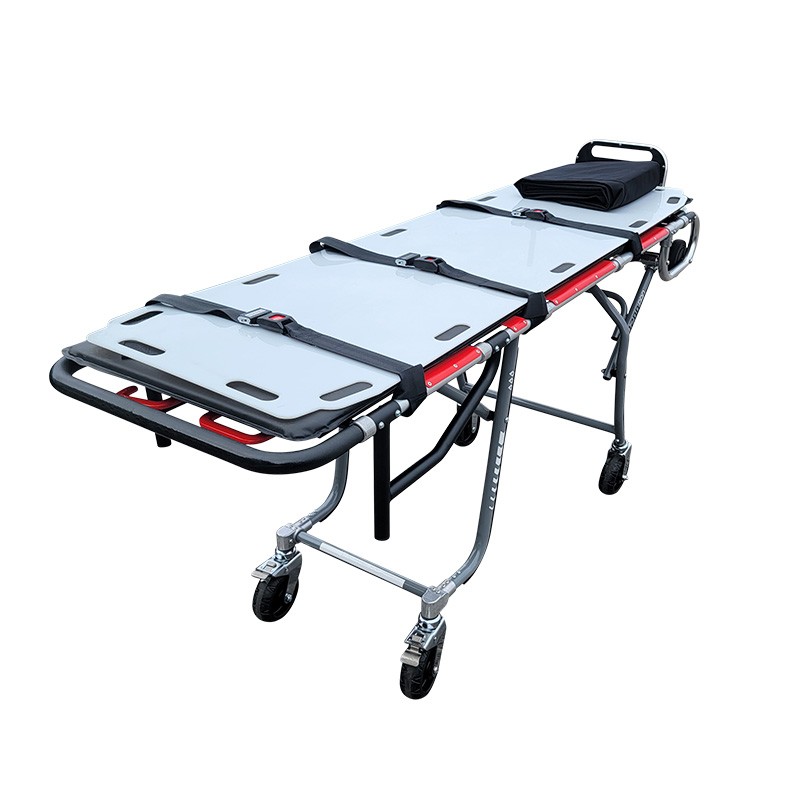
When Is a Flexible or Folding Stretcher Better?
Answer: A flexible or folding stretcher can be useful when stairs, tight turns, uneven access, or limited storage make a rigid wheeled cot difficult to position. It should supplement, not automatically replace, a cot when the team needs stable rolling and controlled vehicle loading.
Review the access route before choosing the secondary aid. Note whether the team must pass through narrow halls, negotiate stairs, cross uneven ground, or transfer from a confined space. Then verify the aid’s rated capacity, handling instructions, cleaning requirements, and storage footprint.
- Use a flexible or folding option when the access challenge is the primary constraint.
- Keep the wheeled cot as the primary platform when rolling, height adjustment, and vehicle loading are central.
- Confirm how many operators are needed and where each person can safely control the aid.
- Practice the route and transfer sequence before relying on the equipment during a difficult call.
A backup aid is most useful when it has a documented place in the workflow. Store it where the team can reach it, inspect it, and keep its instructions with the rest of the removal equipment.
How Should a Funeral Home Compare Cot and Stretcher Fit?
Answer: Compare each device with the full removal route, not only the first transfer. Record doorway and hallway clearance, stairs, ramps, elevator dimensions, vehicle opening, deck height, interior width, turning space, and storage location.
- First call: Identify the primary surface, route, staffing, restraints, and expected handling points.
- Stairs or tight spaces: Measure turns and thresholds, and identify whether a flexible or folding aid is needed.
- Bed-to-cot transfer: Match the transfer board or other aid to the bed height, surface, operator training, and documented procedure.
- Vehicle loading: Compare the cot’s loading height, width, folded dimensions, handles, legs, and wheel controls with the vehicle.
- Repeated daily use: Review cleaning, inspection, wheel service, restraints, mattress care, replacement parts, and storage.
The mortuary cots buying guide provides a broader capacity, width, height, maintenance, and support checklist. For model-specific comparison, review the MOBI F1200 and MC-100A-OS pages rather than applying a generic capacity assumption.
Which Equipment Combination Supports First Calls?
Answer: A practical kit often starts with a primary wheeled cot, then adds transfer or access equipment for the routes the team actually encounters. The combination should reflect staffing, storage, cleaning, inspection, and vehicle-loading procedures.
- Primary cot: Select the capacity, width, height range, wheel control, and loading approach that fit the main vehicle and routes.
- Access aid: Add a flexible, folding, or scoop option only when the team’s access scenarios justify it.
- Transfer support: Choose boards or other aids that match the transfer method and staff training.
- Restraints and covers: Confirm fit, attachment points, cleaning process, and storage.
- Inspection record: Keep pre-use checks, service notes, and manufacturer instructions available to operators.
Do not promise universal vehicle compatibility or one-person operation from a category label. The exact product information and a controlled route test should settle the final choice.
How Do Cleaning, Training, and Support Affect the Choice?
Answer: The best equipment is usable and serviceable after purchase. Build cleaning, inspection, operator training, wheel and brake checks, restraint care, replacement parts, and warranty support into the comparison before ordering.
- Follow the manufacturer’s cleaning instructions for frames, mattresses, covers, restraints, and flexible materials.
- Inspect joints, locks, wheels, handles, straps, and transfer surfaces before each use.
- Train staff on raising, lowering, steering, braking, folding, transferring, and vehicle loading.
- Document repairs and remove equipment from service when damage or impaired operation is found.
- Ask how replacement parts and service questions are handled for the exact model.
Review the equipment with the people who will use it. Their feedback about grip, balance, route clearance, storage, and cleaning can identify a mismatch before it becomes a difficult-call problem.
Ready to compare mortuary cots and stretchers for your removal workflow? Call 800-752-8767 today.
Frequently Asked Questions
What is the difference between a mortuary stretcher and cot?
A mortuary cot is commonly a wheeled, adjustable platform for first calls, transfers, and vehicle loading. Stretcher can refer to that same class or to a flexible, folding, scoop, or transfer aid, so the model’s specifications should control the decision.
When should a funeral home choose a flexible stretcher?
Consider a flexible stretcher when stairs, tight turns, uneven access, or limited storage make a rigid wheeled cot difficult to position. Verify the product’s rating, handling limits, cleaning process, and role in the team’s documented workflow.
What should I measure before buying a mortuary cot?
Measure the narrowest doorway, hallway, turn, elevator, ramp, vehicle opening, deck height, interior width, turning space, and storage location. Compare those measurements with the exact model’s overall width, length, height range, loading height, and folded dimensions.
Does a transfer board replace a mortuary cot?
No. A transfer board supports a bed-to-cot or surface-to-surface transfer, while a wheeled cot supports movement along the route and often vehicle loading. The two tools can serve different steps in one removal workflow.