Choosing funeral home lamps is not just a matter of appearance. A lamp needs to support the purpose of the room, provide comfortable light, fit the available space, and work with the facility’s daily routines. A deliberate review helps operators compare options without treating every room—or every fixture—as the same.
Discuss lamp options with Vischer
What should funeral home lamps do in each room?
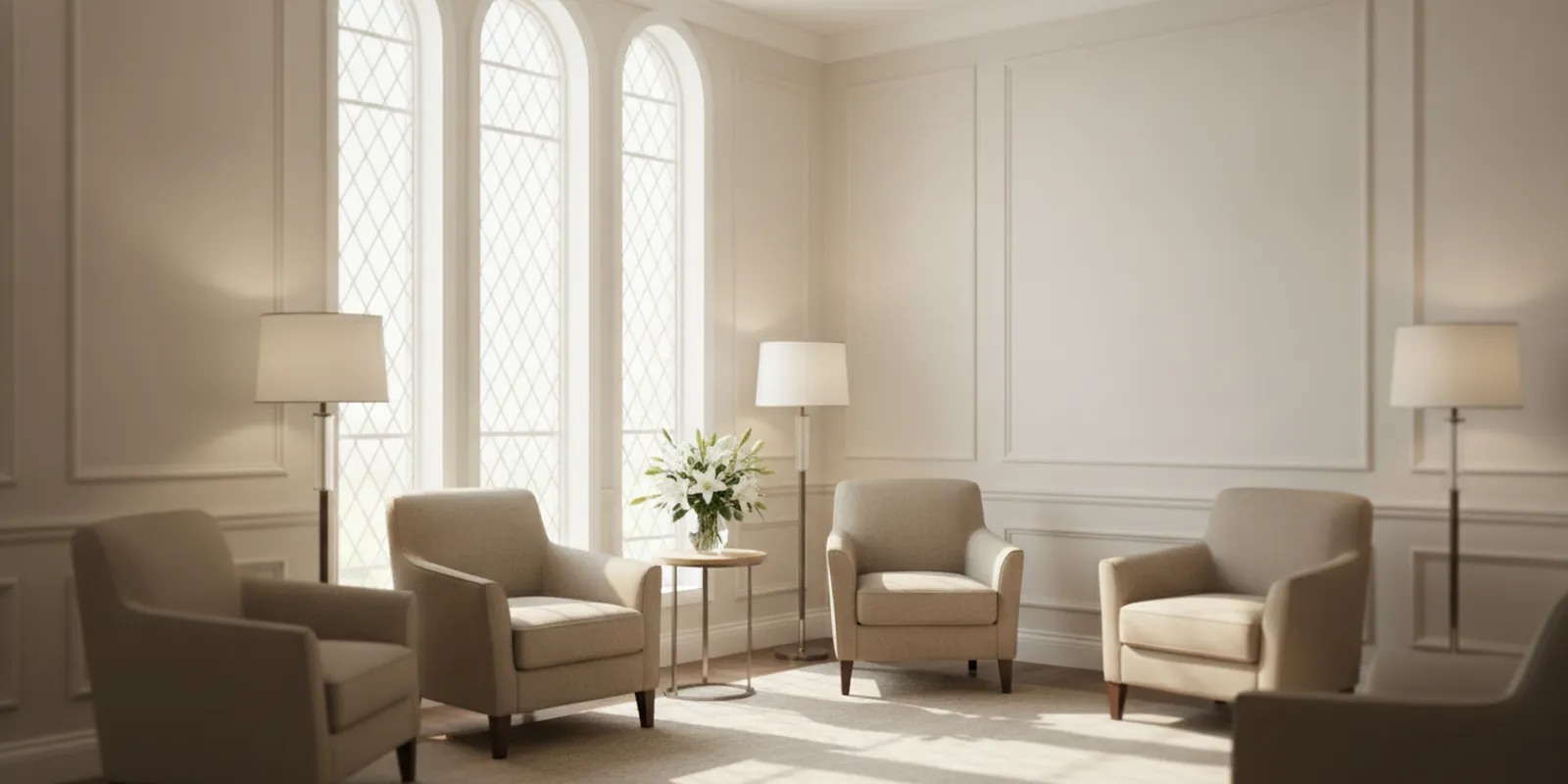
Start with the work a room needs to support, then decide what kind of light and fixture can serve that purpose. A visitation room, chapel, arrangement office, and reception area may have different needs, so one lamp style is not automatically right everywhere.
Write down the room’s primary uses before reviewing products. For example, a visitation area may host quiet conversation, time for reflection, and periods when the room is occupied by a small group. A chapel may need a consistent appearance across a larger seating area. An office may call for practical task lighting rather than a decorative floor fixture.
- Room purpose: Identify whether people gather, read, meet with staff, or move through the space.
- Existing light: Note the contribution from windows and installed ceiling fixtures at different times of day.
- Use pattern: Consider how long the lights are typically on and who operates them.
- Room character: Describe the intended atmosphere in plain terms, such as calm, bright, traditional, or understated.
- Practical constraints: Mark outlets, doors, pathways, furniture, and any areas where a fixture could obstruct movement.
This short room brief can keep a purchase discussion grounded. It also makes it easier to explain why a particular fixture is being considered, rather than choosing on finish or silhouette alone.
Turn the room brief into a use case
Make the notes specific enough to guide a choice. “Improve the chapel lighting” is broad; “add a comfortable pool of light beside the two end seating groups without narrowing the center aisle” gives the team something to evaluate. If a room serves several functions, list them in order and decide which one should guide the purchase. A fixture that works for a quiet visitation may not be the best option for a room that is frequently rearranged.
Also identify the people who will interact with the lamp. Visitors may experience the light from a seated position, while staff may switch it on during room preparation or move furniture around it. Asking both groups what they need can reveal an issue that is easy to miss when reviewing a product page alone.
How can teams assess light quality and comfort?
Evaluate the light in the actual room and under typical operating conditions. Appearance in a product photo is not enough to establish how a lamp will feel beside existing fixtures, furnishings, and daylight.
When available, review the fixture’s documented light source, output, color appearance, and controls. Match the details to the room’s intended use and follow manufacturer information. Avoid assuming that a higher output or a particular bulb type will be comfortable in every space. Glare, contrast, and shadows can matter as much as brightness.
A practical assessment can include these steps:
- Identify the viewing positions. Consider where families may sit, where staff may stand, and the usual approach to the room.
- Check for glare. Look from seated and standing positions to see whether the light source is directly in view or reflects off nearby surfaces.
- Look for uneven patches. Notice whether a lamp creates a harsh pool of light while the surrounding area remains dim.
- Consider color consistency. Compare the lamp with ceiling fixtures and daylight. Different light appearances in one small area can be distracting.
- Review adjustability. If a product includes controls or adjustable components, confirm how staff will use them and whether settings can be kept consistent.
Where possible, assess a sample or a comparable fixture in the intended position before standardizing a choice. If a trial is not practical, use the manufacturer’s specifications and request clarification about any feature that is important to the room. Do not infer performance from a finish name or a catalog photograph.
Test at more than one time of day if natural light changes the room substantially. For instance, a lamp that seems balanced in the morning may look too bright near a window later in the day, or it may provide needed support after dusk. Keep the other room lights in their normal settings during the review. Switching off all ceiling fixtures for a test can give a misleading impression if staff ordinarily use a layered mix of light sources.
When comparing options, take brief notes from the same locations each time. Record whether the light feels even, whether the source is visible from seats, and whether shadows fall across the areas where people gather. This simple method gives the purchasing group a more consistent basis for discussion than a series of general impressions.
Which lamp style and placement fit the space?
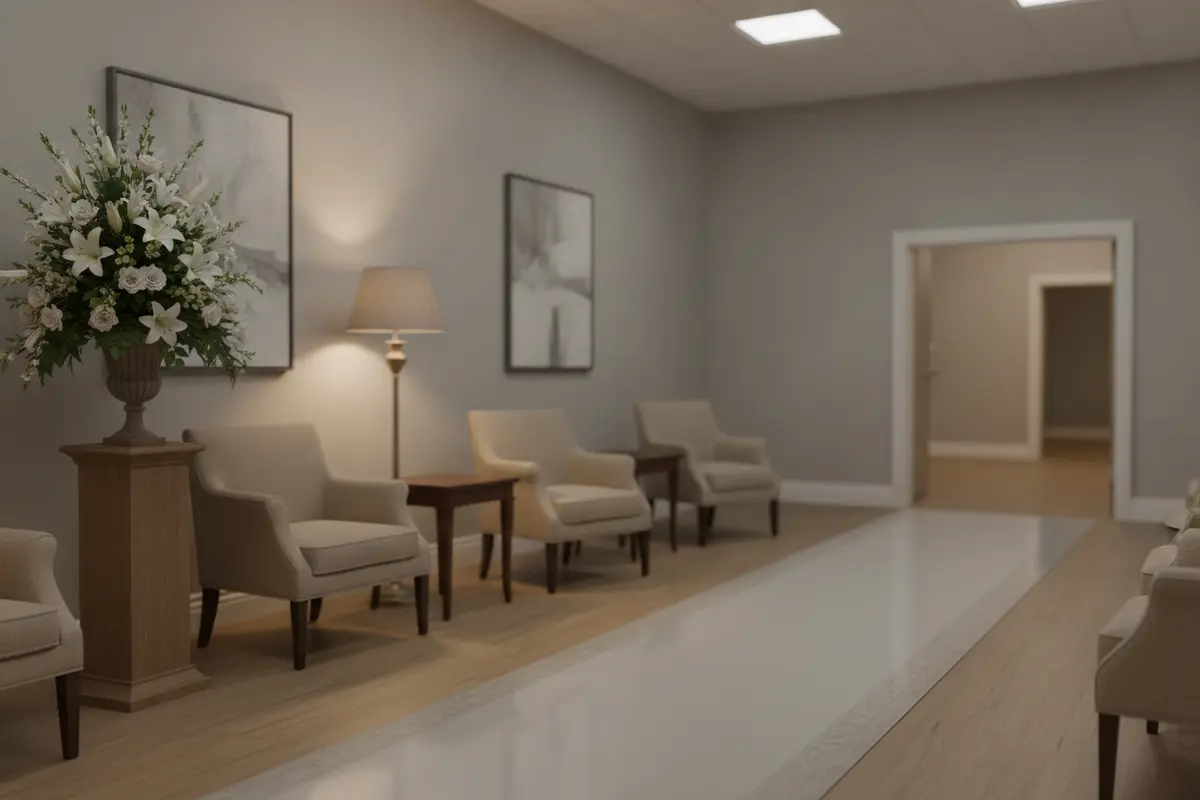
Choose a form that suits the room’s layout and the way it is maintained. Placement should preserve clear routes, avoid crowding furniture, and put the light where it is useful without making the fixture a focal point by accident.
Floor lamps can add light near seating without changing the ceiling, while table lamps may work where a stable surface is already part of the plan. Wall or ceiling fixtures may suit other layouts, but installation and building requirements need separate review. These are general categories, not a claim that any one style is suitable for every funeral home.
Before deciding on a location, walk through the room as a visitor and as a staff member. Check door swings, passage between chairs, access to controls, cleaning routes, and the location of electrical outlets. A cord crossing a walking path can create a practical problem even if the lamp looks well placed in a photo. Follow applicable facility procedures and manufacturer guidance for installation and use.
Scale also matters. Compare the lamp’s overall height and footprint with nearby chairs, tables, floral displays, and other equipment. An unusually large fixture can crowd a modest room; a very small fixture may disappear in a spacious one. If the room uses coordinated furniture, review those pieces together. Vischer’s brown-and-gold-vein chapel chairs offer one example of seating finish to consider alongside a room’s other furnishings, while tall adjustable display stands may be part of the broader visual arrangement.
Map the room before moving furniture
A quick floor plan can help staff spot conflicts before ordering. Mark doors, aisles, outlets, windows, fixed furniture, and usual visitor seating. Add the lamp’s approximate footprint based on product dimensions, allowing room to walk around it rather than placing it directly against a chair in the drawing. If the lamp will be near a floral display or service equipment, include those items in the plan as well.
Then walk the proposed route from the entrance to the main seating and service areas. Check that the fixture does not become a pinch point when chairs are occupied or when the room is reset. Consider whether staff can reach its switch without moving furniture and whether the location remains practical during cleaning. Where several locations appear possible, compare them against the same route and access criteria instead of choosing only the most visually pleasing spot.
What should buyers compare before ordering?
Compare lamps against the same set of operational questions, not just their appearance. A simple side-by-side review makes differences visible and helps the purchasing team identify which details still need confirmation.
| Review area | Questions to ask | Why it matters |
|---|---|---|
| Room fit | Does the style and scale suit the room and its furnishings? | Helps prevent a fixture from dominating the space or feeling out of place. |
| Light characteristics | What light-source, output, color, and control information does the manufacturer provide? | Lets the team assess comfort and consistency using documented details. |
| Placement | Can the lamp sit near its intended users without obstructing doors, routes, or work? | Connects the product choice to the room’s real layout. |
| Operation | Are the switch and any adjustments accessible to staff? | Supports consistent use across shifts and events. |
| Care | What cleaning, bulb replacement, and routine checks does the maker specify? | Clarifies ongoing tasks before the fixture enters service. |
| Ordering | Are finish, dimensions, electrical details, availability, and delivery confirmed? | Reduces avoidable surprises between selection and installation. |
Record answers in a shared comparison sheet. Mark each detail as confirmed, pending, or not applicable. If a specification is missing, ask the supplier or manufacturer rather than filling the gap with an assumption. Prices, lead times, included components, and product features can vary, so confirm the current details for the exact model being considered.
Use a weighted review when options are close
If two or three lamps appear suitable, agree on the most important criteria before comparing them. A team might prioritize room fit, comfortable light, and straightforward care, then treat finish as a secondary preference. Another facility may need to place greater weight on controls that staff can reach easily. The point is not to create a complicated scoring system; it is to avoid changing the decision criteria after seeing a favored style.
One useful worksheet has a row for each candidate and a column for each criterion. Use a simple rating such as “meets,” “needs confirmation,” or “does not fit,” then add a note for any uncertainty. For example, if dimensions are listed but the lamp’s control position is unclear, mark that item as pending rather than assuming it will be convenient. Keep the exact product name or model beside every note so details do not get mixed between options.
How should lamps coordinate with furnishings and service equipment?
Think of a lamp as one part of the room rather than a stand-alone purchase. A cohesive result depends on scale, finish, location, and how people use the surrounding furnishings and display items.
Make a brief inventory of the main visual elements already in the room: chair finishes, tables, lecterns, floral displays, and any drapes or other service equipment. Decide whether the new lamp should blend in or serve as a modest accent. Consistency does not require every piece to match; it does require the overall arrangement to feel considered.
For example, a room with formal seating may call for a restrained lamp profile, while a multipurpose room may benefit from a fixture that can be moved or repositioned if its construction and intended use allow. Review the actual product information before assuming portability or adjustability. Catalog pages for a funeral-service lectern and a church truck drape can help buyers consider nearby service furnishings as part of the same room-planning conversation. These items serve different purposes; the point is to review the setting as a whole, not to treat them as substitutes for lamps.
When a room is being refreshed in stages, document the intended finish palette and placement plan. That way, later purchases can refer to the same choices instead of creating a series of disconnected decisions. Also note which pieces are fixed and which are brought in only for services, since temporary items can change a lamp’s best location.
Where chairs are replaced or added at the same time, check the actual color and dimensions alongside the planned fixture. Vischer’s oak and black vinyl funeral chairs provide another example of a furniture finish that can be considered as part of the room palette. For a service area with a lectern, a Criterion lectern is another adjacent furnishing to account for when planning sight lines and available floor space. Verify current product specifications and appearance before making a coordinated purchase.
What maintenance and safety details belong in the review?
Include routine care and safe operation in the buying decision, before a lamp is placed in service. Confirm the maker’s instructions and your facility procedures for setup, cleaning, inspection, and replacement parts.
Ask what the product requires for cleaning and whether any materials or finishes need special care. Determine how staff will notice a loose component, damaged cord, unstable base, or failed light source and what the facility’s process is for taking equipment out of use. Do not use a damaged fixture, and do not attempt repairs beyond the work permitted by the manufacturer and facility policy.
- Confirm that the lamp is intended for the planned setting and use.
- Review the maker’s setup and electrical instructions before installation.
- Plan a cord route that does not create an obstruction, consistent with facility procedures.
- Decide who is responsible for routine visual checks and cleaning.
- Keep replacement or service information accessible to the staff who need it.
Lighting should not be treated as a substitute for required building, electrical, accessibility, or workplace review. Consult the appropriate qualified professional when a project raises questions about wiring, installation, or local requirements. This guide is a purchasing framework, not technical installation advice.
Make the routine easy to follow
Assign responsibility for the basic checks that fit your facility’s normal workflow. A staff member preparing a room might confirm that the lamp is stable, the cord remains routed as planned, the switch works, and the shade or surface is clean. A separate person may handle replacement or service requests according to the facility’s policy. The exact process is for each facility to determine, but clear ownership helps prevent a small issue from being overlooked between uses.
Keep the product instructions and model details somewhere staff can find them. If a lamp needs a particular replacement component or cleaning method, documenting that information can avoid guesswork later. Include the date the fixture entered service and any maintenance notes your facility normally records. Do not create a repair procedure that goes beyond the manufacturer’s guidance or the qualifications of the person doing the work.
How can a funeral home make a final selection?
A sound decision is one that fits the room, is supported by confirmed product details, and can be maintained by the team. Use a short, repeatable review rather than relying on a single visual impression.
- Define the room need. Record the activities, users, existing lighting, and practical constraints.
- Set the priorities. Rank the most important factors, such as comfort, visual fit, simple operation, and ease of care.
- Shortlist suitable styles. Consider only lamp forms that can work with the space and its routes.
- Verify details. Confirm dimensions, finish, electrical information, light characteristics, included parts, availability, and delivery for the selected item.
- Review with the people who use the room. Ask staff responsible for services and upkeep to identify concerns before the order is placed.
- Document the decision. Keep the selected model information and care instructions with the facility’s records.
A consumer resource from Funeral Consumers Alliance recommends weighing priorities as part of choosing a funeral home. That guide does not address lighting or lamp specifications, but the general reminder to identify priorities before making a decision can also help a facility organize its own purchasing review: read the Funeral Consumers Alliance guide.
For a product conversation, share the room dimensions, a description or photo of the intended location, the preferred style, and any questions that remain about product details. A torchiere lamp is one style to consider; confirm the current product information and suitability for your setting before ordering. Buyers comparing display arrangements may also review bronze church truck options as an example of another furnishing finish in the space, while remembering that each product has a distinct function.
Prepare a concise request for product information
A clear inquiry makes follow-up more useful. Include the room’s approximate dimensions, the proposed location, a photo or simple floor plan if available, the type of activity in the space, and any preference for finish or form. List the details you have already confirmed and separate them from questions, such as whether the listed dimensions include the shade or which light source is compatible. If delivery timing matters, ask for current availability and estimated timing for the exact item instead of relying on a general assumption.
After receiving answers, update the comparison sheet and share it with the staff who will use or maintain the fixture. This closes the gap between a purchasing decision and day-to-day operation. Keep a copy of the final product details so a future replacement or room refresh can start from known information.
Frequently asked questions
These answers address common planning questions, but product specifications and installation requirements should always be confirmed for the exact fixture and facility.
Should every room use the same lamp?
Not necessarily. Different rooms serve different purposes and may have different layouts, existing light, and furnishings. Use a consistent decision framework, but select a fixture based on each room’s needs.
Is a torchiere automatically the right choice for a visitation room?
No. A torchiere is one style to consider, not a universal recommendation. Check the fixture’s documented characteristics, room dimensions, placement, glare, and compatibility with the facility’s procedures before deciding.
What information should a buyer have before requesting product guidance?
Provide the room’s intended use, approximate dimensions, available outlet locations, existing lighting, preferred finish, placement constraints, and any required delivery timing. Ask for confirmation of model-specific specifications that are not clear in the product information.
Can a lamp be selected from a product photo alone?
A photo can help assess general style, but it cannot confirm every important detail. Review dimensions and manufacturer information, and seek clarification about light characteristics, controls, setup, care, and current availability.
Plan the purchase around the room
A practical lamp choice begins with a clear understanding of the room and ends with verified product details. Compare function, comfort, placement, appearance, and care together so the fixture supports a composed and usable setting.
Contact Vischer to discuss your lamp requirements
Before placing an order, confirm the current specifications and make sure the selected fixture fits the room and the facility’s operating plan.